Ayayema Cave Seafarers

下载的 PDF 是图像副本。如需可选中文本及更好的辅助技术支持,请使用打印功能。

Ayayema Cave Seafarers

揭开一个失落的文明

正在加载考古记录……

正在收集古代记录

跳转到主内容
Ayayema Cave Seafarers
文明焦点

Ayayema Cave Seafarers

Mid‑Holocene coastal foragers from the western archipelago of southern Chile, glimpsed through cave deposits and one ancient genome.

3364 CE - 29335100 BCE
Patagonia, Chile (Western Archipelago)
滚动开始
Chapter I

剧情

了解 Ayayema Cave Seafarers 文化

Archaeological deposits at Ayayema Cave (Patagonia, Chile) date to 3364–2933 BCE. Material culture and midden remains indicate maritime foraging. One ancient male genome carries Y‑haplogroup Q; conclusions are preliminary given the single sample.

Time Period

3364–2933 BCE (ca. 5100 BP)

Region

Patagonia, Chile (Western Archipelago)

Common Y-DNA

Q (observed in 1 sample)

Common mtDNA

Unknown / not reported

Chapter II

时间线

这种文化历史上的关键时刻

3200 BCE

Radiocarbon horizon at Ayayema Cave

Stratified deposits dated to the mid‑Holocene indicate episodic cave occupation and intensive use of marine resources.

Chapter III

Origins & Emergence

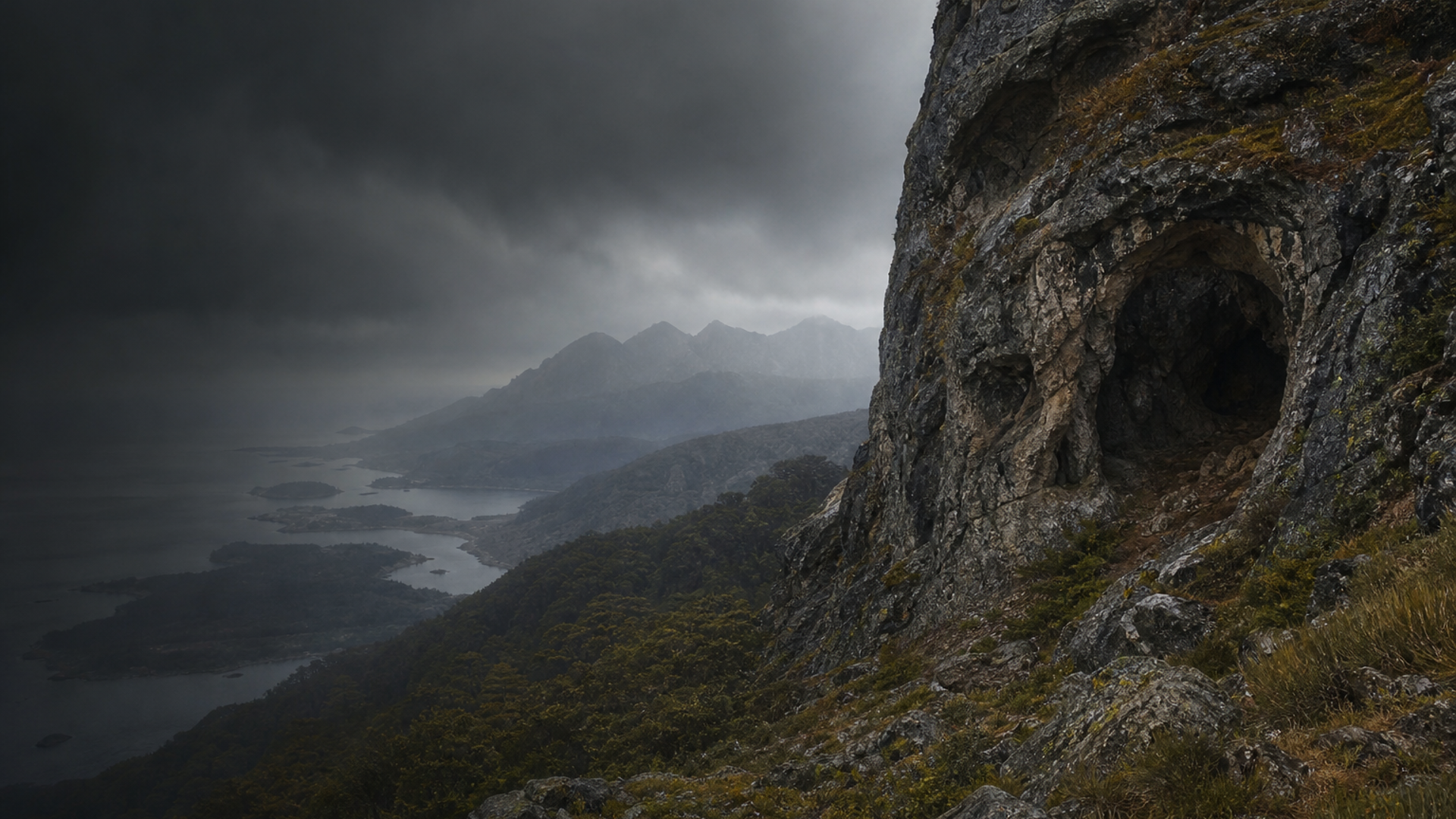
Ayayema Cave sits in the western archipelago off southern Chile, where rocky coves and narrow channels focus marine resources. Radiocarbon dates from stratified deposits place human activity in the mid‑Holocene, between roughly 3364 and 2933 BCE. Archaeological data indicates repeated occupation episodes: shell middens, fragmented bone of fish and seabirds, and chipped stone tools adapted for marine hunting and processing.

Limited evidence suggests these groups were part of a broader pattern of coastal foragers who specialized on rich intertidal and nearshore ecologies of southern Patagonia. Sea‑level adjustments and local ecological shifts in the mid‑Holocene likely shaped settlement intensity and mobility. The cultural label "Western Archipelago Ayayema" reflects a regional assemblage rather than a well‑defined ethnic identity — the archaeological signal is fragmentary and largely constrained to cave and coastal deposits.

Because the genetic dataset presently includes a single genome from Ayayema Cave, hypotheses about population origins, continuity, or interaction with inland groups remain provisional. Nevertheless, combining the stratigraphic record with this first genetic hint opens pathways to test ideas about maritime colonization, resource specialization, and long‑term coastal resilience.

  • Site: Ayayema Cave, western archipelago of Patagonia, Chile
  • Dates: ca. 3364–2933 BCE (mid‑Holocene)
  • Evidence: shell middens, fish and seabird remains, stone tools adapted to coastal foraging
Chapter IV

Daily Life & Society

Life for the Ayayema occupants would have been shaped by tides, kelp forests, and seasonal runs of fish and seabirds. Middens preserve a daily ledger of meals: shells, fish bone, and scattered charcoal from hearths. Chipped stone points and scrapers suggest tasks of fishing, seabird harvesting, hide and feather processing, and woodworking for small watercraft or tools.

Social groups were likely small and flexible, moving between caves, rocky ledges, and sheltered bays in response to resource pulses. Caves like Ayayema provided shelter, discard spaces for food remains, and loci for tool manufacture. Artistic or symbolic materials are scarce in the current record, but curated tools and selective use of raw materials indicate knowledge networks—shared techniques adapted to a demanding coastal environment.

Archaeological data indicates a deep ecological knowledge of the archipelago. However, the narrow sample base limits inferences about social complexity, trade, or ritual life. Future excavations and additional dated contexts are required to flesh out community size, seasonality, and long‑distance contacts.

  • Diet dominated by marine resources: shellfish, fish, seabirds
  • Small, mobile groups using caves and coastal camps seasonally
Chapter V

Genetic Profile

Ancient DNA from a single male individual recovered at Ayayema Cave carries Y‑chromosome haplogroup Q. Haplogroup Q is widespread among Native American paternal lineages and is consistent with deep Pan‑American ancestries deriving ultimately from Beringian founders. The absence of reported mtDNA from this sample prevents maternal lineage assessment.

Archaeogenetic interpretation must be cautious: with n=1, statements about population structure, continuity, or admixture are preliminary. The Y‑Q signal aligns broadly with expectations for Holocene South America, but it cannot resolve finer questions such as whether the Ayayema occupants were genetically continuous with earlier coastal populations, or whether they represent a later movement along the coast.

Combined genetic and archaeological approaches are powerful: genetics can reveal sex‑biased mobility, kinship within cemeteries, and links to distant groups; archaeology supplies context about diet, technology, and landscape use. For Ayayema, the immediate priority is additional sampling—multiple individuals, securely dated contexts, and mitochondrial genomes—to permit robust inferences about population history, local continuity, and interactions with inland Patagonian groups. Until then, any genetic narrative remains a preliminary glimpse rather than a conclusive story.

  • Observed paternal lineage: Y‑haplogroup Q (1 individual)
  • Conclusions are provisional due to a single sampled genome
Chapter VI

Legacy & Modern Connections

The material traces at Ayayema Cave capture a human presence tuned to the sea—communities whose lifeways contributed to the long tapestry of Patagonian coastal occupation. Genetically, the Y‑Q lineage connects this individual to wider Native American paternal diversity, but direct links to present‑day groups require much more data.

For descendant communities and researchers alike, Ayayema is both heritage and a scientific frontier. Archaeological stewardship and collaborative genetic research with indigenous partners are essential to interpret biological ancestry respectfully and accurately. As more genomes and archaeological contexts are recovered across southern Chile, a clearer picture will emerge of how coastal lifeways persisted, transformed, and contributed to modern genetic landscapes. Presently, the Ayayema evidence should be read as an evocative, guarded glimpse into mid‑Holocene coastal life.

  • Provides a tentative genetic link to broader Native American paternal lineages
  • Highlights need for more samples and collaborative research with descendant communities
AI 电源

AI 助手

就 Ayayema Cave Seafarers 文化提问

AI 助手 由DNAGENICS公司制作

解锁此特性
Ask questions about the Ayayema Cave Seafarers culture. Our AI assistant can explain genetic findings, historical context, archaeological evidence, and modern connections.
AI 样本分析

Ayayema Cave Seafarers 文化是人类历史中值得了解的一章……

遗传分析揭示了与早期种群的联系,同时显示了独特的适应和文化创新的证据。 古代DNA样本提供了对迁徙模式、社会结构以及古代种群之间的生物关系的深刻见解。

这是人工智能分析的预览。 解锁全AI 助手, 以探索关于:

  • 遗传组成和祖先
  • 移徙模式和起源
  • 日常生活和文化习俗
  • 现代遗传遗产

探索更古老的文化

揭开古代世界文明的故事

使用优惠码 可减免 35% • 11月12日 到期




