Caishichang: Echoes of the Iron Age

下载的 PDF 是图像副本。如需可选中文本及更好的辅助技术支持,请使用打印功能。

Caishichang: Echoes of the Iron Age

揭开一个失落的文明

正在加载考古记录……

正在收集古代记录

跳转到主内容
Caishichang: Echoes of the Iron Age
文明焦点

Caishichang: Echoes of the Iron Age

Xinjiang burials (800–1 BCE) revealing a tentative blend of eastern and western maternal and paternal lineages.

800 CE - 1 BCE
Xinjiang, China (Yili Region, Nileke County)
滚动开始
Chapter I

剧情

了解 Caishichang: Echoes of the Iron Age 文化

Archaeological and ancient-DNA evidence from Caishichang (Yili Region, Xinjiang) dated 800–1 BCE suggests a small Iron Age community with mixed maternal and paternal ancestry, reflecting frontier networks between East Asia and the Eurasian steppe. Conclusions are preliminary (n=8).

Time Period

800–1 BCE

Region

Xinjiang, China (Yili Region, Nileke County)

Common Y-DNA

Q, J, Q1a (observed; low n=8)

Common mtDNA

U, M3, A11, T, D

Chapter II

时间线

这种文化历史上的关键时刻

800 BCE

Earliest Caishichang Assemblage

Earliest secure contexts at Caishichang date to around 800 BCE, marking the site's occupation in the late Iron Age frontier of Xinjiang.

Chapter III

Origins & Emergence

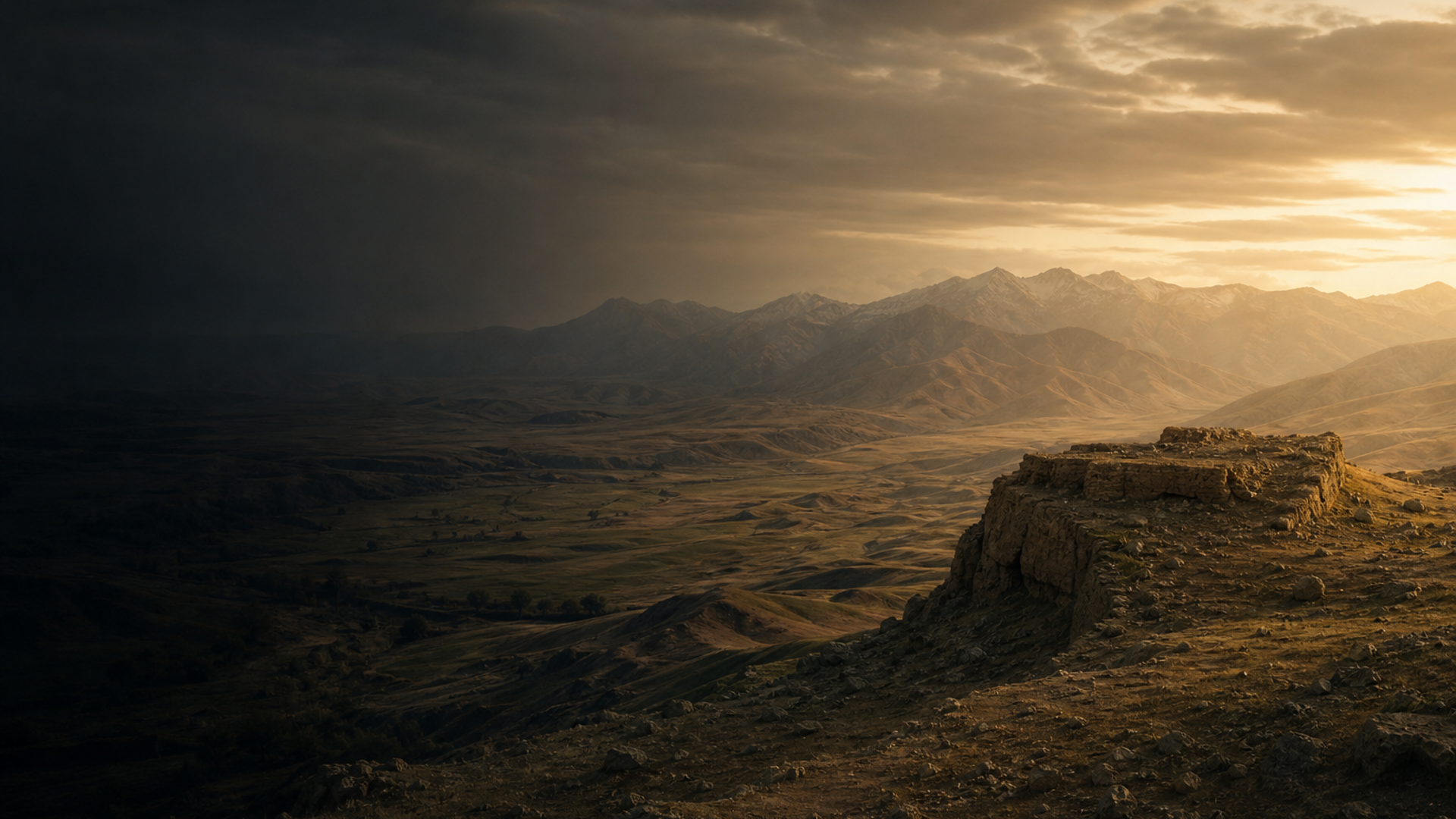
Set in the fertile corridor of the Yili Valley, the Caishichang assemblage sits at a crossroads where mountain passes and steppe tracks converge. Archaeological data indicates human activity around Caishichang in Nileke County during the later first millennium BCE, a period when mobility and long-distance exchange intensified across Xinjiang.

Limited evidence suggests Caishichang was neither an isolated hamlet nor a major metropolis but part of a network of small Iron Age settlements that negotiated cultural influence from both eastern China and the Eurasian interior. Material traces—burial clusters and fragmentary field contexts—point to local adaptations of widely shared practices rather than wholesale cultural replacement. The chronology (800–1 BCE) places these people in the broader era of regional reorganization: the growth of interstate polities to the east and shifting pastoral dynamics to the west.

Genetically, the site captures that liminal quality: paternal and maternal lineages show signatures commonly associated with both East Asian and western Eurasian ancestries, reflecting routes of contact along the northern Silk Road corridors. Because the dataset is small (eight individuals), these patterns should be read as preliminary glimpses of population dynamics rather than definitive population histories.

  • Located in Caishichang, Nileke County, Yili Region (Xinjiang)
  • Chronology: 800–1 BCE, late Iron Age contexts
  • Evidence indicates frontier interactions between East Asia and the Eurasian interior
Chapter IV

Daily Life & Society

Archaeological traces from Caishichang suggest a community shaped by mobility and resource diversity. The landscape—mountain-fed valleys and steppe margins—supported mixed subsistence strategies: pastoral herding, localized farming in irrigable pockets, and participation in exchange networks that brought exotic raw materials and ideas.

Burial contexts, the primary archaeological window at Caishichang, reveal structured attention to the dead and variable grave assemblages that imply differences in age, sex, or social role. Archaeological data indicates craft specialization may have existed on a modest scale, with households participating in both local production and long-distance trade. Social organization likely balanced kinship-based groups with flexible alliances formed around seasonal movements and trade routes.

Culturally, the site embodies hybridity: material culture elements align neither exclusively with steppe nomadism nor with the settled agricultural traditions to the east. Instead, Caishichang represents a living frontier where people adapted practices as opportunities and relationships evolved. Given the limited excavation and the small number of ancient genomes, reconstructions of daily life remain provisional and should be refined with more fieldwork and a larger DNA sample.

  • Mixed subsistence: pastoralism alongside localized agriculture
  • Burial variability suggests social differentiation; interpretations are provisional
Chapter V

Genetic Profile

Ancient DNA from eight individuals at Caishichang provides a compact but revealing picture of biological ancestry during the late first millennium BCE. Y-chromosome results include haplogroups Q (including Q1a) and J. Haplogroup Q and Q1a are often associated with populations of northern Eurasia and the steppe corridor, while J is more frequently observed in West Eurasian and southwest Asian contexts; the presence of both hints at male-mediated connections across east–west routes. Because only three Y-lineages are reported (Q, J, Q1a total counts include overlap), and the overall sample count is eight, any Y-based inference is preliminary.

Mitochondrial (maternal) diversity at Caishichang is notable: U (3 individuals), M3 (2), A11 (1), T (1), and D (1). Haplogroup U and T are typically found in West Eurasian and European contexts as well as western steppe groups; M3, A11, and D are characteristic of East Asian and Inner Asian populations. This mix of maternal lineages suggests admixed ancestry or sustained contact between eastern and western gene pools in the region. Archaeogenetic patterns from Xinjiang more broadly have shown such admixture across millennia, and Caishichang appears to fit that mosaic.

Important caveats: with only eight genomes, statistical power is limited. These data provide a snapshot that aligns with a picture of frontier admixture—male and female lineages reflecting both eastward and westward connections—but more samples are needed to resolve proportions, timing, and the social mechanisms behind gene flow.

  • Y-DNA: presence of Q, Q1a, and J suggests mixed paternal links (steppe and west-Asian signals)
  • mtDNA: U, M3, A11, T, D indicate maternal diversity consistent with east–west admixture; sample size is small (n=8)
Chapter VI

Legacy & Modern Connections

Caishichang offers a vivid tableau of Iron Age frontier life whose genetic echoes persist in the tapestry of Central and East Asia. The mingling of haplogroups at the site resonates with modern genetic diversity across Xinjiang and adjacent regions, where descendants carry layered ancestries shaped by millennia of mobility. Archaeological data indicates that places like Caishichang were conduits for people, goods, and genes—small nodes whose cumulative activity helped shape broader population landscapes.

Because the dataset is limited, Caishichang's contribution to modern populations should be seen as suggestive rather than conclusive. Ongoing and future ancient-DNA sampling in the Yili Valley and surrounding basins will be necessary to trace the persistence and transformation of these lineages into later historical populations. Nevertheless, the site captures how human lives at a contested ecological threshold can leave an outsized genetic and cultural imprint on subsequent generations.

  • Reflects genetic mixing consistent with modern Xinjiang heterogeneity
  • Preliminary patterns underscore need for more sampling to map long-term genetic continuity
AI 电源

AI 助手

就 Caishichang: Echoes of the Iron Age 文化提问

AI 助手 由DNAGENICS公司制作

解锁此特性
Ask questions about the Caishichang: Echoes of the Iron Age culture. Our AI assistant can explain genetic findings, historical context, archaeological evidence, and modern connections.
AI 样本分析

Caishichang: Echoes of the Iron Age 文化是人类历史中值得了解的一章……

遗传分析揭示了与早期种群的联系,同时显示了独特的适应和文化创新的证据。 古代DNA样本提供了对迁徙模式、社会结构以及古代种群之间的生物关系的深刻见解。

这是人工智能分析的预览。 解锁全AI 助手, 以探索关于:

  • 遗传组成和祖先
  • 移徙模式和起源
  • 日常生活和文化习俗
  • 现代遗传遗产

探索更古老的文化

揭开古代世界文明的故事

使用优惠码 可减免 35% • 11月12日 到期