Echoes from the Amur: Paleolithic Moment

下载的 PDF 是图像副本。如需可选中文本及更好的辅助技术支持,请使用打印功能。

Echoes from the Amur: Paleolithic Moment

揭开一个失落的文明

正在加载考古记录……

正在收集古代记录

跳转到主内容
Echoes from the Amur: Paleolithic Moment
文明焦点

Echoes from the Amur: Paleolithic Moment

A single 32,000-year-old individual illuminates riverine life on the Amur’s ancient floodplains

32159 CE - 31169 BCE
Amur River Basin, China
滚动开始
Chapter I

剧情

了解 Echoes from the Amur: Paleolithic Moment 文化

Archaeogenetic and archaeological evidence from a single Paleolithic individual (c. 32,159–31,169 BCE) in the Amur River Basin, China, offers a tentative glimpse into early Northeast Asian lifeways and maternal lineages (mtDNA B). Limited sample size makes conclusions provisional.

Time Period

c. 32,159–31,169 BCE

Region

Amur River Basin, China

Common Y-DNA

Not reported / undetermined

Common mtDNA

B (single sample)

Chapter II

时间线

这种文化历史上的关键时刻

32159 BCE

Radiocarbon date for Amur individual

Direct dating places the sampled individual at c. 32,159–31,169 BCE, providing a rare Paleolithic genetic snapshot from the Amur Basin.

Chapter III

Origins & Emergence

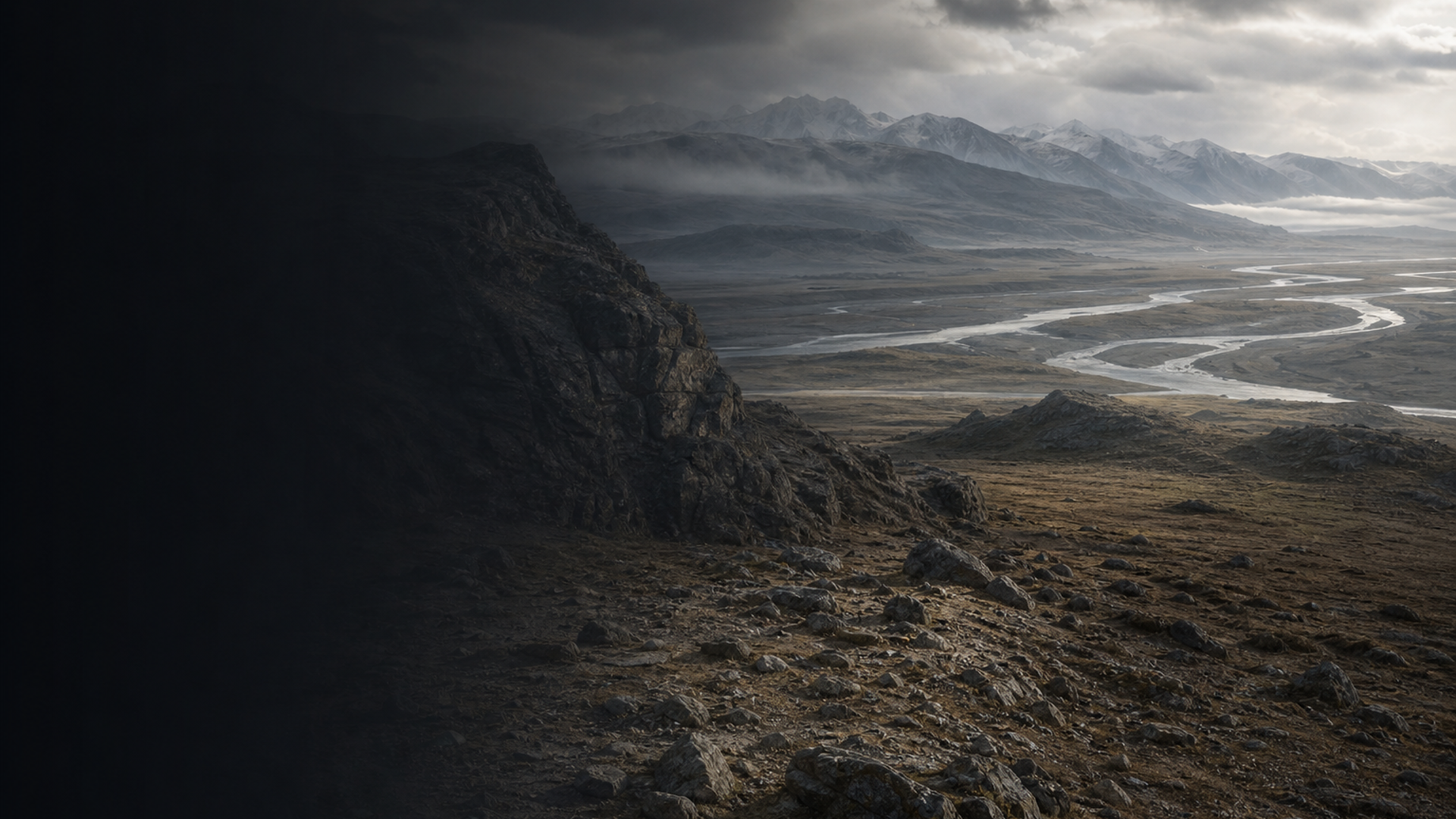
Beneath a cold, wind-swept sky and the braided channels of the Amur, a human hand—one genetic profile recovered from riverine deposits—anchors a moment of deep prehistory. Radiocarbon dates place this individual between c. 32,159 and 31,169 BCE, in the Upper Paleolithic landscape of what is now the Amur River Basin in northeastern China. Archaeological data indicates a focus on river and wetland resources across the broader region during this period: lithic scatters, hearths and faunal remains at nearby localities suggest specialized hunting, fishing, and seasonal mobility.

Climatically, this interval predates the Last Glacial Maximum and sits within a fluctuating, cold-adapted environment. Limited evidence suggests human groups exploited diverse ecological niches—floodplains, wooded terraces and ice-free refugia—allowing for both local continuity and long-distance interactions across Northeast Asia. Because the genetic record here currently rests on a single sampled individual, interpretations of population origins and movements must remain cautious. Archaeology frames a landscape of adaptation; genetics offers the first maternal signal, a single strand of the larger human story waiting to be woven by further discoveries.

  • Single ancient individual dated to c. 32,159–31,169 BCE
  • Found in the Amur River Basin, northeastern China
  • Context suggests riverine and wetland exploitation
Chapter IV

Daily Life & Society

Imagining daily life along the ancient Amur requires threading together fragile archaeological traces with environmental inference. Stone tools recovered in regional Paleolithic contexts include bladelets, truncated pieces and simple retouched implements consistent with hunting, processing hides and butchering fish and large mammals. Archaeological data indicates hearth features and concentrations of bone that hint at ephemeral camps rather than long-lived sedentary sites.

Seasonality likely structured movement: warm months for fishing and plant gathering along riverbanks, colder seasons for hunting in forest margins or terraces. Social groups were probably small, mobile bands with flexible kin networks that could coalesce for resource-rich seasons. Ornamentation and curated tools—seen regionally—suggested social signaling and long-distance exchange of ideas or raw materials. However, the single genetic sample constrains our ability to generalize about social complexity, kinship patterns or population size; ethnographic analogy and regional excavation remain essential to flesh out daily life on these paleolandscapes.

  • Riverine subsistence: fishing, hunting, and plant gathering
  • Mobile camps with curated stone toolkits and hearths
Chapter V

Genetic Profile

The recovered genetic information from this individual is sparse but evocative. Mitochondrial DNA places the person in haplogroup B—an East Asian maternal lineage that, in later millennia, is present across East Asia and also in populations of the Americas. This single mtDNA assignment provides a maternal snapshot rather than a full population portrait. No Y‑chromosome data are reported for this specimen, and autosomal coverage is limited, so assessments of ancestry, admixture or direct continuity with later groups are highly provisional.

Because sample count = 1, statistical inference is essentially impossible: the mtDNA B signal could represent a locally common maternal line, a transient lineage, or an individual of mixed ancestry. Nevertheless, when combined with other ancient genomes from Northeast Asia, such mitochondrial data help map the deep-time presence of lineages that later appear across wider regions. Archaeogenetics here primarily serves as a directional indicator—suggesting maternal connections across East Asia—rather than definitive proof of population movements. Future samples from the Amur and adjacent regions, especially with robust autosomal data, will be required to test hypotheses of continuity, migration, and the role of the Amur as a corridor linking interior Siberia, the Russian Far East and northeastern China.

  • mtDNA haplogroup B identified (single sample)
  • Y‑DNA not recovered; autosomal data limited — interpretations provisional
Chapter VI

Legacy & Modern Connections

The genetic echo of this lone Paleolithic individual offers a poetic glimpse of deep maternal roots in Northeast Asia. Haplogroup B’s later presence across East Asia and into the Americas means this find sits within a broader tapestry of population dispersals, but any direct line of descent to modern groups remains hypothetical given the tiny sample size. Archaeologically, the Amur corridor continued to be important through the Holocene: it appears in later records as a zone of cultural exchange, resource abundance and demographic resilience.

For researchers and the public, this discovery underscores both the promise and limits of early ancient DNA: a single genome can illuminate possibilities but cannot substitute for the dense sampling needed to trace ancestry and cultural transmission. The true legacy of the site will come as more individuals are sequenced and integrated with archaeological contexts, enabling a clearer picture of how Ice Age communities on the Amur contributed to the genetic and cultural mosaic of Northeast Asia.

  • mtDNA B connects this individual to broader East Asian maternal lineages
  • Additional sampling is needed to assess long-term continuity and links to modern populations
AI 电源

AI 助手

就 Echoes from the Amur: Paleolithic Moment 文化提问

AI 助手 由DNAGENICS公司制作

解锁此特性
Ask questions about the Echoes from the Amur: Paleolithic Moment culture. Our AI assistant can explain genetic findings, historical context, archaeological evidence, and modern connections.
AI 样本分析

Echoes from the Amur: Paleolithic Moment 文化是人类历史中值得了解的一章……

遗传分析揭示了与早期种群的联系,同时显示了独特的适应和文化创新的证据。 古代DNA样本提供了对迁徙模式、社会结构以及古代种群之间的生物关系的深刻见解。

这是人工智能分析的预览。 解锁全AI 助手, 以探索关于:

  • 遗传组成和祖先
  • 移徙模式和起源
  • 日常生活和文化习俗
  • 现代遗传遗产

探索更古老的文化

揭开古代世界文明的故事

使用优惠码 可减免 35% • 11月12日 到期




