Echoes of the Iberian Foragers

下载的 PDF 是图像副本。如需可选中文本及更好的辅助技术支持,请使用打印功能。

Echoes of the Iberian Foragers

揭开一个失落的文明

正在加载考古记录……

正在收集古代记录

跳转到主内容
Echoes of the Iberian Foragers
文明焦点

Echoes of the Iberian Foragers

Ancient hunter-gatherers of Spain seen through archaeology and DNA

40000 CE - 5000 BCE
Spain (Iberian Peninsula)
滚动开始
Chapter I

剧情

了解 Echoes of the Iberian Foragers 文化

Archaeological remains from La Braña, Cueva de la Carigüela and other Spanish sites (40,000–5,000 BCE) reveal hunter-gatherer lifeways. Ancient DNA from seven individuals links them to broader Western European hunter-gatherer lineages while highlighting rare, deep-rooted Y lineages. Conclusions remain preliminary.

Time Period

40,000–5,000 BCE

Region

Spain (Iberian Peninsula)

Common Y-DNA

C (2), F (1), CT (1), I (1)

Common mtDNA

U (6), including U5b (1)

Chapter II

时间线

这种文化历史上的关键时刻

8000 BCE

Mesolithic Continuity in Iberia

Archaeological transition toward microlithic toolkits and increased forager regionalization across Spanish sites, reflecting post-glacial adaptations and localized lifeways.

Chapter III

Origins & Emergence

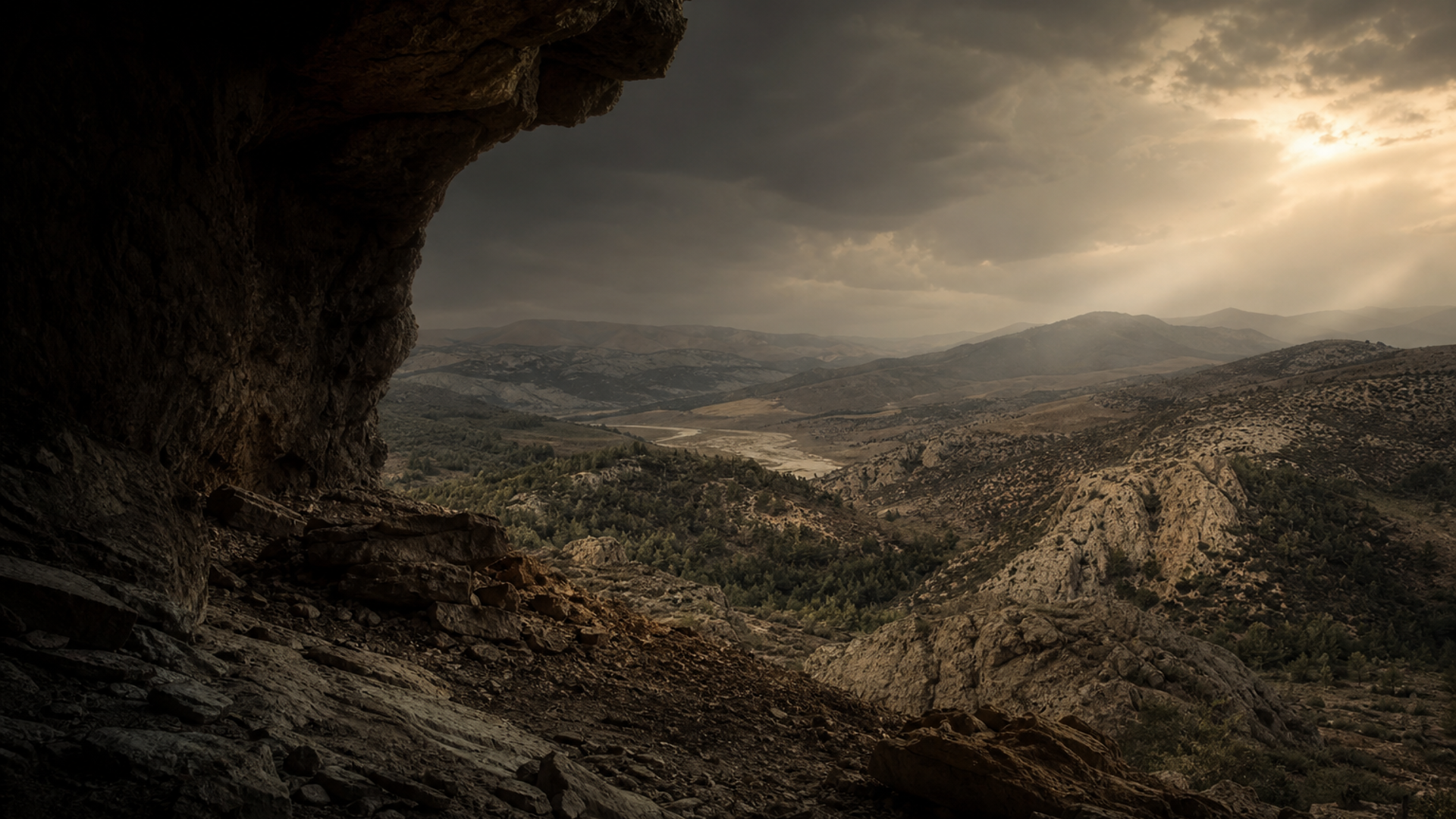
Beneath limestone shelters and highland caves, the Spain_HG story unfolds across a vast span—from Upper Paleolithic horizons into late Mesolithic contexts (approximately 40,000–5,000 BCE). Archaeological sites such as La Braña-Arintero (León), Cueva de la Carigüela (Piñar, Granada), Cingle del Mas Nou (Ares del Maestre, Castelló) and Cueva de la Cocina (Dos Aguas, València) preserve stone tools, hearths and faunal remains that speak to seasonal mobility, specialized hunting, and long-standing coastal and interior traditions.

Material culture indicates continuity and regional adaptation: blade industries and microlithic toolkits appear alongside site-specific practices tied to upland oak forests, river valleys and Mediterranean scrub. Limited evidence suggests population continuity in some valleys, while changes in tool form and site use around 7,000–5,000 BCE hint at broader ecological and social shifts. Archaeological data indicate that these groups lived in small, mobile bands with deep knowledge of local landscapes—an image evoked by the layers of charcoal and flint in cave floors and the dispersed scatters of butchery debris.

While the archaeological record is robust in places, geographic gaps remain. The long time span covered by the Spain_HG designation encompasses multiple climatic oscillations and cultural responses, and so any single narrative must treat continuity and change as regional and time-dependent phenomena.

  • Sites span 40,000–5,000 BCE across northern and eastern Spain
  • Stone tool continuity with regional variation in microlithic traditions
  • Evidence for seasonal mobility and small band organization
Chapter IV

Daily Life & Society

Life for Spain_HG communities was intimate with landscape and season. Archaeozoological remains from La Braña and Cueva de la Cocina show hunting of red deer, wild boar and smaller mammals, while shell middens and freshwater fish remains at some coastal and riverine sites suggest varied subsistence strategies. Hearth features and fire-cracked stones point to repeated occupation episodes; hearth lenses preserve charred seeds and nuts that hint at gathered plant foods and a broad-spectrum diet.

Material traces such as bone and antler blanks, ochre fragments, and personal ornaments indicate social expression—perhaps kin signaling, ritual acts or identity marking within small groups. Burial evidence is sparse but evocative: interments found at La Braña show deliberate deposition and grave goods that imply social recognition. Seasonal migration between uplands and lowlands likely structured social calendars, with knowledge of water sources, salt licks and hunting corridors passed between generations.

Craft production appears opportunistic and efficient: on-site reduction of lithic materials, occasional curated tool forms, and localized craft traditions. Overall, archaeological data indicate resilient, place-informed lifeways shaped by changing climates and resource availability.

  • Mixed hunting, fishing and gathering economies with regional variation
  • Use of ochre, ornaments and deliberate burials suggest social complexity
Chapter V

Genetic Profile

Seven ancient genomes attributed to Spain_HG have been analyzed, a small sample that requires cautious interpretation. Mitochondrial DNA is dominated by haplogroup U (6 of 7 samples), with at least one U5b lineage—patterns consistent with broader Western European hunter-gatherer (WHG) maternal ancestry. On the paternal side, recovered Y-DNA haplogroups include C (2), F (1), CT (1) and I (1). The detection of haplogroup I aligns with known European hunter-gatherer lineages, while occurrences of C, F and CT point to either rare deep-rooted Eurasian lineages persisting in Iberia or to previously under-sampled diversity in prehistoric western Europe.

Archaeogenetic affinity analysis places Spain_HG individuals closer to WHG clusters than to early Neolithic farmers, supporting archaeological inferences of long-term forager lifeways. However, with only seven genomes, population-level parameters—such as effective population size, micro-regional structure, and gene flow events—remain tentative. Limited evidence suggests pockets of continuity amid episodes of demographic turnover elsewhere in Europe, but further sampling across the peninsula is needed to resolve questions about migration, admixture and the persistence of archaic lineages.

In sum, the genetic portrait is evocative: a maternal signature dominated by U lineages and a paternal record that preserves both common WHG markers and rarer haplogroups, highlighting the Iberian Peninsula as a repository of ancient genetic diversity.

  • mtDNA dominated by haplogroup U; includes U5b
  • Y-DNA shows I plus rarer C, F, CT lineages—interpretation preliminary
Chapter VI

Legacy & Modern Connections

The genetic and archaeological threads of Spain_HG weave into the longer story of Europe. Maternal U lineages and the presence of haplogroup I connect these foragers to the broader West European hunter-gatherer legacy that later populations encountered and sometimes absorbed. Traces of rare Y lineages hint that Iberia preserved pockets of deep ancestry that may have contributed, in subtle ways, to the genetic tapestry of later Mediterranean and Atlantic populations.

For modern DNA users, Spain_HG emphasizes caution and wonder: matches to deep U lineages or rare paternal markers can signal very old regional roots, but small sample sizes mean that direct ancestry claims should be conservative. Archaeology reminds us that culture, mobility and environment shaped genetic outcomes; genetics reveals inheritance patterns that archaeology alone cannot. Together they offer a cinematic but scientifically restrained portrait of resilient forager communities whose lives were carved into caves and plains—and whose genetic echoes still whisper in the genomes of people living around the Iberian coasts.

  • Connects to broader Western European hunter-gatherer ancestry
  • Small ancient sample size means modern links are suggestive, not definitive
AI 电源

AI 助手

就 Echoes of the Iberian Foragers 文化提问

AI 助手 由DNAGENICS公司制作

解锁此特性
Ask questions about the Echoes of the Iberian Foragers culture. Our AI assistant can explain genetic findings, historical context, archaeological evidence, and modern connections.
AI 样本分析

Echoes of the Iberian Foragers 文化是人类历史中值得了解的一章……

遗传分析揭示了与早期种群的联系,同时显示了独特的适应和文化创新的证据。 古代DNA样本提供了对迁徙模式、社会结构以及古代种群之间的生物关系的深刻见解。

这是人工智能分析的预览。 解锁全AI 助手, 以探索关于:

  • 遗传组成和祖先
  • 移徙模式和起源
  • 日常生活和文化习俗
  • 现代遗传遗产

探索更古老的文化

揭开古代世界文明的故事

使用优惠码 可减免 35% • 11月12日 到期