Gold and Genes of Varna

下载的 PDF 是图像副本。如需可选中文本及更好的辅助技术支持,请使用打印功能。

Gold and Genes of Varna

揭开一个失落的文明

正在加载考古记录……

正在收集古代记录

跳转到主内容
Gold and Genes of Varna
文明焦点

Gold and Genes of Varna

Chalcolithic coastal elites at Varna revealed through archaeology and ancient DNA

4750 CE - 4347 BCE
Varna, Bulgaria (Black Sea coast)
滚动开始
Chapter I

剧情

了解 Gold and Genes of Varna 文化

Varna Chalcolithic (4750–4347 BCE) cemetery in Bulgaria shows striking wealth, complex society, and a diverse genetic signature in 23 ancient samples — hinting at local European maternal lineages alongside unusually varied male haplogroups that suggest long-distance connections.

Time Period

4750–4347 BCE (Chalcolithic)

Region

Varna, Bulgaria (Black Sea coast)

Common Y-DNA

L (7), V88 (4), PF (3), M70 (1)

Common mtDNA

H (5), K (3), U (3), T (2), X2 (1)

Chapter II

时间线

这种文化历史上的关键时刻

4600 BCE

Flourishing of Varna Necropolis

The Varna cemetery sees the interment of richly furnished elite graves with gold and copper—evidence of social stratification and long-distance exchange.

Chapter III

Origins & Emergence

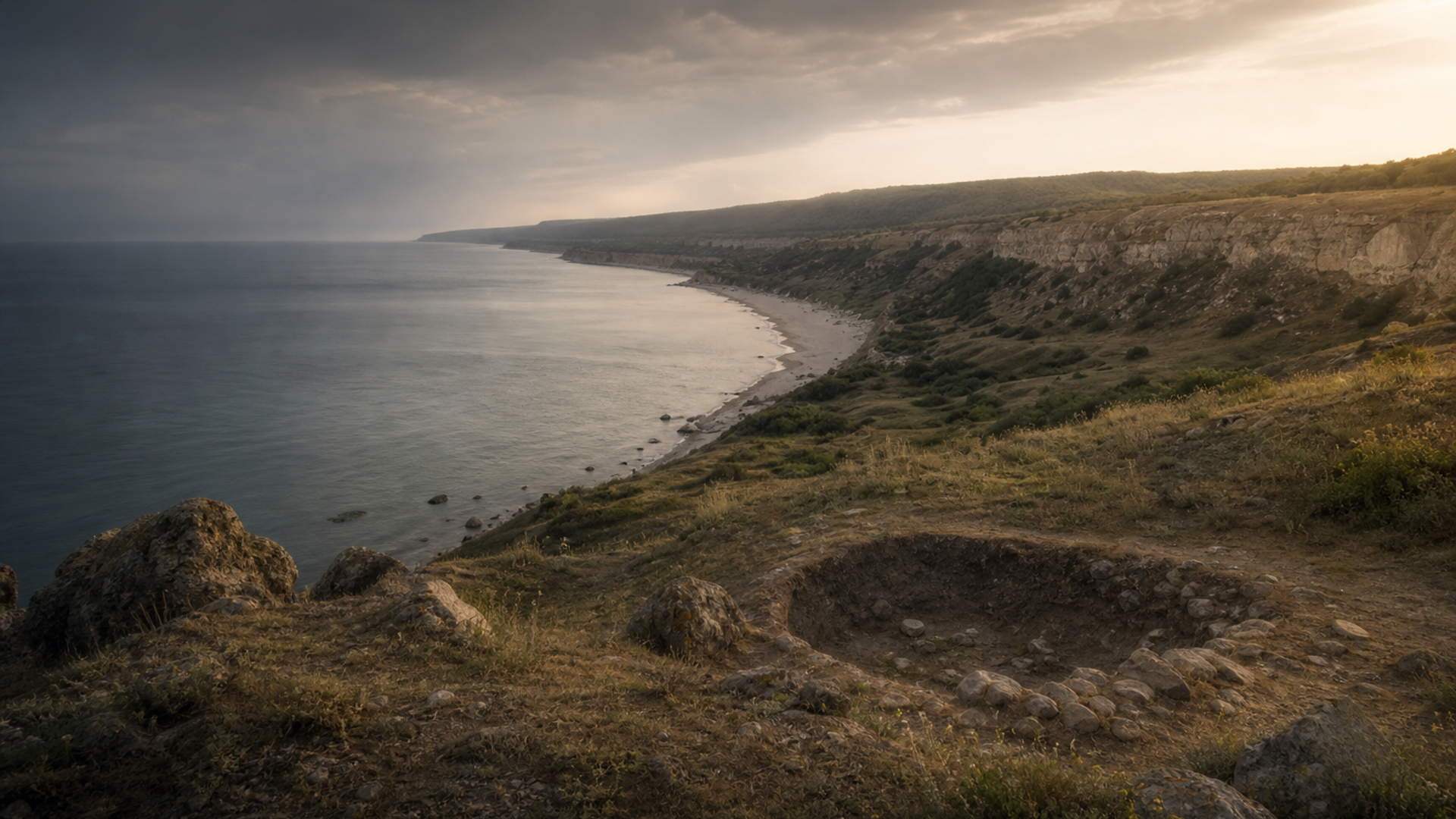
The Varna Chalcolithic horizon unfolds along the western Black Sea littoral between c. 4750 and 4347 BCE. Archaeological data from the Varna necropolis (prov. Varna, municipality Varna) reveal one of Europe’s earliest and most spectacular concentrations of metal wealth, with rich graves containing worked gold, copper ornaments, and prestige goods. These funerary assemblages belong to what archaeologists call the Varna Culture — a regional expression within broader southeast European Chalcolithic societies.

Excavation contexts and material culture indicate rapid social differentiation: some burials contain abundant symbolic wealth while others are modest. Metallurgy and long-distance exchange in raw materials and finished objects imply Varna sat within maritime and overland networks across the Balkans and beyond. Limited evidence suggests that this economic complexity developed from local Neolithic farming communities that adopted early copper technology and intensified social ranking.

Caution is warranted: chronological precision varies between cemetery sectors and many aspects of social change remain debated. Nevertheless, the combination of monumental graves, crafted metalwork, and coastal geography paints a cinematic picture of a community experimenting with wealth display, craft specialization, and far-reaching connections at the dawn of the Copper Age.

  • Varna necropolis dates to 4750–4347 BCE and anchors the Varna Culture
  • Rich gold and copper grave goods indicate pronounced social inequality
  • Location on the Black Sea coast suggests participation in regional exchange networks
Chapter IV

Daily Life & Society

Archaeological remains allow glimpses into everyday rhythms beneath the dazzling funerary displays. Pottery, polished stone tools, and copper implements point to a mixed economy of cereal agriculture, animal husbandry, fishing, and specialized crafts. The Varna cemetery itself is a funerary landscape: body placement, grave goods, and collective vs. single interments reflect a society that used ritualized death to convey status.

Metalwork — thin beaten gold sheets, copper tools, and sophisticated ornaments — suggests skilled workshops and artisans. Textile impressions on some finds imply woven clothing; shells, Spondylus beads, and exotic raw materials signal exchange along coastal routes. Stable isotope studies elsewhere in the region indicate diets based on cereals, pulses, and varying proportions of animal protein; similar patterns are plausible at Varna but require more direct dietary sampling to confirm locally.

Social life at Varna was likely hierarchical and performative. Public displays in death (grave architecture and wealth concentration) probably mirrored living inequalities: elites controlled access to prestigious goods and the social memory preserved in monumental burials. Yet many aspects of household organization, gender roles, and daily ritual remain archaeologically subtle and are interpreted cautiously.

  • Mixed farming, animal husbandry, fishing, and specialist craft production
  • Wealth concentrated in funerary contexts suggests elite display and control of prestige goods
Chapter V

Genetic Profile

Ancient DNA from 23 Varna Chalcolithic individuals provides a window into the biological diversity of this coastal community. The Y-chromosome pool is notably heterogeneous: seven individuals carry haplogroup L, four carry V88, three fall in PF-defined branches, and one in M70. These male lineages stand out because some — particularly L and V88 — are today more frequent in regions outside Europe, which makes their presence at Varna intriguing.

Mitochondrial DNA is dominated by lineages commonly associated with Neolithic and later European populations: H (5), K (3), U (3), T (2), and X2 (1). This pattern suggests that maternal ancestry in Varna was broadly continuous with the southern and central European farming-derived gene pool known from the Neolithic and Chalcolithic.

Interpreting Y-haplogroup signals requires caution. The presence of haplogroups today concentrated in Africa or South Asia does not necessarily mean recent migration from those regions in the 5th millennium BCE; they may represent deep, complex West Eurasian branches or the outcomes of earlier prehistoric movements. With 23 samples the data are informative but not exhaustive: population structure, sex-biased mobility, and the timing of external contacts remain provisional until larger genome-wide datasets and direct radiocarbon-linked samples are integrated. Archaeology — trade goods, exotic raw materials, and coastal connectivity — provides a plausible context for the genetic diversity observed, pointing to Varna as a hub where local European maternal lineages mixed with a more varied set of paternal lineages.

  • 23 samples reveal diverse male lineages (L, V88, PF, M70) and European maternal haplogroups (H, K, U, T, X2)
  • Patterns hint at long-distance contacts and possible sex-biased mobility, but conclusions remain provisional
Chapter VI

Legacy & Modern Connections

Varna’s archaeological and genetic traces have a resonant legacy. The cemetery provides one of the earliest material testimonies of wealth inequality in prehistoric Europe and enriches our understanding of how craft, trade, and social ranking coalesced during the Copper Age. Genetic data from Varna contribute to broader models of population dynamics in the Balkans: mitochondrial lineages align with continental Neolithic ancestry, while unusual paternal markers highlight complexity in male-mediated connections.

For contemporary genetic landscapes, Varna is a deep-time chapter rather than a direct precursor; contributions to modern populations are filtered by millennia of movement, admixture, and demographic change. Nevertheless, by linking burial wealth, maritime exchange, and a distinctive genetic signature, the Varna Chalcolithic helps explain why the Balkans have been a crossroads of peoples and cultures. Future, larger-scale ancient DNA studies will refine how these early coastal networks fed into later Bronze Age and historic genetic patterns.

  • Varna illustrates early institutionalized inequality and craft specialization in Europe
  • Ancient DNA shows continuity in maternal lineages but complex paternal inputs, informing Balkan population history
AI 电源

AI 助手

就 Gold and Genes of Varna 文化提问

AI 助手 由DNAGENICS公司制作

解锁此特性
Ask questions about the Gold and Genes of Varna culture. Our AI assistant can explain genetic findings, historical context, archaeological evidence, and modern connections.
AI 样本分析

Gold and Genes of Varna 文化是人类历史中值得了解的一章……

遗传分析揭示了与早期种群的联系,同时显示了独特的适应和文化创新的证据。 古代DNA样本提供了对迁徙模式、社会结构以及古代种群之间的生物关系的深刻见解。

这是人工智能分析的预览。 解锁全AI 助手, 以探索关于:

  • 遗传组成和祖先
  • 移徙模式和起源
  • 日常生活和文化习俗
  • 现代遗传遗产

探索更古老的文化

揭开古代世界文明的故事

使用优惠码 可减免 35% • 11月12日 到期




