Gotland's Maritime Foragers

下载的 PDF 是图像副本。如需可选中文本及更好的辅助技术支持,请使用打印功能。

Gotland's Maritime Foragers

揭开一个失落的文明

正在加载考古记录……

正在收集古代记录

跳转到主内容
Gotland's Maritime Foragers
文明焦点

Gotland's Maritime Foragers

Pitted Ware people of Sweden, seen through archaeology and ancient DNA

3100 CE - 2150 BCE
Gotland, Sweden
滚动开始
Chapter I

剧情

了解 Gotland's Maritime Foragers 文化

Archaeological and genetic evidence from Gotland (3100–2150 BCE) illuminates the Pitted Ware communities: maritime hunter-gatherers with predominantly Y-haplogroup I and U-series maternal lineages. Limited samples suggest continuity with northern hunter-gatherer ancestry.

Time Period

3100–2150 BCE

Region

Gotland, Sweden

Common Y-DNA

I (6/7)

Common mtDNA

U4d (4), U (2), V (1)

Chapter II

时间线

这种文化历史上的关键时刻

2500 BCE

Peak Pitted Ware activity on Gotland

Concentration of shell middens, cemeteries (Ajvide), and pitted ceramics reflects maritime-focused communities with distinct material culture and emerging social differentiation.

Chapter III

Origins & Emergence

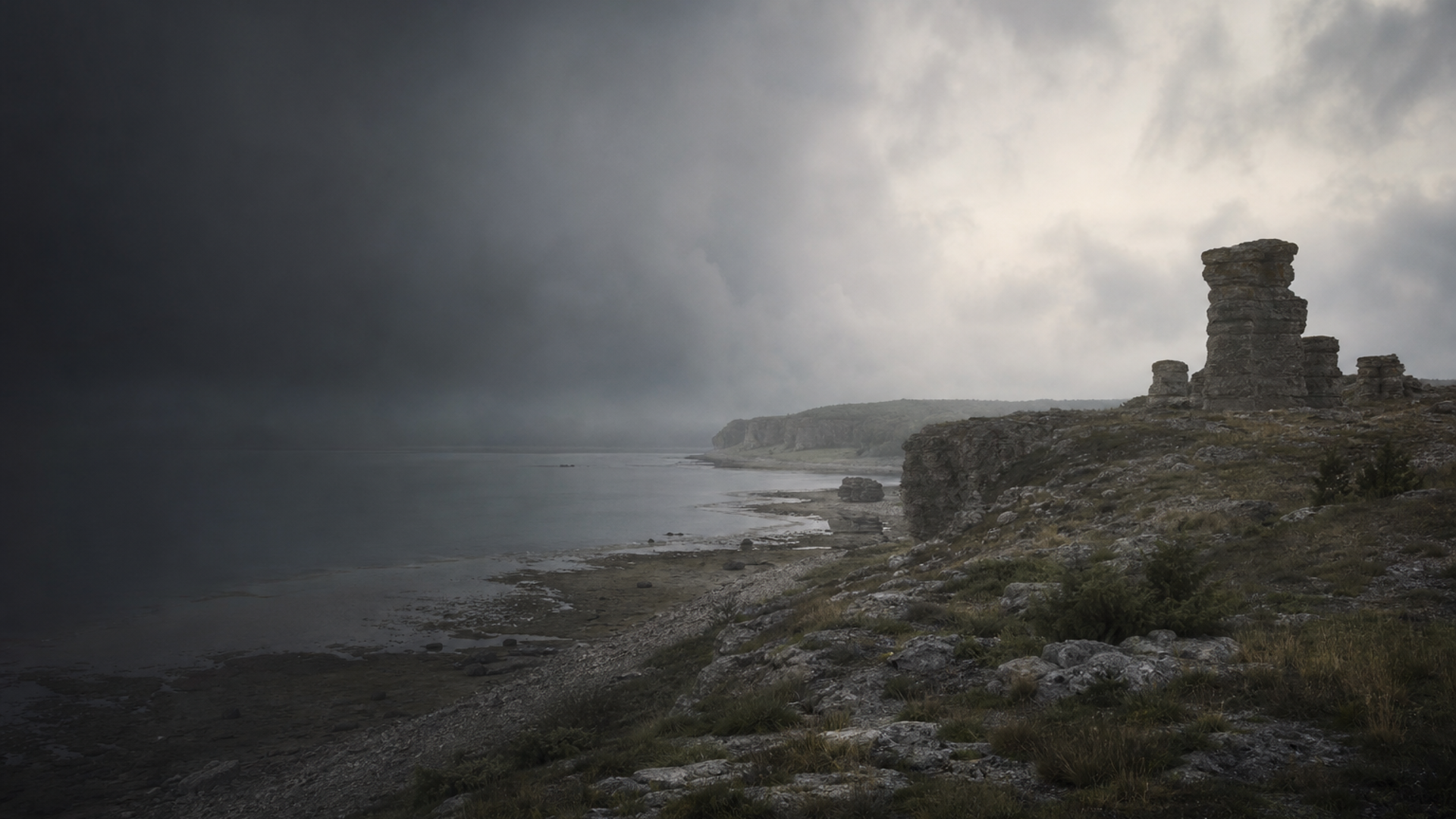
Along the windswept shores of Gotland—at Ajvide and Stora Karlsö—archaeological deposits record communities often grouped with the Pitted Ware tradition. Radiocarbon dates for the Sweden_PWC samples fall between c. 3100 and 2150 BCE, a span when maritime hunter‑gatherer lifeways persisted alongside expanding farming populations on the Scandinavian mainland. Archaeological data indicates specialized seal and fish exploitation, stone and bone toolkits, and characteristic pitted ceramics that give the culture its name.

Genetically, the available dataset is small (7 individuals) but informative: the male lineages are overwhelmingly haplogroup I, a marker frequently associated with long-term northern European hunter‑gatherer ancestry. Maternal lineages—dominated here by U4d, other U types, and a V—also track with northern Mesolithic and Neolithic forager groups. Limited evidence suggests these communities maintained a distinct biological profile from nearby farming groups (e.g., Funnelbeaker farmers) while also interacting with them culturally and economically.

Because the sample count is low, conclusions about population continuity, migration, and admixture remain provisional. Future sampling and broader genomic comparisons will refine whether Gotland Pitted Ware groups represent deep continuity of local forager populations, selective male-line continuity, or more complex demographic processes.

  • Dates: c. 3100–2150 BCE; sites: Ajvide, Stora Karlsö (Gotland)
  • Material culture: pitted ceramics, marine-focused toolkit
  • Caution: only 7 genetic samples—interpretations are preliminary
Chapter IV

Daily Life & Society

On rocky beaches and offshore skerries, daily life for Sweden_PWC communities was shaped by the sea. Hunting seals, fishing cod and flatfish, and exploiting seabird colonies created seasonal rhythms. Ajvide’s large shell middens and burial grounds preserve butchered bones, hearths, and personal ornaments—evidence of intensive coastal resource use and craft specialization. Lithic and bone tools found at Stora Karlsö and Ajvide display a continuity of flaked stone and polished bone implements suited to harpooning, processing hides, and marine hunting.

Social life likely wove ritual and subsistence together: graves at Ajvide contain grave goods and structured deposits suggesting social differentiation and collective memory. Pottery with distinctive pit impressions appears both utilitarian and symbolic, perhaps marking group identity in a seascape shared with neighboring farming communities. Interaction with inland farmers is visible archaeologically in exchange items and occasional shared practices, but coastal sites maintain a recognizable forager character.

Archaeological context supports a picture of mobile, maritime-adapted groups with seasonal aggregation sites, strong maritime technological traditions, and social networks anchored to the sea and shore.

  • Economy centered on seal, fish, and seabirds; shell middens at Ajvide
  • Distinctive pitted pottery and maritime toolkits indicate cultural identity
Chapter V

Genetic Profile

Ancient DNA from seven individuals attributed to Sweden_PWC (Gotland) reveals a striking pattern: six males belong to Y‑chromosome haplogroup I, while the mitochondrial markers are dominated by U4d (4 individuals), with two other U types and one V. These lineages are commonly associated with northern European hunter‑gatherer ancestries (WHG/EHG-related components) in wider ancient DNA studies.
The prevalence of haplogroup I in males suggests male-line continuity with pre‑farm forager populations or strong patrilineal transmission within these communities. Mitochondrial U‑lineages likewise point to maternal descent from long‑standing northern forager pools. Together, the uniparental markers support a demographic scenario where maritime forager ancestry remained biologically significant on Gotland during the Late Neolithic–Early Bronze Age transition.

However, the dataset is small (<10 samples), so broader genomic inferences (e.g., proportions of farmer vs. hunter‑gatherer autosomal ancestry, or admixture timing) remain tentative. Archaeological contrasts with nearby Funnelbeaker and later Bronze Age communities suggest cultural contact; genomic analyses with larger sample sizes would be required to quantify gene flow and the extent to which cultural exchange translated into biological admixture.

  • High frequency of Y‑haplogroup I suggests male continuity from northern foragers
  • mtDNA dominated by U4d and U types, consistent with WHG/EHG-related maternal ancestry
Chapter VI

Legacy & Modern Connections

The Pitted Ware communities of Gotland leave a vivid archaeological legacy: shell middens, clustered cemeteries at Ajvide, and pottery impressions that speak of seascapes central to identity. Genetically, the Sweden_PWC profile—marked by haplogroup I and U‑lineages—adds to a broader pattern in northern Europe where Mesolithic and Neolithic forager ancestries persisted alongside incoming farmers. These threads contribute to the genetic tapestry of contemporary Scandinavians, although the small sample size means direct lines of descent should be proposed cautiously.

Modern interest in coastal lifeways, maritime technology, and regional identity finds deep roots in sites like Ajvide and Stora Karlsö. Continued ancient DNA sampling across Sweden and the Baltic will clarify how much of this Pitted Ware signal survives in later populations and how it interwove with farming and steppe-derived ancestries in the millennia that followed.

  • Archaeological features (Ajvide middens, graves) remain key evidence of maritime lifeways
  • Genetic signal suggests persistence of northern forager ancestry but requires more data
AI 电源

AI 助手

就 Gotland's Maritime Foragers 文化提问

AI 助手 由DNAGENICS公司制作

解锁此特性
Ask questions about the Gotland's Maritime Foragers culture. Our AI assistant can explain genetic findings, historical context, archaeological evidence, and modern connections.
AI 样本分析

Gotland's Maritime Foragers 文化是人类历史中值得了解的一章……

遗传分析揭示了与早期种群的联系,同时显示了独特的适应和文化创新的证据。 古代DNA样本提供了对迁徙模式、社会结构以及古代种群之间的生物关系的深刻见解。

这是人工智能分析的预览。 解锁全AI 助手, 以探索关于:

  • 遗传组成和祖先
  • 移徙模式和起源
  • 日常生活和文化习俗
  • 现代遗传遗产

探索更古老的文化

揭开古代世界文明的故事

使用优惠码 可减免 35% • 11月12日 到期




