Krusza Zamkowa: Late Lengyel Echoes

下载的 PDF 是图像副本。如需可选中文本及更好的辅助技术支持,请使用打印功能。

跳转到主内容
文明焦点

Krusza Zamkowa: Late Lengyel Echoes

Three Neolithic voices from Krusza Zamkowa bridge pottery, place and ancient DNA

4333 CE - 3993 BCE
Kuyavian-Pomeranian, Poland

剧情

Archaeological and genetic data from three burials at Krusza Zamkowa (4333–3993 BCE) reveal Late Lengyel cultural practices in central Poland. Limited ancient DNA (n=3) shows mtDNA lineages K and U, hinting at farmer–forager interaction; conclusions remain preliminary.

Time Period

4333–3993 BCE

Region

Kuyavian-Pomeranian, Poland

Common Y-DNA

Not reported / no data

Common mtDNA

K (1), K1 (1), U (1)

时间线

4333 BCE

Earliest radiocarbon date at Krusza Zamkowa

Radiocarbon evidence places human remains at Krusza Zamkowa-3 around 4333–3993 BCE, within the Late Lengyel horizon.

Origins & Emergence

The Krusza Zamkowa assemblage sits at the waning edge of Neolithic agricultural expansion in north-central Poland. Radiocarbon dates from three individuals cluster between 4333 and 3993 BCE, placing these remains in the Late Lengyel horizon — a time when Linearbandkeramik (LBK) traditions and later Lengyel expressions interwove across Central Europe. Archaeological data indicates pottery with complex painted and incised motifs, local variations on longhouse settlement plans, and burial practices that reflect both local customs and wider continental connections.

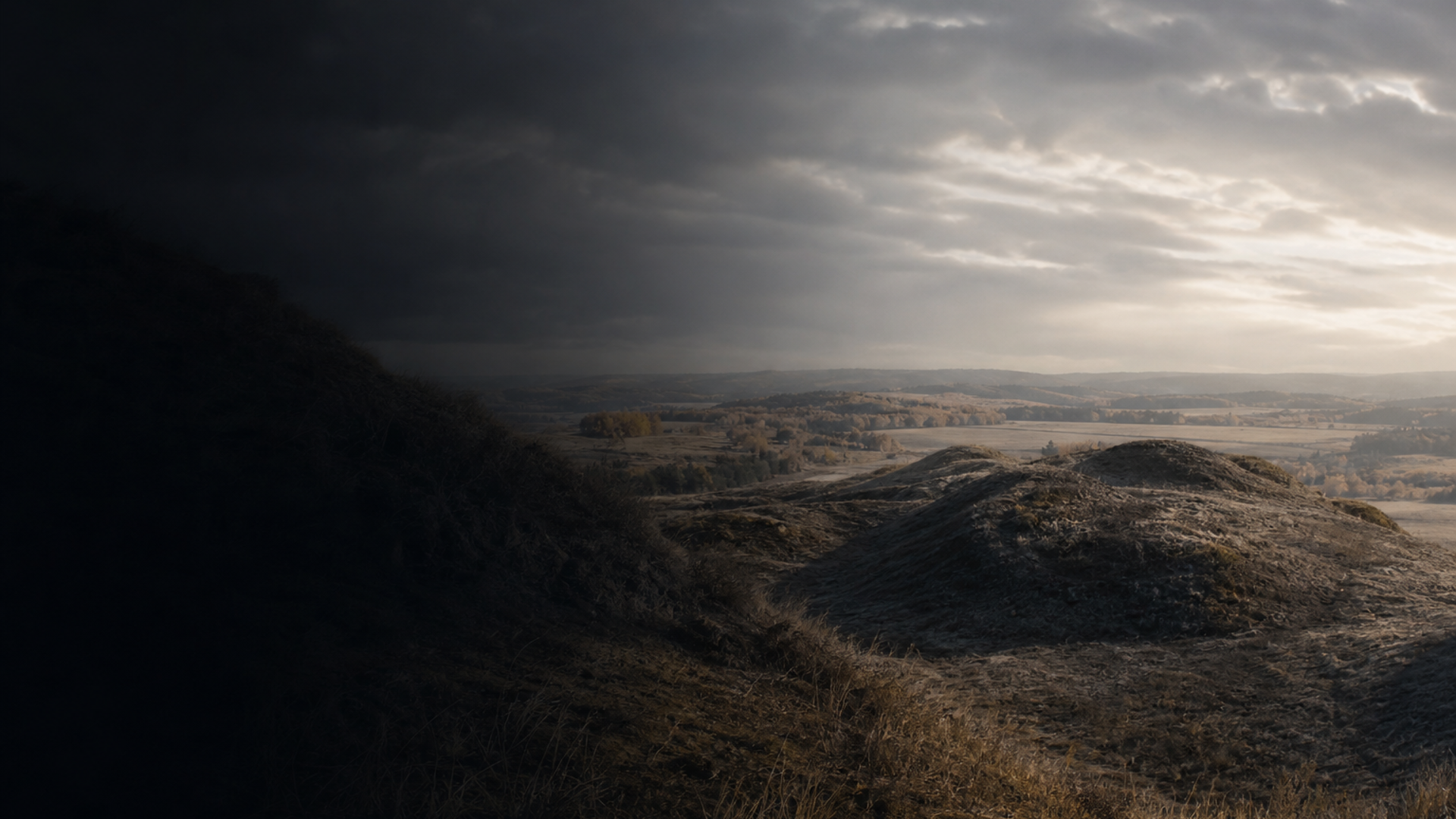
Cinematic landscapes — river valleys cut through loess plains, fields punctuated by timber-built houses — frame how communities lived and moved. Limited excavation at Krusza Zamkowa-3 (Kuyavian-Pomeranian Province, Inowrocław) reveals a snapshot rather than a full panorama: the material culture hints at exchange networks and evolving social roles, while the few human remains provide direct biological links to those networks. Where material culture alone can be ambiguous, ancient DNA begins to illuminate ancestry and contact, though with only three samples the genetic picture is necessarily tentative.

  • Radiocarbon-dated to 4333–3993 BCE, Late Lengyel context
  • Site: Krusza Zamkowa-3, Kuyavian-Pomeranian Province (Inowrocław)
  • Archaeological indicators of LBK-to-Lengyel cultural continuity and interaction

Daily Life & Society

Archaeological remains from Lengyel contexts in this region point to an agricultural economy of domesticated wheat, barley, cattle and sheep, worked through by seasonal rhythms. Houses — elongated timber structures known from related sites — sheltered extended households, while pottery vessels stored, processed and served food that anchored communal life. Tools of stone, bone and polished flint survive as echoes of daily tasks: cereal harvesting, hide working and woodworking.

Burial practices recorded at Krusza Zamkowa and comparable Lengyel cemeteries suggest a society attentive to social identity: grave goods and body positions vary, implying distinctions in age, sex or status. The landscape itself was lived-in and remade: field systems, trackways and ephemeral enclosures left faint traces in the soil. Taken together, the material culture evokes an intimate world where crafted objects, cultivated fields and kinship bound people to place.

  • Mixed economy of agriculture and animal husbandry
  • Households likely organized in elongated timber longhouses; craft and domestic tools prevalent

Genetic Profile

Three individuals from Krusza Zamkowa-3 yielded mitochondrial haplogroups K (two instances, one K1) and U (one instance). MtDNA K is frequently associated with Neolithic farming populations across Europe and Anatolia-derived gene flow, while mtDNA U often traces deeper European hunter-gatherer ancestry. The coexistence of K and U in this tiny assemblage is consistent with archaeological evidence for interaction and admixture between incoming farmers and local foragers in late Neolithic Central Europe.
No consistent Y-chromosome signal is reported for these samples, so paternal lineages remain unknown. Crucially, sample count is very small (n=3): any demographic inference is preliminary. Archaeogenetic interpretation must therefore emphasize uncertainty — these three mitochondria are individual snapshots, not population statements. Broader sampling from Krusza Zamkowa and neighbouring Lengyel and LBK sites would be required to test hypotheses about sex-biased admixture, continuity of maternal lineages, or the pace of genetic change during the Late Neolithic.

  • mtDNA: K (1), K1 (1), U (1) — suggests farmer and hunter‑gatherer maternal lineages
  • Y-DNA: not reported; small sample size (n=3) makes conclusions preliminary

Legacy & Modern Connections

The genetic signatures found at Krusza Zamkowa — especially mitochondrial haplogroup K — are part of lineages that persist in modern European populations, offering a molecular thread from Neolithic households to present-day communities. Archaeologically, pottery styles and settlement patterns contribute to a cultural legacy observable in later Bronze Age and Iron Age developments across Central Europe.

However, the small number of ancient genomes from Krusza Zamkowa cautions against direct ancestry narratives. Instead, these remains act as evocative waypoints: they demonstrate how material culture and DNA together can transform isolated finds into stories of contact, movement and enduring biological connections. Continued excavation and targeted ancient DNA sampling are needed to expand this bridge between past and present.

  • MtDNA lineages like K and U continue in modern Europe, linking past maternal ancestries to present-day populations
  • Current conclusions are tentative; greater sampling will clarify demographic and cultural continuities

AI 助手

AI 助手 由DNAGENICS公司制作

解锁此特性
Ask questions about the Krusza Zamkowa: Late Lengyel Echoes culture. Our AI assistant can explain genetic findings, historical context, archaeological evidence, and modern connections.
AI 样本分析

Krusza Zamkowa: Late Lengyel Echoes 文化是人类历史中值得了解的一章……

遗传分析揭示了与早期种群的联系,同时显示了独特的适应和文化创新的证据。 古代DNA样本提供了对迁徙模式、社会结构以及古代种群之间的生物关系的深刻见解。

这是人工智能分析的预览。 解锁全AI 助手, 以探索关于:

  • 遗传组成和祖先
  • 移徙模式和起源
  • 日常生活和文化习俗
  • 现代遗传遗产
使用优惠码 可减免 30% • 11月14日 到期




