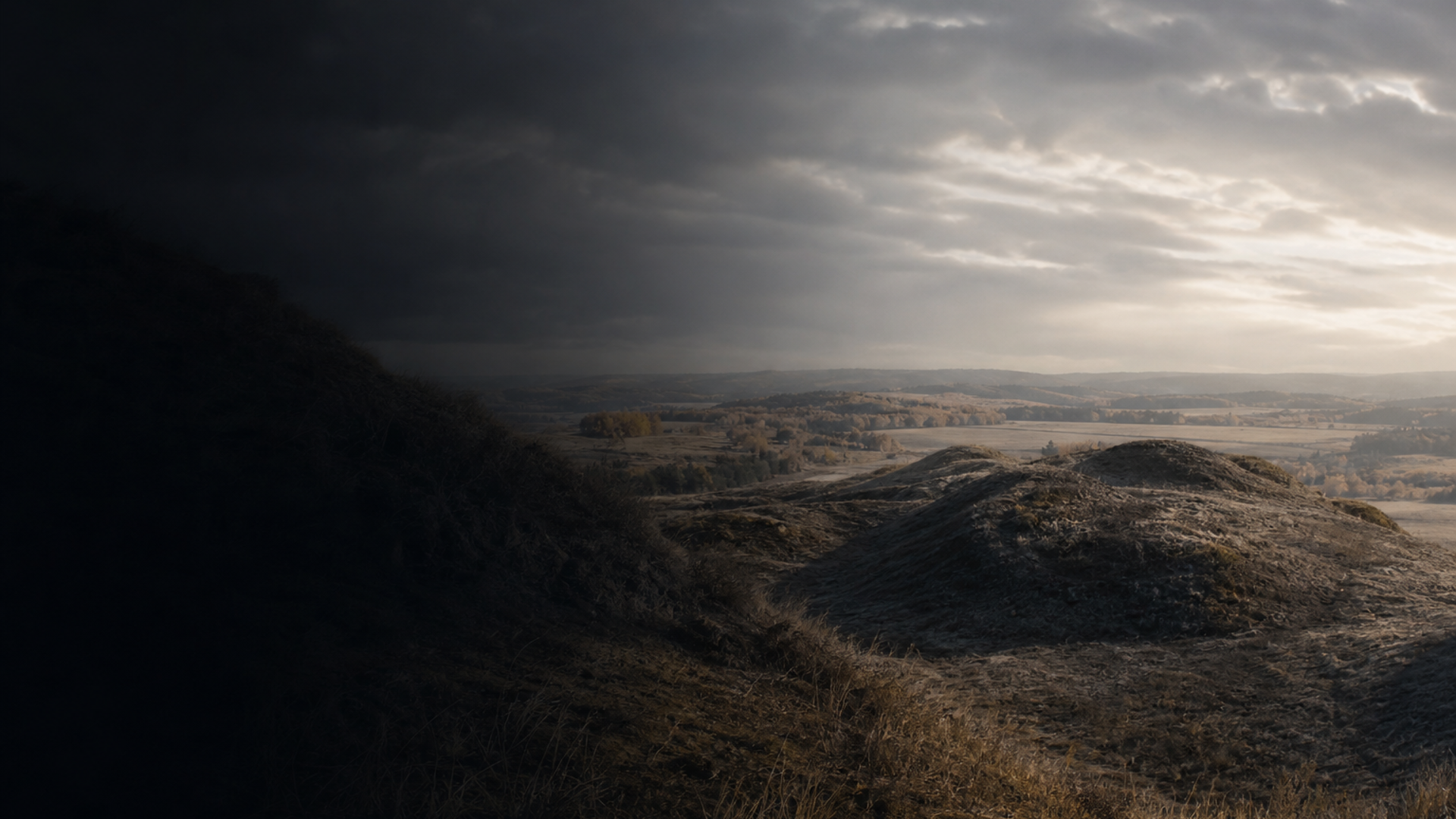
Archaeological remains from Lengyel contexts in this region point to an agricultural economy of domesticated wheat, barley, cattle and sheep, worked through by seasonal rhythms. Houses — elongated timber structures known from related sites — sheltered extended households, while pottery vessels stored, processed and served food that anchored communal life. Tools of stone, bone and polished flint survive as echoes of daily tasks: cereal harvesting, hide working and woodworking.
Burial practices recorded at Krusza Zamkowa and comparable Lengyel cemeteries suggest a society attentive to social identity: grave goods and body positions vary, implying distinctions in age, sex or status. The landscape itself was lived-in and remade: field systems, trackways and ephemeral enclosures left faint traces in the soil. Taken together, the material culture evokes an intimate world where crafted objects, cultivated fields and kinship bound people to place.