Pre-Thracian Chalcolithic Echoes

下载的 PDF 是图像副本。如需可选中文本及更好的辅助技术支持,请使用打印功能。

Pre-Thracian Chalcolithic Echoes

揭开一个失落的文明

正在加载考古记录……

正在收集古代记录

跳转到主内容
Pre-Thracian Chalcolithic Echoes
文明焦点

Pre-Thracian Chalcolithic Echoes

A portrait of southeastern European communities between 5200–3100 BCE, seen through graves, gold, and genomes.

5204 CE - 3100 BCE
Bulgaria, Romania, Moldova
4 Ancient Samples
滚动开始
Chapter I

剧情

了解 Pre-Thracian Chalcolithic Echoes 文化

Archaeological and genetic data from 52 Chalcolithic individuals across Bulgaria, Romania, and Moldova reveal a mosaic of Neolithic farming continuity, local social complexity (notably Varna), and intriguing low-frequency paternal lineages. Findings are preliminary for several rare haplogroups.

Time Period

5204–3100 BCE

Region

Bulgaria, Romania, Moldova

Common Y-DNA

L (8), V88 (5), PF (3), M (2), FGC (2)

Common mtDNA

H (10), K (9), U (7), T (3), HV+ (2)

Chapter II

时间线

这种文化历史上的关键时刻

4500 BCE

Peak Varna funerary wealth

Richly furnished graves at Varna mark pronounced social inequality and extensive craft specialization in the mid‑5th millennium BCE.

Chapter III

Origins & Emergence

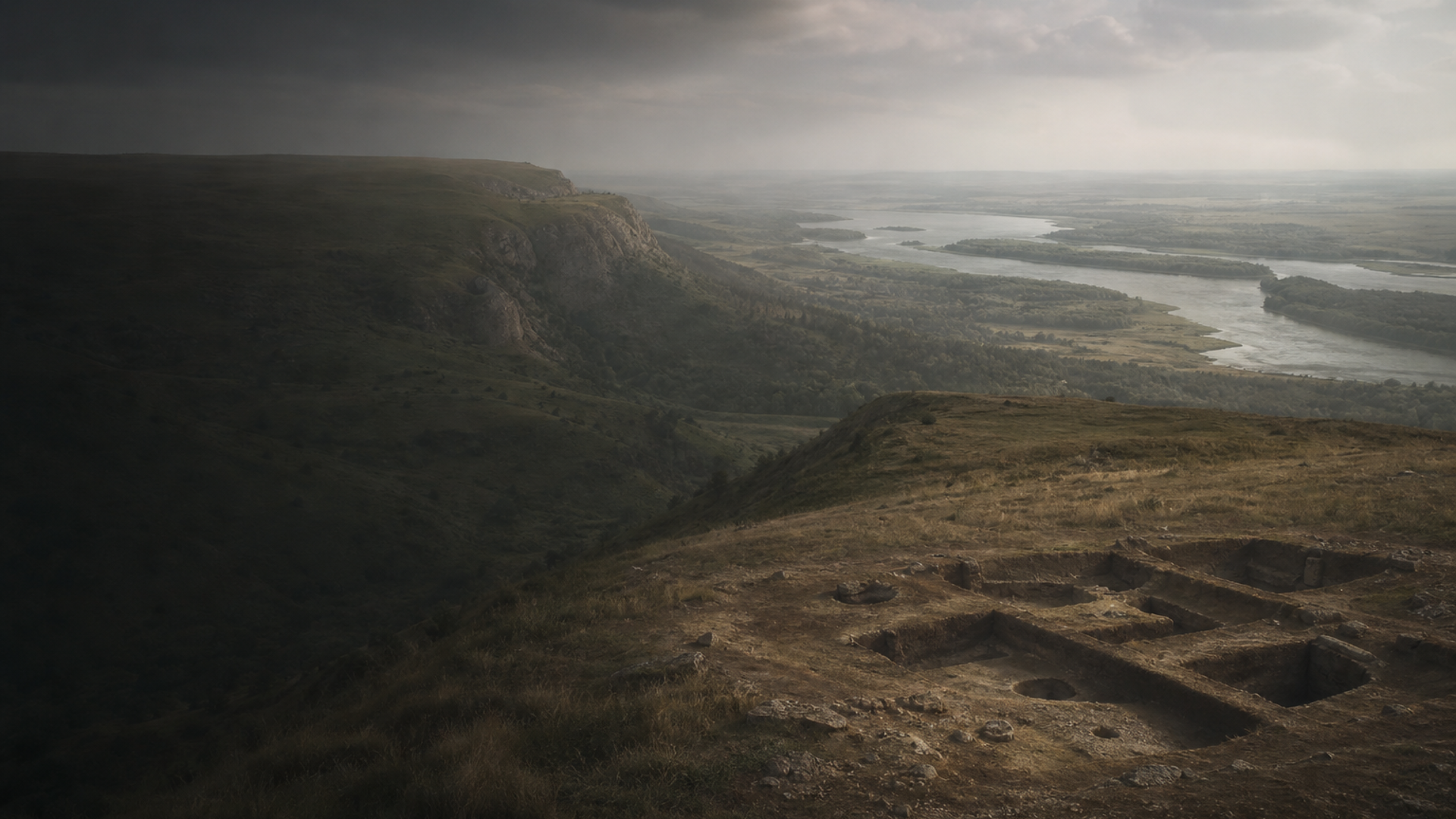
Across the rolling plains and river valleys of present-day Bulgaria, Romania and Moldova the archaeological record records a slow crescendo from Neolithic village life to Chalcolithic complexity. The chronological span represented by these 52 samples (5204–3100 BCE) captures sites associated with the Varna Complex (Varna, Petko Karavelovo), Gumelnița–Karanovo horizons (Yunatsite), and regional variants such as Boian and Gordinești.

Archaeological data indicates durable continuity of farming lifeways introduced earlier in the Neolithic, combined with increasing craft specialization: metallurgy and high-status burial practices appear particularly pronounced at Varna. Material links between Căscioarele, Sultana Valea (Călărași), Curătești, and Gordinești I suggest dense networks of exchange along rivers and coastal routes.

Limited evidence suggests that some social innovations emerged locally from long-standing farming communities rather than from sudden mass migrations; however, the incoming influences and contacts across the northern Black Sea and Aegean shores are visible in exotic materials and stylistic borrowings. The pace of change varies by site — e.g., the tell at Yunatsite shows occupational depth and transformation, whereas the Varna cemetery reflects striking ritual and social differentiation within the Chalcolithic timeframe.

  • Continuity of Neolithic farming lifeways across the region
  • Varna demonstrates marked social inequality and craft specialization
  • Site clusters imply riverine and coastal exchange networks
Chapter IV

Daily Life & Society

Life in Pre-Thracian Chalcolithic communities combined household agriculture with emerging craft production. Excavations at Yunatsite and Petko Karavelovo reveal houses built in dense compounds, storage pits, and evidence for cereals, pulses, and livestock management. Pottery—often burnished and decorated—served both domestic and ritual roles.

The Varna cemetery (Varna, province Varna) provides a cinematic counterpoint: richly furnished graves with hammered gold, copper tools, and shells imply ranked society and long-distance value systems. Yet most people left simpler burials or settlement traces: everyday life was shaped by seasonal rhythms, craft specialists (potters, lithic and early copper workers), and exchange across the Danube and Black Sea littoral.

Settlement archaeology at Căscioarele and Curătești shows continuity of house plans alongside innovations such as storage architecture and workshop areas. Mortuary variability—some communal graves, some individual richly furnished burials—suggests flexible social identities and possibly inherited status for a minority. Archaeobotanical and zooarchaeological remains indicate a mixed subsistence base with growing reliance on secondary animal products and cultivated staples.

  • Mixed farming, herding, and early craft specialization
  • Varna burials indicate pronounced social differentiation alongside ordinary village life
Chapter V

Genetic Profile

The genetic dataset of 52 individuals from Curătești, Căscioarele, Sultana Valea, Gordinești I, Petko Karavelovo, Varna, and Yunatsite provides a window into maternal and paternal diversity in the Chalcolithic lower Danube corridor. Mitochondrial haplogroups are dominated by H (10), K (9), and U (7), which is consistent with broad Neolithic farmer-related maternal ancestry in Europe combined with some persistence of hunter-gatherer–associated lineages (U). This maternal pattern aligns with archaeological indications of farming continuity.

On the paternal side, the apparent predominance of haplogroups labeled here as L (8) and V88 (5) is unexpected for Chalcolithic southeastern Europe and merits cautious interpretation. Low counts for several Y-chromosome lineages (PF: 3, M: 2, FGC: 2) mean conclusions about their population-wide importance are preliminary. Limited evidence suggests these rarer paternal signatures could reflect small-scale male-line contacts across the Mediterranean or Black Sea, survival of rare local lineages, or sampling variance; they do not necessarily indicate broad migrations.

Autosomal profiles from regional Chalcolithic contexts elsewhere typically show dominant Anatolian farmer ancestry with variable indigenous hunter-gatherer admixture and little steppe-related ancestry before ~3000 BCE. In this dataset, the overall pattern is compatible with farmer-derived genetic continuity, punctuated by low-frequency paternal diversity that requires more samples and higher-resolution analysis to interpret robustly.

  • mtDNA dominated by H, K, U—consistent with Neolithic farmer continuity
  • Unusual low-frequency Y lineages (L, V88) are intriguing but preliminary
Chapter VI

Legacy & Modern Connections

The archaeological splendor of sites like Varna left a deep cultural imprint: goldsmithing traditions, social inequality visible in burial rites, and long-distance exchange networks anticipated later Bronze Age developments in the Balkans. Genetically, the regional signal of Neolithic farmer ancestry—visible in maternal lineages here—contributes to the deep genetic substratum of modern southeastern European populations.

However, continuity is not identity. Subsequent millennia brought Bronze Age migrations, Iron Age movements, and historic era population dynamics that reshaped genomic landscapes. Thus, while some modern groups in Bulgaria, Romania and Moldova may carry traces of these Chalcolithic ancestors, direct one-to-one cultural or genetic descent is complex and layered. Ongoing ancient DNA sampling and improved chronological coverage will refine how these prehistoric communities contributed to the genetic and cultural tapestry of the Balkans.
  • Varna's material culture influenced later regional craft and status display
  • Genetic continuity exists but was modified by later migrations; links are complex
Chapter VII

样本目录

4 份与 Pre-Thracian Chalcolithic Echoes 文化相关的古 DNA 样本,为研究该时期的人群提供遗传线索。

4 / 4 samples
纵向 样本 国家 大纪元 日期 文化 性别 Y-DNA mtDNA
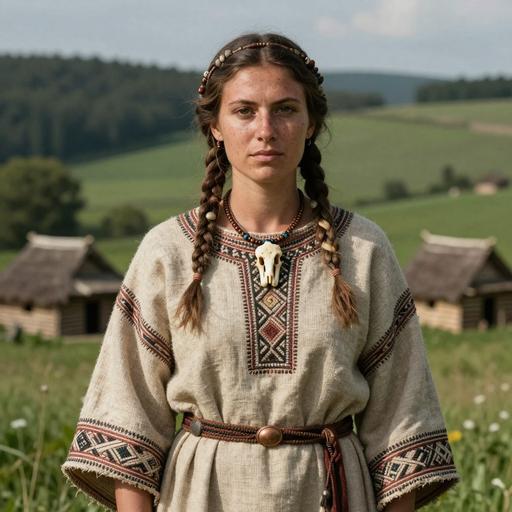
重建的肖像画 N Boian individual, Romania
N Boian individual, Romania
Romania Romania_Curatesti_Boian_LN_Eneolithic 4931-4726 calBCE (5950±30 BP, Beta-440973) Pre-Thracian F - H
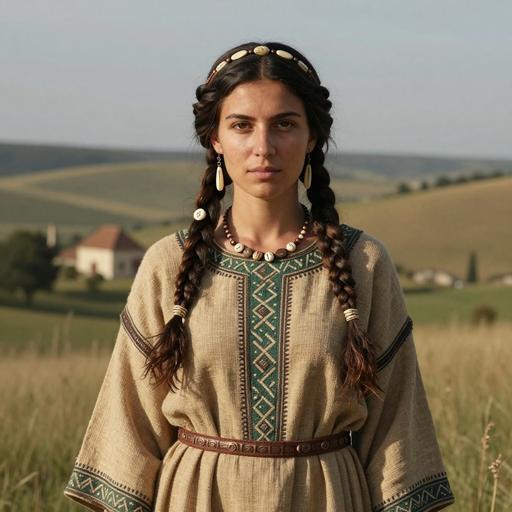
重建的肖像画 N Boian individual, Romania
N Boian individual, Romania
Romania Romania_Curatesti_Boian_LN_Eneolithic 4984-4784 calBCE (5980±30 BP, Beta-440974) Pre-Thracian F - K1a+195
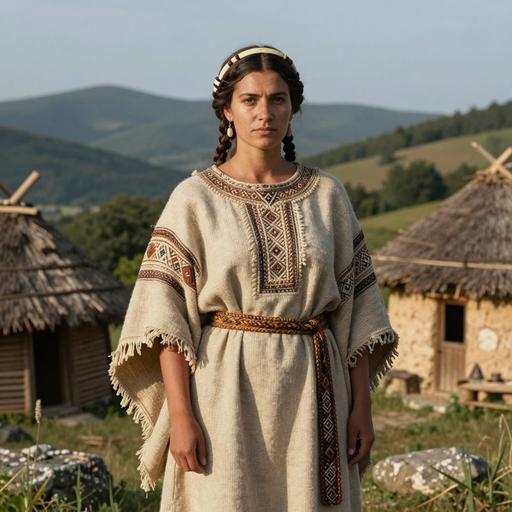
重建的肖像画 N Boian individual, Romania
N Boian individual, Romania
Romania Romania_Curatesti_Boian_LN_Eneolithic 4984-4784 calBCE (5980±30 BP, Beta-430663) Pre-Thracian F - K1a+195
重建的肖像画 N Boian individual, Romania
N Boian individual, Romania
Romania Romania_Curatesti_Boian_LN_Eneolithic 4938-4728 calBCE (5960±30 BP, Beta-440977) Pre-Thracian M G-L140 K1a+195
AI 电源

AI 助手

就 Pre-Thracian Chalcolithic Echoes 文化提问

AI 助手 由DNAGENICS公司制作

解锁此特性
Ask questions about the Pre-Thracian Chalcolithic Echoes culture. Our AI assistant can explain genetic findings, historical context, archaeological evidence, and modern connections.
AI 样本分析

Pre-Thracian Chalcolithic Echoes 文化是人类历史中值得了解的一章……

遗传分析揭示了与早期种群的联系,同时显示了独特的适应和文化创新的证据。 古代DNA样本提供了对迁徙模式、社会结构以及古代种群之间的生物关系的深刻见解。

这是人工智能分析的预览。 解锁全AI 助手, 以探索关于:

  • 遗传组成和祖先
  • 移徙模式和起源
  • 日常生活和文化习俗
  • 现代遗传遗产

探索更古老的文化

揭开古代世界文明的故事

使用优惠码 可减免 35% • 11月12日 到期