Sea‑Rim Foragers of Hummervikholmen

下载的 PDF 是图像副本。如需可选中文本及更好的辅助技术支持,请使用打印功能。

Sea‑Rim Foragers of Hummervikholmen

揭开一个失落的文明

正在加载考古记录……

正在收集古代记录

跳转到主内容
Sea‑Rim Foragers of Hummervikholmen
文明焦点

Sea‑Rim Foragers of Hummervikholmen

Early Mesolithic coastal foragers from southern Norway, revealed by archaeology and ancient DNA

7589 CE - 7325 BCE
Southern Norway (Agder, Søgne)
滚动开始
Chapter I

剧情

了解 Sea‑Rim Foragers of Hummervikholmen 文化

Mesolithic individuals from Hummervikholmen (Agder, Søgne), dated 7589–7325 BCE, offer a glimpse of Norway's postglacial coastal foragers. Limited archaeological and genomic evidence (3 samples) links them to broader Scandinavian hunter‑gatherer ancestry and highlights paternal haplogroup I and maternal U lineages.

Time Period

7589–7325 BCE

Region

Southern Norway (Agder, Søgne)

Common Y-DNA

I (2 of 3 samples)

Common mtDNA

U (2), U4 (1)

Chapter II

时间线

这种文化历史上的关键时刻

7589 BCE

Earliest dated individual from Hummervikholmen

Radiocarbon evidence places human remains at Hummervikholmen to ca. 7589 BCE, marking Early Mesolithic coastal occupation in southern Norway.

Chapter III

Origins & Emergence

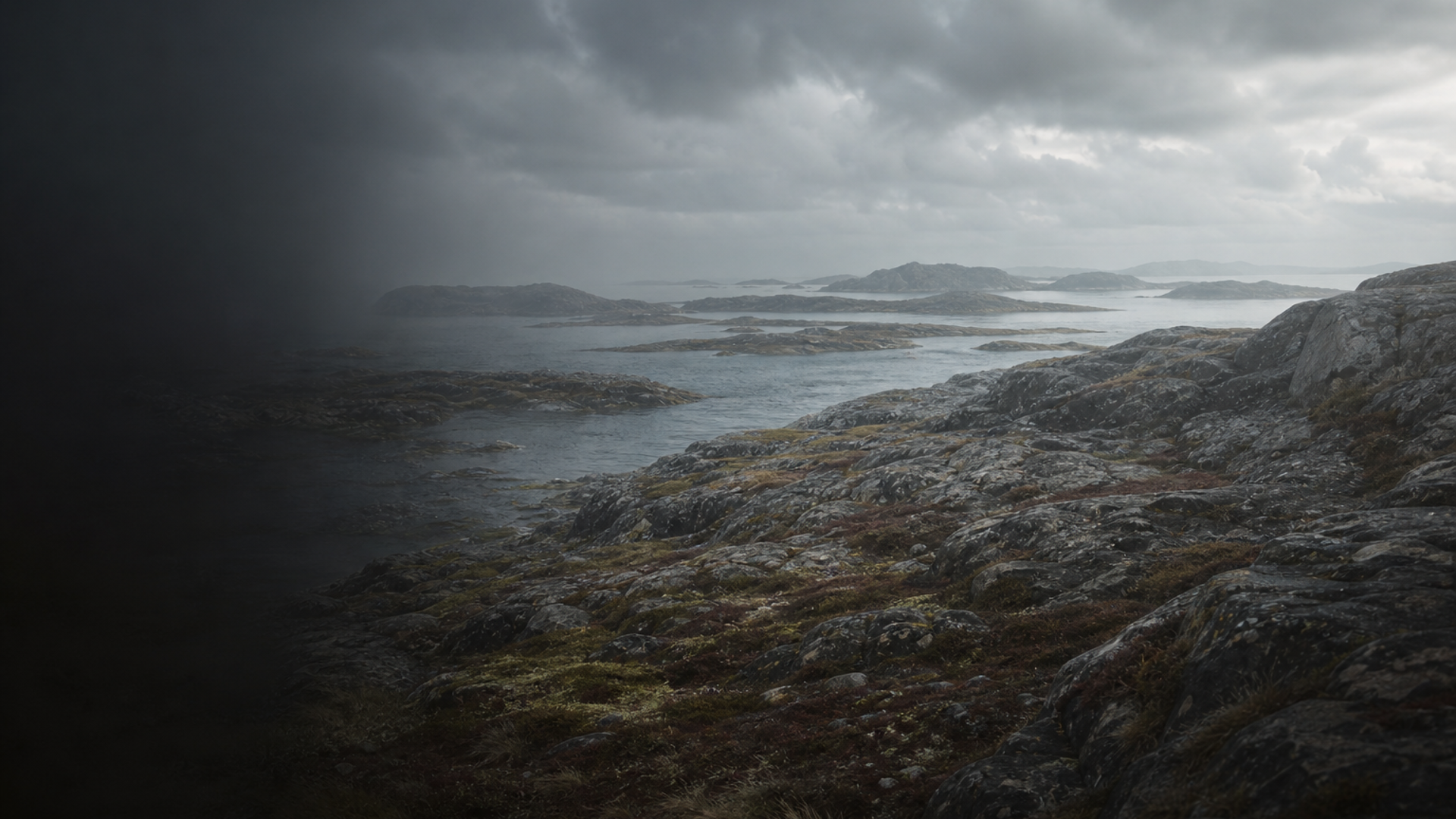
Along the drowned shores of southern Norway, the tiny island site of Hummervikholmen preserves traces of people who walked newly exposed coastline after the last Ice Age. Radiocarbon dates from human remains place activity between about 7589 and 7325 BCE, a century in which rising seas and rebounding landscapes redrew the edge of habitable land. Archaeological data indicates these were maritime foragers exploiting rich fjord and shelf environments; submerged finds at Hummervikholmen speak to a coastline now lost beneath the waves.

Limited evidence suggests these individuals belonged to the wider ensemble of Scandinavian hunter‑gatherers who occupied northern Europe in the Early Mesolithic. The material imprint is fragmentary: human bone recovered from peat and marine sediments, few preserved organic artifacts, and scant intact settlement deposits. Nonetheless, the context at Hummervikholmen—its coastal position near Søgne in Agder—shows how groups tracked shifting resources as sea levels rose and habitats transformed.

Cinematic in their setting yet careful in interpretation, these origins point to small mobile bands adapting to a rapidly changing postglacial world. With only three genome samples available, archaeological and genetic inferences are necessarily provisional; they nevertheless connect Hummervikholmen to broader processes of recolonization and coastal specialization along Norway's shores.

  • Site: Hummervikholmen (Søgne, Agder), submerged coastal context
  • Dates: ca. 7589–7325 BCE (Early Mesolithic)
  • Small, mobile foraging groups adapting to rapid sea‑level changes
Chapter IV

Daily Life & Society

Archaeological evidence paints a picture of daily life organized around the sea and the margins where forest met fjord. Coastal foragers likely focused on fish, shellfish, seabirds, and marine mammals, supplemented by inland hunting and seasonal plant resources. The landscape was a mosaic of rocky skerries, sheltered bays, and newly emerging coastal plains—an environment that rewarded mobility, intimate knowledge of tides, and seasonal scheduling.

Social groups were probably small and flexible. Ethnographic analogies and stone‑tool distributions suggest networks of exchange and intermittent aggregation at rich resource patches. Material culture at many Mesolithic Norwegian sites emphasizes flaked stone tools, organic implements (often poorly preserved in submerged contexts), and occasional bone or antler artefacts. Hummervikholmen itself offers sparse but telling traces: human remains found within marine sediments that imply shoreline burial or loss to rising waters.

Daily life was shaped by unpredictability—storms, sea‑level rise, and shifting fish runs—so resilience likely depended on diverse foraging strategies and social ties spanning coastal and inland landscapes. Archaeological data indicates a people deeply attuned to the sea, moving with its seasons and rhythms rather than imposing fixed settlement patterns.

  • Economy centered on marine resources and seasonal mobility
  • Small social groups with exchange networks and flexible camps
Chapter V

Genetic Profile

Ancient DNA from three individuals at Hummervikholmen provides a slender but valuable genetic window into Norway's earliest postglacial inhabitants. Two of the three male samples carry Y‑DNA haplogroup I, a lineage widely documented among Mesolithic European hunter‑gatherers. On the maternal side, mitochondrial haplogroups in the assemblage include U (two individuals) and specifically U4 (one individual) — lineages characteristic of Upper Paleolithic and Mesolithic populations across northern and central Europe.

Genomic affinities are consistent with placement within the broader Scandinavian hunter‑gatherer (SHG) constellation: a genetic profile formed by admixture between Western Hunter‑Gatherer (WHG) and Eastern Hunter‑Gatherer (EHG) ancestries in earlier millennia. Archaeogenetic patterns suggest these coastal Norwegians shared ancestry with contemporaneous groups along the Scandinavian coast, reflecting migrations and local continuity following deglaciation.

Important caveats apply. With only three samples, statistical resolution is limited; patterns such as the predominance of Y‑haplogroup I or the presence of mtDNA U may reflect local founder effects or chance. Archaeological context, radiocarbon dating, and comparisons with larger regional datasets are essential to place these genomes within longer‑term demographic trends. Still, the concordance between typical Mesolithic haplogroups and Hummervikholmen's archaeological setting strengthens the interpretation of these individuals as part of northern Europe's maritime hunter‑gatherer mosaic.

  • Y‑DNA: Haplogroup I in 2 of 3 samples — common in European Mesolithic males
  • mtDNA: U (2), including U4 (1) — typical Mesolithic maternal lineages
Chapter VI

Legacy & Modern Connections

Hummervikholmen's whispering bones link modern Norway to a dramatic postglacial past. Genetic signals typical of Mesolithic northern Europe—Y‑haplogroup I and mtDNA U lineages—appear in later populations, suggesting threads of continuity amid waves of migration and cultural change. Coastal lifeways pioneered by these early foragers set long‑lasting economic and social templates for adaptation to northern seascapes.

Yet continuity is complex. Subsequent Neolithic farming expansions and later Bronze and Iron Age transformations reshaped genetic and cultural landscapes. The Hummervikholmen genomes are a snapshot of one adaptive strategy at a particular time and place. For modern descendants, these ancestral signatures are part of a layered heritage that includes Mesolithic foragers, incoming farmers, and later northern European populations. Ongoing ancient DNA sampling across Norway will refine how much of this Mesolithic legacy persisted locally versus being diluted or absorbed by later demographic events.
  • Contributes to understanding of long‑term northern European genetic heritage
  • Highlights coastal adaptations that influence later regional cultures
AI 电源

AI 助手

就 Sea‑Rim Foragers of Hummervikholmen 文化提问

AI 助手 由DNAGENICS公司制作

解锁此特性
Ask questions about the Sea‑Rim Foragers of Hummervikholmen culture. Our AI assistant can explain genetic findings, historical context, archaeological evidence, and modern connections.

AI 样本分析

Sea‑Rim Foragers of Hummervikholmen 文化是人类历史中值得了解的一章……

遗传分析揭示了与早期种群的联系,同时显示了独特的适应和文化创新的证据。 古代DNA样本提供了对迁徙模式、社会结构以及古代种群之间的生物关系的深刻见解。

这是人工智能分析的预览。 解锁全AI 助手, 以探索关于:

  • 遗传组成和祖先
  • 移徙模式和起源
  • 日常生活和文化习俗
  • 现代遗传遗产

探索更古老的文化

揭开古代世界文明的故事

使用优惠码 可减免 35% • 11月12日 到期




