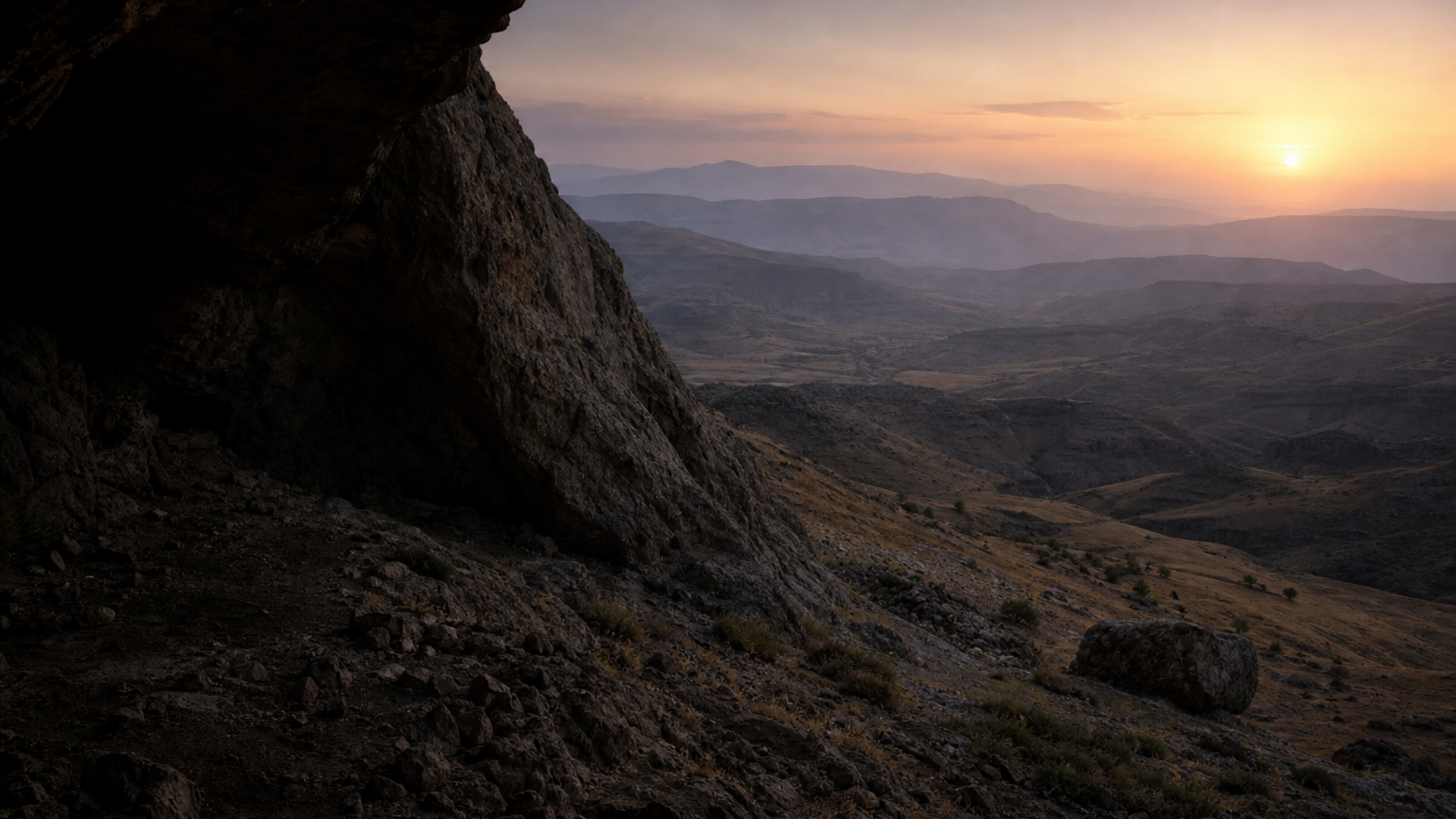
Shanidar Dawn

下载的 PDF 是图像副本。如需可选中文本及更好的辅助技术支持,请使用打印功能。

Shanidar Dawn

揭开一个失落的文明

正在加载考古记录……

正在收集古代记录

跳转到主内容
Shanidar Dawn
文明焦点

Shanidar Dawn

Early Holocene voices from Shanidar Cave, Iraq — fragile threads of ancestry

8456 CE - 7956 BCE
Shanidar (Kurdistan), Iraq
滚动开始
Chapter I

剧情

了解 Shanidar Dawn 文化

Human remains from Shanidar (8456–7956 BCE) reveal early Holocene lifeways in the Zagros foothills. Limited genetic data (3 samples) show diverse maternal lineages (J1d, N, H); Y-DNA is not reported. Archaeology and DNA together hint at complex postglacial population dynamics.

Time Period

c. 8456–7956 BCE

Region

Shanidar (Kurdistan), Iraq

Common Y-DNA

Not reported / unknown

Common mtDNA

J1d (1), N (1), H (1)

Chapter II

时间线

这种文化历史上的关键时刻

8456 BCE

Earliest sampled burial at Shanidar

One of the earliest genetic samples from Shanidar dates to c. 8456 BCE, marking early Holocene human presence in the Zagros foothills (preliminary evidence).

Chapter III

Origins & Emergence

Shanidar Cave sits like a throat in the Zagros, where winds and rivers have funneled people, animals and ideas since the last glacial retreat. Archaeological data indicates human use of the site spans deep time; the present samples date to the early Holocene (c. 8456–7956 BCE), a period of climatic amelioration and ecological expansion. In this interval hunter‑gatherer groups recalibrated mobility, resource use and social networks as forests and grasslands shifted across Mesopotamia and the Zagros foothills. The skeletal material and associated tools from Shanidar reflect intermittent occupation, seasonal camps and ritualized behaviors recorded in the cave’s stratigraphy.

Limited evidence suggests these individuals belonged to local postglacial foraging communities that exploited upland and riverine ecotones. The archaeological record at Shanidar — lithic scatters, faunal remains and spatially structured burials — points to a community negotiating landscape change rather than a single static population. Because the dataset here is small (three genetic samples), any inference about wider population movements or cultural transitions must be regarded as preliminary and provisional.

  • Early Holocene occupation of Shanidar Cave (c. 8456–7956 BCE)
  • Site reflects seasonal foraging and structured burial practices
  • Interpretations are cautious due to sparse sample size
Chapter IV

Daily Life & Society

Imagine dawn light spilling into the cave mouth over the Zagros slopes: people preparing hides, mending tools, and tending hearths. Archaeological remains from Shanidar indicate a mixed foraging economy focused on wild ungulates, small game and plant resources that would have been abundant in mosaic habitats. Flint bladelets and retouched tools recovered from the cave suggest skilled lithic economies adapted for hunting and processing. Burials in Shanidar Cave — some with grave goods and deliberate positioning — evoke social bonds, care for the deceased and possibly long‑standing ritual behaviors.

Spatial patterns within the cave imply activity zones: living surfaces, processing areas and isolated burial pits. Seasonal rounds likely drew these groups between highland pastures and lowland river corridors, creating networks of exchange for raw materials and information. While the archaeological picture is resonant, it remains fragmentary; combining cultural traces with genetic evidence offers a richer, if still tentative, portrait of daily life in this early Holocene pocket of Mesopotamia.

  • Foraging economy centered on ungulates and seasonal plants
  • Stone tool production tailored to mobile hunter‑gatherer life
Chapter V

Genetic Profile

Genetic data from three individuals at Shanidar provide a delicate but informative filament into early Holocene ancestry. Mitochondrial haplogroups observed are J1d (1 sample), N (1), and H (1). These maternal lineages are widespread across West Eurasia in later periods and their presence here speaks to genetic continuity and diversity among postglacial Near Eastern foragers. The sample count is very small (<10), so conclusions are necessarily provisional: patterns could reflect local diversity, small‑scale migration, or sampling bias.

No common Y‑DNA haplogroups are reported for these samples in the provided dataset, leaving paternal lineages unresolved. Archaeogeneticists typically interpret maternal haplogroup mixtures in early Holocene contexts as evidence for population interconnection across ecological zones rather than for a single homogeneous group. When combined with the archaeological signal — mobility, resource diversity and ritual burial — the genetic results suggest Shanidar’s inhabitants were part of a broader network of postglacial hunter‑gatherer populations in the Near East. Future sampling and whole‑genome data will be required to test affinities with neighboring Epipaleolithic groups and to clarify demographic processes such as gene flow, continuity, and population structure.

  • mtDNA: J1d, N, H observed (1 each) — indicates maternal diversity
  • Y‑DNA: not reported; small sample size limits paternal inferences
Chapter VI

Legacy & Modern Connections

Shanidar’s voices are faint but persistent: the cave preserves human choices made under a shifting sky. The maternal lineages found among the three samples resonate with haplogroups later common across West Eurasia, hinting at long‑term genetic threads that weave through the Near East. Archaeological continuity in burial practice and toolkits suggests cultural habits that could have contributed to the tapestry of later Neolithic life, although direct lines of descent remain to be demonstrated.

For modern populations, these early Holocene individuals represent ancestral nodes in a deep and complex history of movement and mixture. Because the dataset is tiny, any modern connection should be framed as tentative: the samples illuminate local diversity and offer a starting point for mapping genetic change across millennia in Iraq and the broader Near East.

  • Maternal lineages align with broader West Eurasian mtDNA diversity
  • Small sample size makes links to modern populations provisional
AI 电源

AI 助手

就 Shanidar Dawn 文化提问

AI 助手 由DNAGENICS公司制作

解锁此特性
Ask questions about the Shanidar Dawn culture. Our AI assistant can explain genetic findings, historical context, archaeological evidence, and modern connections.
AI 样本分析

Shanidar Dawn 文化是人类历史中值得了解的一章……

遗传分析揭示了与早期种群的联系,同时显示了独特的适应和文化创新的证据。 古代DNA样本提供了对迁徙模式、社会结构以及古代种群之间的生物关系的深刻见解。

这是人工智能分析的预览。 解锁全AI 助手, 以探索关于:

  • 遗传组成和祖先
  • 移徙模式和起源
  • 日常生活和文化习俗
  • 现代遗传遗产

探索更古老的文化

揭开古代世界文明的故事

使用优惠码 可减免 35% • 11月12日 到期