Tiwanaku Echoes

下载的 PDF 是图像副本。如需可选中文本及更好的辅助技术支持,请使用打印功能。

Tiwanaku Echoes

揭开一个失落的文明

正在加载考古记录……

正在收集古代记录

跳转到主内容
Tiwanaku Echoes
文明焦点

Tiwanaku Echoes

Voices from the Lake: people of the Tiwanaku heartland, 650–1200 CE

650 CE - 1200 CE
Tiwanaku, Lake Titicaca basin, La Paz, Bolivia
滚动开始
Chapter I

剧情

了解 Tiwanaku Echoes 文化

Ancient DNA from four individuals at Tiwanaku (La Paz, Bolivia; 650–1200 CE) shows predominantly Y haplogroup Q and mtDNA B2/C1c, suggesting local Andean ancestry. Archaeology and genetics together illuminate a powerful Middle Horizon polity—preliminary results given small sample size.

Time Period

c. 650–1200 CE (Middle Horizon & after)

Region

Tiwanaku, Lake Titicaca basin, La Paz, Bolivia

Common Y-DNA

Q (majority of 4 samples)

Common mtDNA

B2 (3), C1c (1)

Chapter II

时间线

这种文化历史上的关键时刻

500 CE

Early monumental construction

Initial building phases at Tiwanaku begin, laying foundations for later monumental architecture.

700 CE

Cultural apogee

Tiwanaku reaches its architectural and ritual peak, influencing wide regions around the southern Andes.

1000 CE

Regional transformation

Signs of sociopolitical change and regional restructuring appear; classic Tiwanaku patterns wane.

Chapter III

Origins & Emergence

Tiwanaku rose like stone cathedral-work on the cold shores of Lake Titicaca. Archaeological data indicates the site of Tiwanaku (near modern Tiwanaku village, La Paz department) became a focal center of the Middle Horizon from roughly the 6th through the 10th centuries CE, with monumental platforms such as Akapana, the Kalasasaya courtyard, the Semi-Subterranean Temple, and adjacent precincts including Pumapunku. Radiocarbon-dated construction phases and stratigraphy point to a crescendo of architectural expansion and long-distance exchange between about 600 and 900 CE.

Material culture—fine polychrome ceramics, carved stone iconography, and engineered landscapes of raised fields (suka kollus)—testifies to an integrated economic and ritual system capable of supporting dense populations at high altitude. Archaeological evidence indicates Tiwanaku’s influence radiated across the southern Andes through networks of pilgrimage, trade, and stylistic emulation rather than straightforward colonial settlement. Yet the biological origins of people associated with the monumental core have remained a crucial question. Limited ancient DNA from the site begins to place bodies within these stone narratives, suggesting strong local Andean ancestry but reminding us that the full story of demographic formation requires larger, geographically wider samples.

  • Core site: Tiwanaku near Lake Titicaca, La Paz, Bolivia
  • Architectural peaks: Akapana, Kalasasaya, Pumapunku
  • Cultural florescence during Middle Horizon (c. 600–900 CE)
Chapter IV

Daily Life & Society

Daily existence in the Tiwanaku heartland balanced the pragmatic demands of high-altitude life with elaborate ritual expression. Agricultural engineering—raised fields, terracing, and wetland management—enhanced productivity of tubers and grains and supported camelid herding. Llamas were both pack animals and a critical economic commodity; their wool fed a sophisticated textile industry renowned across the Andes.

Craft specialists produced distinctive ceramics, metalwork, and textiles that articulated community identity and ritual roles. The urban core likely functioned as a ceremonial-political center: processions, feasting, and votive deposition appear in the archaeological record. Human remains recovered from ceremonial contexts show traces of formalized ritual behavior; archaeological data indicates offerings and mortuary variability, though interpretations of social hierarchy and population composition remain debated. Life in the Tiwanaku world was thus a weave of agricultural ingenuity, specialist crafts, long-distance exchange, and deeply staged ritual practices.

  • Agriculture: raised fields (suka kollus), tubers, camelid herding
  • Specialization: textiles, ceramics, metalwork; ceremonial center activity
Chapter V

Genetic Profile

Ancient DNA from four individuals excavated at Tiwanaku (La Paz, Bolivia; dated between 650 and 1200 CE) yields a preliminary genetic portrait. Three of the four males carry Y-chromosome haplogroup Q, a lineage widely found among Indigenous peoples across the Americas and commonly interpreted as one of the major founding paternal clades of Native American populations. On the maternal side, three individuals carry mtDNA haplogroup B2 and one carries C1c—both are subclades frequently observed in Andean and broader South American ancient and modern populations.

These genetic signals are consistent with substantial local Andean ancestry in the Tiwanaku population sampled. However, with only four individuals, conclusions about population structure, migration, or social organization are provisional. Limited evidence suggests continuity with earlier Andean lineages, but the sample is too small to detect subtle admixture events, sex-biased mobility, or regional heterogeneity. Future sampling from peripheral Tiwanaku-influenced sites and contemporaneous communities will be necessary to test hypotheses about demographic expansion, interregional marriage networks, and genetic connections to present-day Aymara and Quechua-speaking groups. For now, ancient DNA complements the archaeological picture by anchoring Tiwanaku people within longstanding Andean genetic lineages while highlighting the need for broader datasets.

  • Major paternal lineage: Y haplogroup Q dominant among the 4 samples
  • Maternal lineages: mtDNA B2 (3 samples) and C1c (1 sample); sample size small
Chapter VI

Legacy & Modern Connections

Stone and strand converge: Tiwanaku’s architectural and ritual vocabulary persists in the highlands’ cultural memory and in patterns of settlement around Lake Titicaca. Archaeological continuity and shared material practices suggest cultural influence on later Andean polities. Genetically, the presence of founding Native American haplogroups in Tiwanaku-era remains aligns with lineages still present among highland populations, offering a biological thread between past and present.
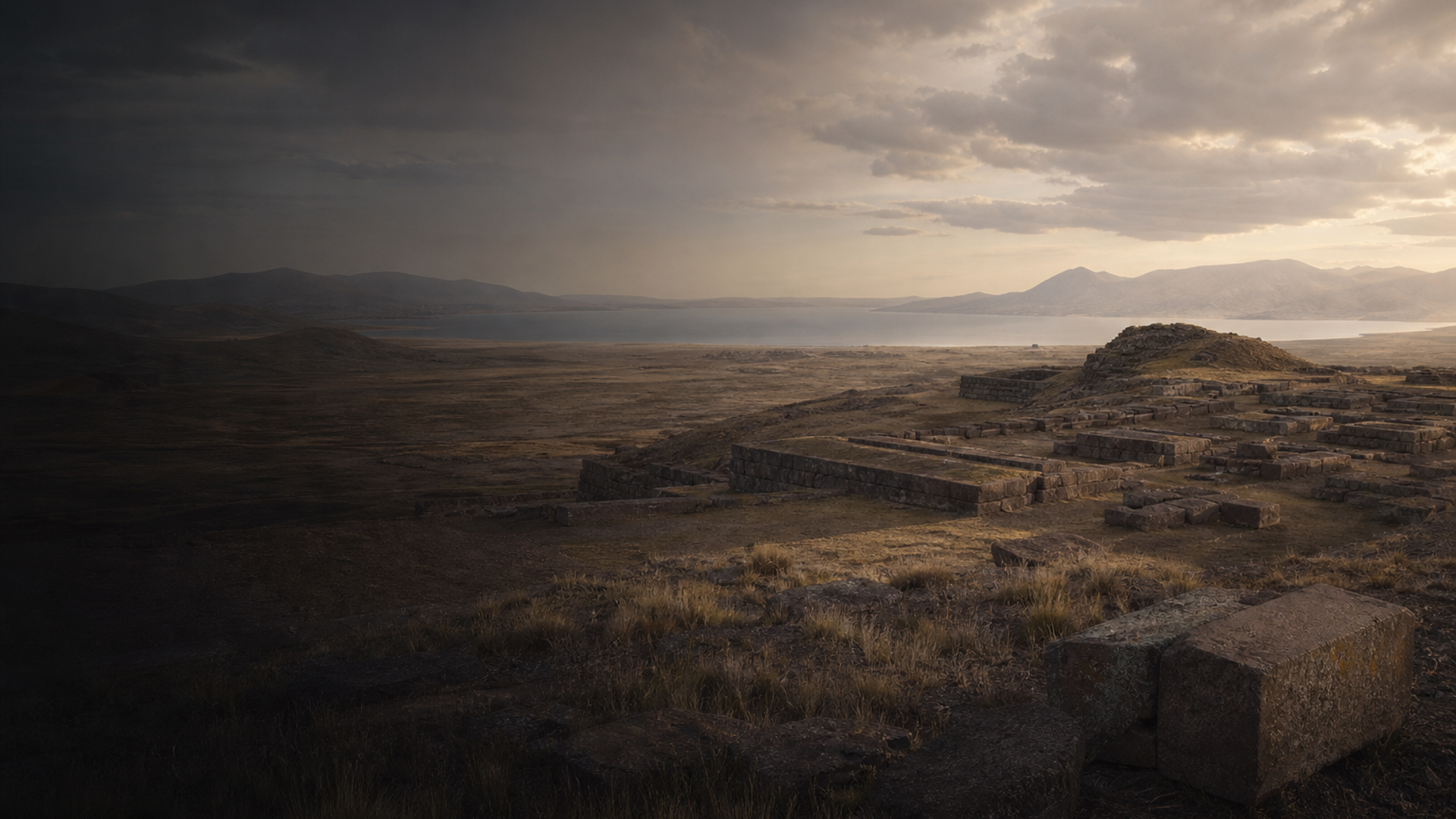

Caveats are essential. The genetic sample is small, so assertions of direct continuity with specific modern groups (for example, Aymara or Quechua communities) remain tentative. Nevertheless, the combined archaeological and genetic evidence paints a portrait of a society rooted in the Andes—adaptive, connected, and influential—whose echoes still inform identity and ancestry studies in the region. Ongoing aDNA research promises to refine these connections and reveal the demographic rhythms behind Tiwanaku’s enduring presence.

  • Cultural influence persists in Andean rituals and landscape engineering
  • Genetic links to modern Andean groups are plausible but remain tentative due to small sample size
AI 电源

AI 助手

就 Tiwanaku Echoes 文化提问

AI 助手 由DNAGENICS公司制作

解锁此特性
Ask questions about the Tiwanaku Echoes culture. Our AI assistant can explain genetic findings, historical context, archaeological evidence, and modern connections.
AI 样本分析

Tiwanaku Echoes 文化是人类历史中值得了解的一章……

遗传分析揭示了与早期种群的联系,同时显示了独特的适应和文化创新的证据。 古代DNA样本提供了对迁徙模式、社会结构以及古代种群之间的生物关系的深刻见解。

这是人工智能分析的预览。 解锁全AI 助手, 以探索关于:

  • 遗传组成和祖先
  • 移徙模式和起源
  • 日常生活和文化习俗
  • 现代遗传遗产

探索更古老的文化

揭开古代世界文明的故事

使用优惠码 可减免 35% • 11月12日 到期




