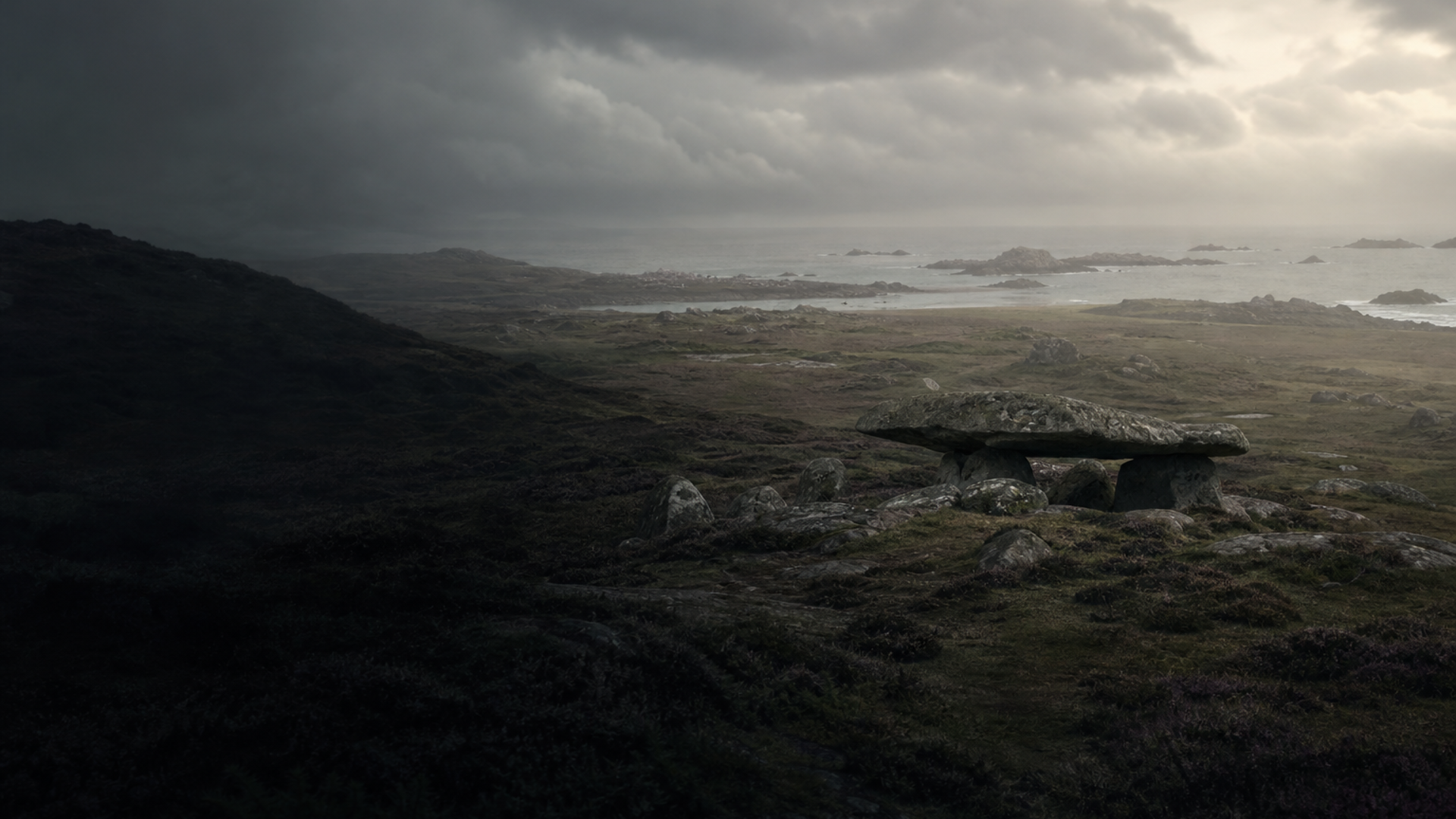
Archaeological traces portray lives balanced between cultivated fields and the sea. Polished stone axes, domestic pottery, and faunal remains show that cereal cultivation and animal husbandry were established, yet coastal foraging and fishing would have supplemented diets — a rhythm of fields and tides. Passage graves and carved chambers at sites such as Le Déhus acted as focal points for ritual activity, fostering a shared cosmology expressed through megalithic architecture and rock art.
Small, kin-based groups likely managed arable plots and shared communal labor for monument construction. Craft skills — flint working, woodworking, and simple pottery production — underpinned daily life, while long-distance exchange brought exotic materials, ideas, and perhaps mates. Mortuary deposits in chambered tombs indicate deliberate treatment of the dead and memories held across generations. However, the archaeological picture comes mainly from a handful of excavated monuments and surface finds; therefore, interpretations of social complexity and settlement patterns should be treated as hypotheses pending broader survey and excavation.