דילוג לתוכן הראשי
תיקי DNA

Tomb-Builders of the Channel Isles

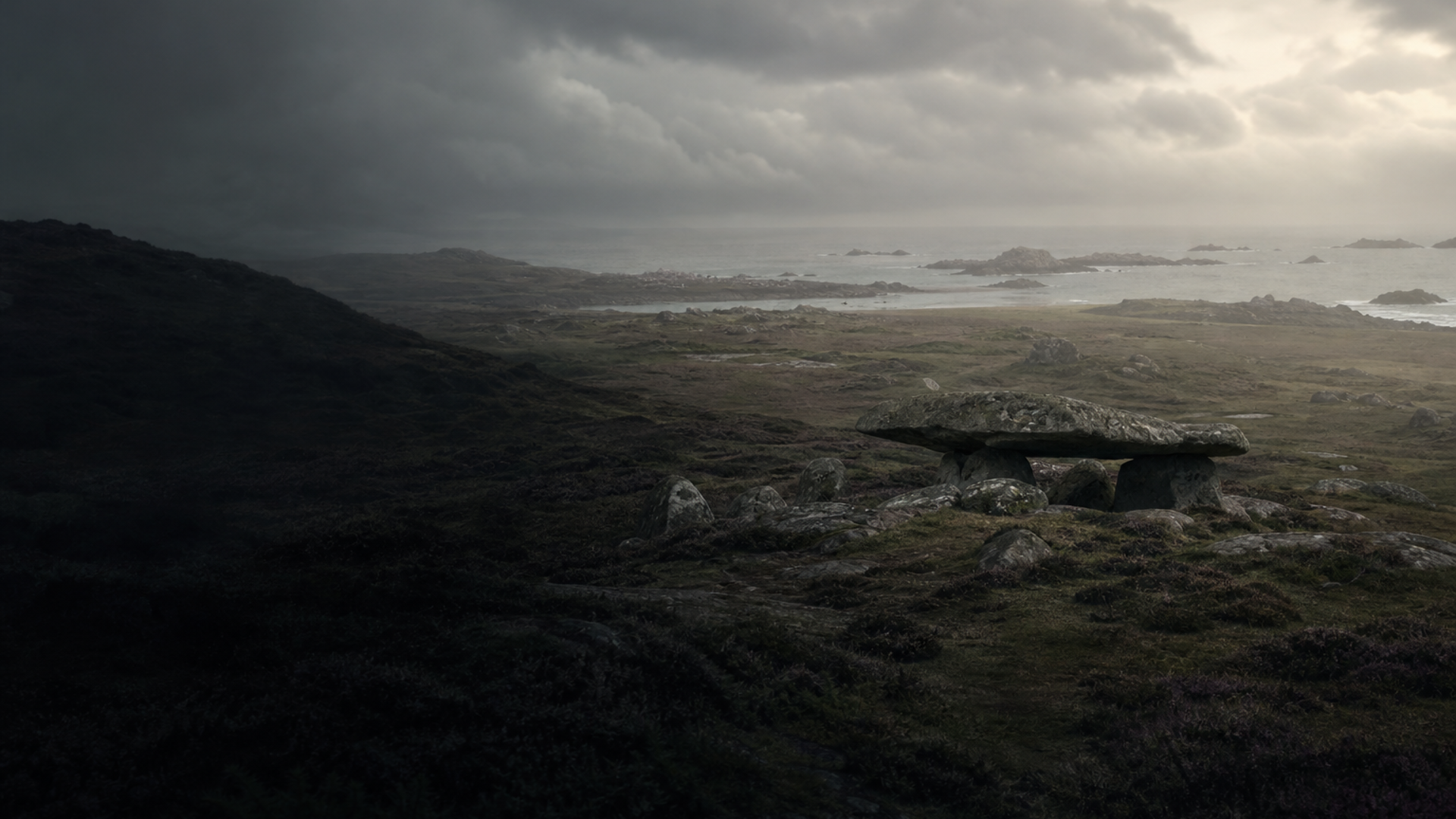
Middle Neolithic communities at Le Déhus, Guernsey — where archaeology meets ancient DNA

4241 CE - 3968 BCE
Channel Islands (Guernsey), United Kingdom

הסיפור

Archaeological remains and three ancient genomes from Le Déhus (Vale, Guernsey) illuminate Middle Neolithic life (c. 4241–3968 BCE). Limited samples hint at mixed Neolithic farmer and local hunter-gatherer ancestry, with Y haplogroup I and mtDNA K, J, X present.

Time Period

4241–3968 BCE

Region

Channel Islands (Guernsey), United Kingdom

Common Y-DNA

I (2 of 3 samples)

Common mtDNA

K, J, X (one each)

ציר הזמן

4200 BCE

Use and carving of Le Déhus passage tomb

Le Déhus chamber in Vale, Guernsey, is used for funerary rites and incised stone art, reflecting Middle Neolithic ritual activity on the Channel Islands.

Origins & Emergence

The Channel Islands Middle Neolithic presence, preserved most strikingly at the chambered tomb of Le Déhus in the Vale of Guernsey, emerges in a world of shifting shorelines and interconnected coasts. Archaeological data indicates the tomb was used and carved in the early 4th millennium BCE; the genetic dates for the three analyzed individuals fall between 4241 and 3968 BCE. Material culture — passage-grave architecture, decorated stone surfaces, and Neolithic pottery — signals participation in wider insular networks that linked Brittany, southern England, and the Atlantic façade.

Limited evidence suggests communities here practiced mixed subsistence strategies as they adapted to insularity: bringing domesticated cereals and livestock into maritime landscapes rich in shellfish and fish. The presence of monumental tombs like Le Déhus suggests ritual investment and social memory anchored to place. While the archaeological record records stones and motifs, ancient DNA from three individuals offers a fragile but vivid glimpse into the people who shaped those monuments: their ancestry appears to reflect both incoming farming traditions and persistence of local lineages. Given the very small sample size, any reconstruction of population origins remains provisional and invites further sampling across the islands and nearby coasts.

  • Le Déhus (Vale, Guernsey) is a key funerary site for this era
  • Dates for analyzed individuals: 4241–3968 BCE
  • Evidence points to maritime connections with Britain and Brittany

Daily Life & Society

Archaeological traces portray lives balanced between cultivated fields and the sea. Polished stone axes, domestic pottery, and faunal remains show that cereal cultivation and animal husbandry were established, yet coastal foraging and fishing would have supplemented diets — a rhythm of fields and tides. Passage graves and carved chambers at sites such as Le Déhus acted as focal points for ritual activity, fostering a shared cosmology expressed through megalithic architecture and rock art.

Small, kin-based groups likely managed arable plots and shared communal labor for monument construction. Craft skills — flint working, woodworking, and simple pottery production — underpinned daily life, while long-distance exchange brought exotic materials, ideas, and perhaps mates. Mortuary deposits in chambered tombs indicate deliberate treatment of the dead and memories held across generations. However, the archaeological picture comes mainly from a handful of excavated monuments and surface finds; therefore, interpretations of social complexity and settlement patterns should be treated as hypotheses pending broader survey and excavation.

  • Mixed farming and marine resource use shaped subsistence
  • Passage graves like Le Déhus functioned as ritual and memory centers

Genetic Profile

Three Middle Neolithic genomes from Guernsey provide a modest but instructive window into ancestry. Two male-associated samples carry Y-chromosome haplogroup I, while the three mitochondrial genomes belong to haplogroups K, J, and X (one each). In broader European ancient-DNA research, mtDNA K and J are often associated with farmer-associated lineages derived from Anatolian Neolithic expansions, whereas haplogroup I has a long presence in Mesolithic and later European populations and can reflect hunter-gatherer paternal continuity or regionally specific demographic histories.

Taken together, these markers are consistent with a mixed ancestry scenario: incoming Neolithic farmer-related genetic components (reflected in mtDNA lineages such as K and J) admixed with persistent local hunter-gatherer ancestry that may be represented by Y haplogroup I in this small set. Archaeological data indicating Neolithic material culture supports such a mixture of lifeways. Crucially, with only three samples (fewer than ten), conclusions must remain preliminary: random sampling, kinship between individuals, or burial selection could bias the picture. Additional genomes from the Channel Islands and neighboring coasts are required to test whether these findings reflect a local pattern or isolated instances.

  • Y haplogroup I present in 2 of 3 samples — suggests possible paternal continuity
  • mtDNA K, J, X indicate farmer-associated maternal lineages and mixed ancestry

Legacy & Modern Connections

The stone chambers and carved surfaces of Le Déhus remain a cinematic link between deep past and present. Genetic snapshots from three individuals hint at ancestry components that later contribute to the genetic tapestry of the British Isles: a mixture of Anatolian-derived farmer ancestry and local Western Hunter-Gatherer elements. These small datasets are valuable in ancestry platforms because they localize broad prehistoric processes to specific islands and monuments, reminding us that population change was uneven and place-specific.

Modern Channel Islanders today carry diverse ancestries from millennia of migration and exchange; ancient DNA from the Middle Neolithic offers a momentary glimpse of one chapter in that long story. Continued archaeological fieldwork and expanded ancient-genome sampling will clarify how representative the Le Déhus individuals are and deepen connections between material culture, monumentality, and genetic heritage.

  • Le Déhus endures as a cultural and archaeological landmark
  • Ancient genomes provide localized snapshots but require larger samples for firm connections

עוזר הבינה המלאכותית

עוזר הבינה המלאכותית מאת DNA Genics

פתיחת התכונה הזו
שאלו שאלות על תרבות Tomb-Builders of the Channel Isles. העוזר יכול להסביר ממצאים גנטיים, הקשר היסטורי, ראיות ארכאולוגיות וקשרים לעת המודרנית.
דוגמה לניתוח בבינה מלאכותית

מבט על תרבות Tomb-Builders of the Channel Isles

דגימות DNA קדום עוזרות לחוקרים לחקור דפוסי נדידה וקשרים גנטיים בין אוכלוסיות קדומות.

זו תצוגה מקדימה של הניתוח. העוזר המלא מאפשר לעיין בנושאים הבאים:

  • הרכב גנטי ודמיון גנטי
  • דפוסי נדידה ומקורות
  • חיי יומיום ומנהגים תרבותיים
  • קשרים גנטיים בני זמננו