Totocachi Echoes

下载的 PDF 是图像副本。如需可选中文本及更好的辅助技术支持,请使用打印功能。

Totocachi Echoes

揭开一个失落的文明

正在加载考古记录……

正在收集古代记录

跳转到主内容
Totocachi Echoes
文明焦点

Totocachi Echoes

A late Tiwanaku presence in the Bolivian highlands revealed through material culture and a single maternal lineage

1393 CE - 1439 CE
Totocachi, Bolivia (Andean highlands)
滚动开始
Chapter I

剧情

了解 Totocachi Echoes 文化

Archaeological evidence from Totocachi, Bolivia (c. 1393–1439 CE) suggests continued Tiwanaku cultural influence in the late pre-Columbian highlands. Ancient DNA from one individual carries mtDNA haplogroup B2. Limited sampling means genetic conclusions are preliminary but evocative of Andean maternal continuity.

Time Period

1393–1439 CE

Region

Totocachi, Bolivia (Andean highlands)

Common Y-DNA

Unknown / not reported

Common mtDNA

B2 (1 sample)

Chapter II

时间线

这种文化历史上的关键时刻

1400 CE

Totocachi individual dated

Single individual from Totocachi calibrated to 1393–1439 CE, indicating late Tiwanaku-associated occupation or influence in the area.

Chapter III

Origins & Emergence

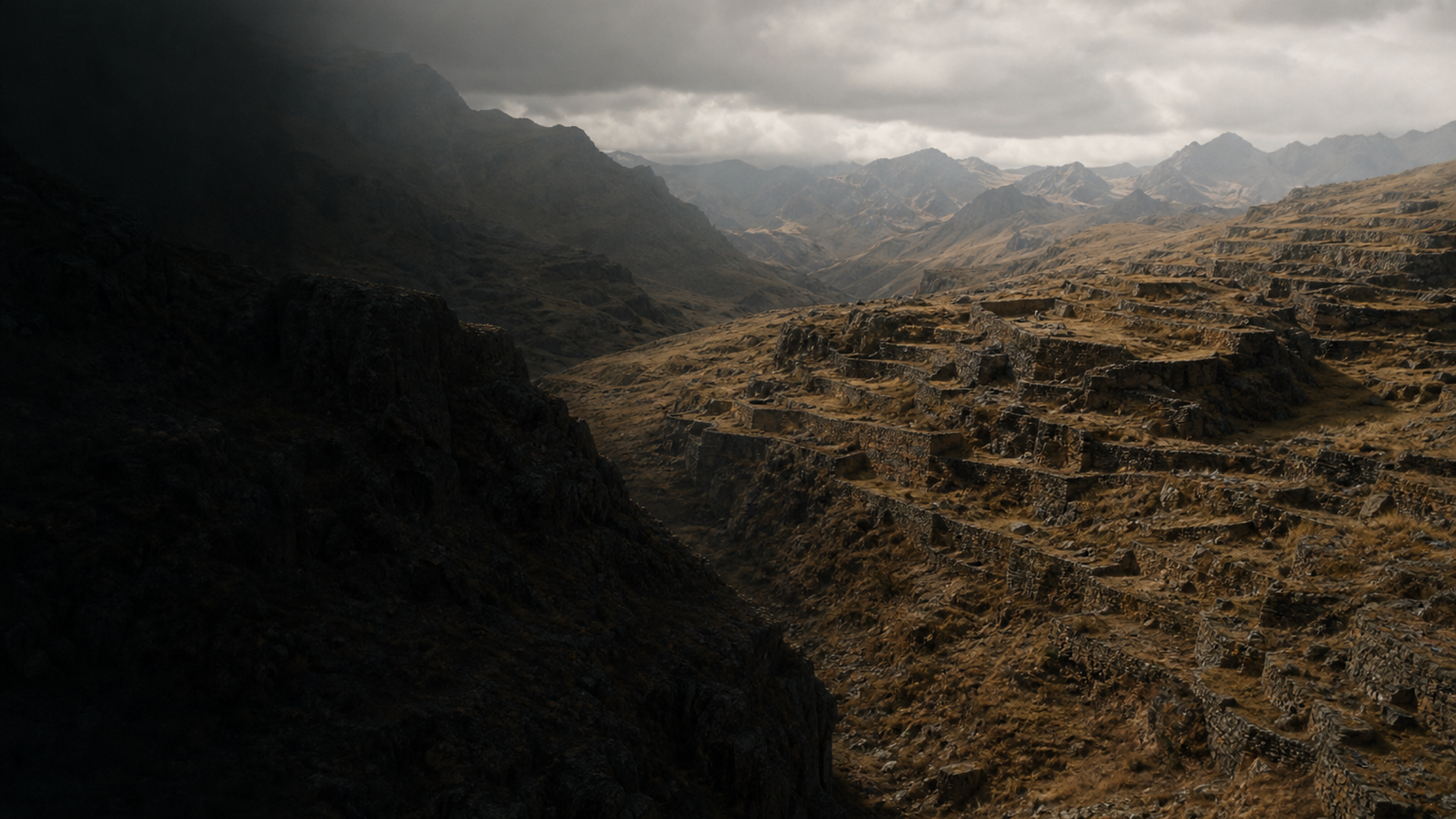
Nestled in the high, thin air of the Bolivian altiplano, Totocachi registers as a late expression of the long-lived Tiwanaku cultural horizon. Archaeological data indicates that Tiwanaku influence did not vanish with the collapse of the polity's classic-phase centers (c. 700–1000 CE); instead, local communities appear to have maintained elements of Tiwanaku material style, ritual practice, and agricultural strategies well into the second millennium CE. The radiocarbon-calibrated range for the individual sampled from Totocachi (1393–1439 CE) places this human presence in a period of regional reconfiguration: the Late Intermediate and early Late Horizon centuries when Andean polities, including the rising Inca, reorganized networks of exchange and ritual.

Limited evidence suggests Totocachi functioned as a local node where ancestral Tiwanaku traditions were adapted to changing political and ecological conditions. Pottery shapes, stonework fragments, and landscape features recorded at nearby sites are consistent with a recognizable Tiwanaku-derived repertoire, but they also show hybridization with later highland trends. Because the archaeological record in and around Totocachi remains sparsely sampled, interpretations emphasize continuity and transformation rather than direct political continuity with classic Tiwanaku centers like Tiwanaku (near Lake Titicaca).

  • Site dated to 1393–1439 CE, late pre-Columbian highlands
  • Material culture shows Tiwanaku-derived traits adapted locally
  • Interpretations limited by sparse excavation and sampling
Chapter IV

Daily Life & Society

Life at Totocachi must be imagined against a backdrop of wind, altitude, and a sky that narrows the palette of crops and animals available to human hands. Archaeological analogies with Tiwanaku and later Andean settlements suggest mixed highland strategies: cultivation of tubers and quinoa on terraced slopes or raised fields, herding of camelids (llama and alpaca) for transport and wool, and intensive use of wetlands where present. Stone architecture and domestic ceramics found in the region imply tightly-knit households, craft specialization, and ritual practice woven into everyday tasks.

Communities likely organized production around seasonal cycles—planting, herding, textile weaving, and exchange. Ritual clinics and small shrines would have anchored social memory, while craft objects carried symbolic motifs inherited from Tiwanaku iconography. Trade connections, both local and trans-Altiplano, probably delivered obsidian, Spondylus shell, and exotic goods into highland life. Yet at Totocachi these patterns must be presented cautiously: the single DNA sample and limited excavations mean reconstructions of social structure and economy remain inferential rather than definitive.

  • Agriculture adapted to high-altitude conditions (tubers, quinoa, raised fields)
  • Household craft, textile production, and ritual likely central to community life
Chapter V

Genetic Profile

Ancient DNA from Totocachi currently derives from a single individual dated to 1393–1439 CE. This individual carries mitochondrial haplogroup B2, a lineage widely observed among ancient and modern populations across the Andes and lowland South America. B2 is interpreted as a maternal marker reflecting deep Native American ancestry and regional continuity in maternal lines over millennia. However, the sample count of one means any broader genetic portrait of Totocachi or local Tiwanaku-descended communities is highly provisional.

No Y-chromosome (paternal) haplogroup information is reported for this sample, and genome-wide data—if available—would be necessary to test models of population continuity, admixture, or migration. Archaeological parallels suggest cultural continuity, and the presence of mtDNA B2 is consistent with maternal links to Andean population pools. Still, small sample size prevents confident claims about demographic processes: we cannot yet resolve whether Totocachi represented an isolated remnant population, a node within broader highland gene flow, or a mingling of local and incoming groups during the centuries before Inca expansion. Future sequencing of additional individuals and comparison to contemporary and ancient Andean genomes would clarify these scenarios.

  • mtDNA B2 detected in the single sampled individual
  • Small sample size (<10) means genetic conclusions are preliminary
Chapter VI

Legacy & Modern Connections

Totocachi's archaeological shadow reaches into the present through living Andean traditions of agriculture, textile practice, and ritual memory. The mitochondrial signal (B2) in the single sample resonates with a broad pattern: many modern Andean communities retain maternal lineages traceable to pre-Columbian populations. This genetic continuity, when corroborated by larger datasets, can illuminate how cultural practices persisted even as political landscapes shifted.

Archaeological data indicates that Tiwanaku-derived identities were resilient—recrafted across centuries rather than erased. For visitors and descendants today, Totocachi offers a cinematic fragment: a human life at altitude, traced in bone and DNA, connecting contemporary Andean peoples to their deep past. Yet it is important to stress the tentative nature of these connections given the very limited genetic sampling; more data is needed to turn evocative threads into robust historical tapestries.

  • mtDNA B2 links the individual to wider Andean maternal continuity
  • Cultural traditions show persistence of Tiwanaku-derived practices
AI 电源

AI 助手

就 Totocachi Echoes 文化提问

AI 助手 由DNAGENICS公司制作

解锁此特性
Ask questions about the Totocachi Echoes culture. Our AI assistant can explain genetic findings, historical context, archaeological evidence, and modern connections.

AI 样本分析

Totocachi Echoes 文化是人类历史中值得了解的一章……

遗传分析揭示了与早期种群的联系,同时显示了独特的适应和文化创新的证据。 古代DNA样本提供了对迁徙模式、社会结构以及古代种群之间的生物关系的深刻见解。

这是人工智能分析的预览。 解锁全AI 助手, 以探索关于:

  • 遗传组成和祖先
  • 移徙模式和起源
  • 日常生活和文化习俗
  • 现代遗传遗产

探索更古老的文化

揭开古代世界文明的故事

使用优惠码 可减免 35% • 11月12日 到期




