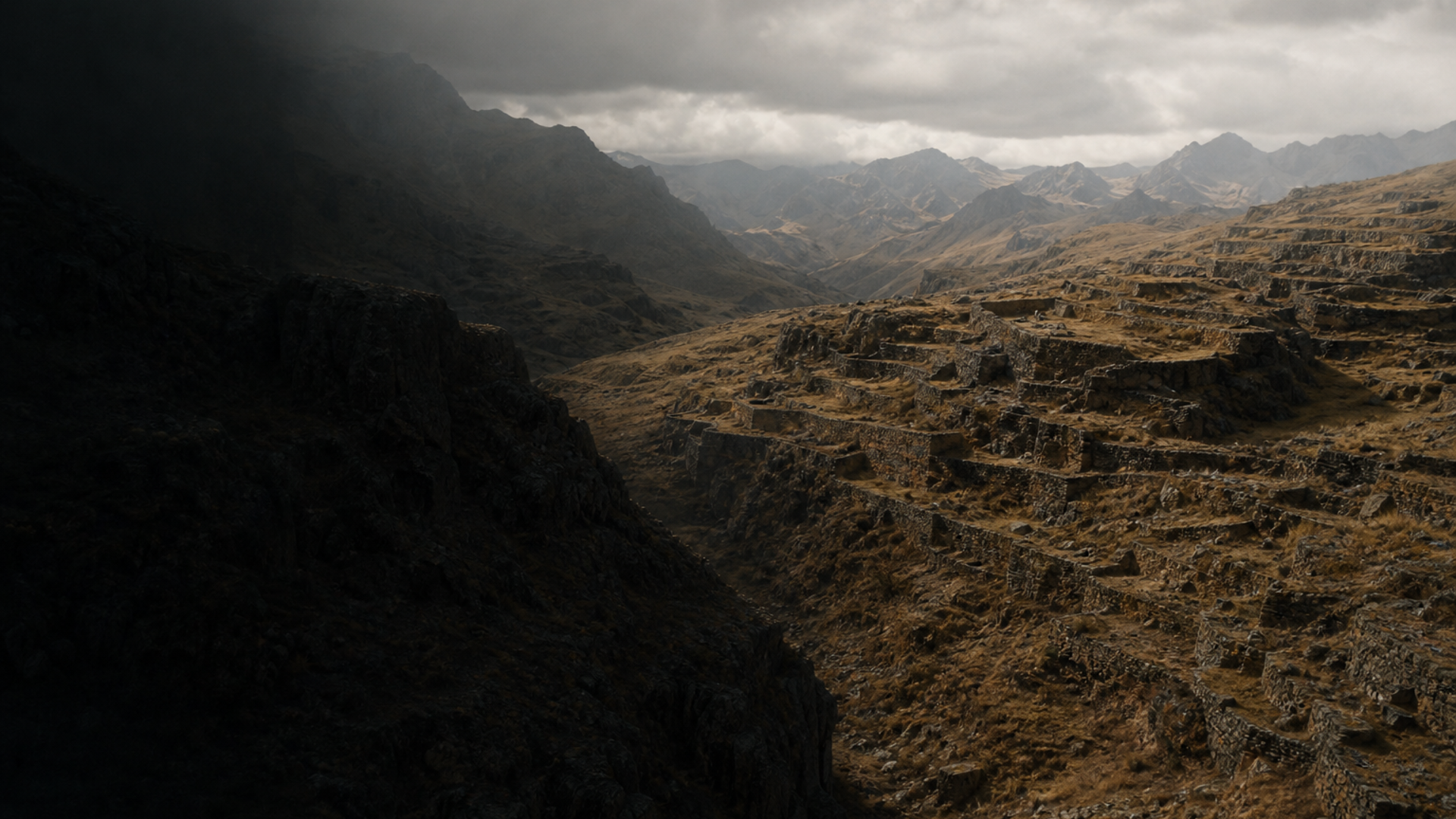
Life at Totocachi must be imagined against a backdrop of wind, altitude, and a sky that narrows the palette of crops and animals available to human hands. Archaeological analogies with Tiwanaku and later Andean settlements suggest mixed highland strategies: cultivation of tubers and quinoa on terraced slopes or raised fields, herding of camelids (llama and alpaca) for transport and wool, and intensive use of wetlands where present. Stone architecture and domestic ceramics found in the region imply tightly-knit households, craft specialization, and ritual practice woven into everyday tasks.
Communities likely organized production around seasonal cycles—planting, herding, textile weaving, and exchange. Ritual clinics and small shrines would have anchored social memory, while craft objects carried symbolic motifs inherited from Tiwanaku iconography. Trade connections, both local and trans-Altiplano, probably delivered obsidian, Spondylus shell, and exotic goods into highland life. Yet at Totocachi these patterns must be presented cautiously: the single DNA sample and limited excavations mean reconstructions of social structure and economy remain inferential rather than definitive.