Transtisza Sarmatians — Hajdúnánás (350–450 CE)

下载的 PDF 是图像副本。如需可选中文本及更好的辅助技术支持,请使用打印功能。

Transtisza Sarmatians — Hajdúnánás (350–450 CE)

揭开一个失落的文明

正在加载考古记录……

正在收集古代记录

跳转到主内容
Transtisza Sarmatians — Hajdúnánás (350–450 CE)
文明焦点

Transtisza Sarmatians — Hajdúnánás (350–450 CE)

Late Antique Sarmatian community on Hungary's Transtisza plain — archaeology meeting ancient DNA

350 CE - 450 CE
Transtisza, Hungary (Hajdúnánás)
滚动开始
Chapter I

剧情

了解 Transtisza Sarmatians — Hajdúnánás (350–450 CE) 文化

Human remains from Hajdúnánás-Fürj-halom-dűlő 2 (M3/40A) dated 350–450 CE reveal a small Late Antique Sarmatian presence in the Transtisza region. Archaeology and DNA hint at steppe affiliations with local admixture; conclusions remain preliminary (n=8).

Time Period

350–450 CE

Region

Transtisza, Hungary (Hajdúnánás)

Common Y-DNA

R (2), G (1)

Common mtDNA

T2b (2), H59 (1), I (1), J (1), HV0 (1)

Chapter II

时间线

这种文化历史上的关键时刻

400 CE

Transtisza Sarmatian burials (Hajdúnánás)

Human remains at Hajdúnánás-Fürj-halom-dűlő 2 dated to 350–450 CE document a small Sarmatian-associated presence in eastern Hungary.

Chapter III

Origins & Emergence

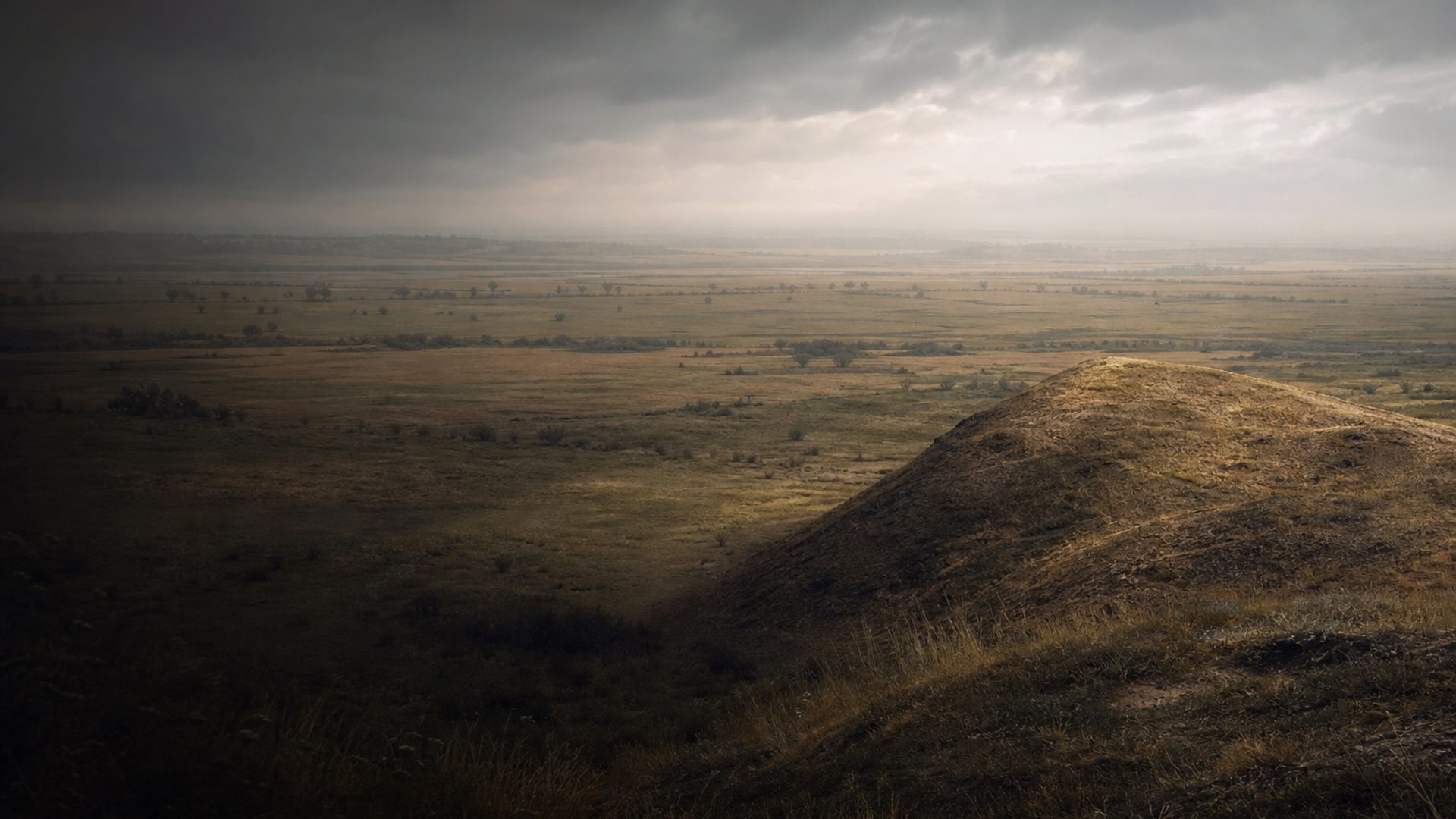
On the broad, wind-scoured plain east of the Tisza River, excavations at Hajdúnánás-Fürj-halom-dűlő 2 (sample M3/40A) have yielded human remains dated to between 350 and 450 CE. Archaeological data indicates these individuals belong to a Late Antique horizon traditionally associated with Sarmatian groups in the Carpathian Basin and the Early Hun Period. The Sarmatians themselves trace cultural roots to the Pontic–Caspian steppe, where mobile, horse-oriented lifeways and characteristic metalwork spread across the plains from the early centuries CE.

Limited evidence suggests that the Transtisza assemblage represents either local descendants of Sarmatian communities or people living within a Sarmatian cultural sphere that was undergoing rapid change during the Migration Period. Burial contexts in the region commonly show a mix of steppe-derived practices and local Carpathian traditions, but the Hajdúnánás material is fragmentary and modest in size.

Because this dataset comprises only eight individuals, any reconstruction of population movements, cultural continuity, or replacement must be cautious. Nevertheless, the combination of stratigraphic dating, regional archaeology, and genetic markers offers a cinematic glimpse of a frontier landscape where steppe traditions met local Central European lifeways.

  • Human remains from Hajdúnánás-Fürj-halom-dűlő 2 dated 350–450 CE
  • Associated with Sarmatian cultural sphere during Early Hun Period
  • Small sample size — interpretations are preliminary
Chapter IV

Daily Life & Society

The daily world of Transtisza communities in the 4th–5th centuries CE would have been a tapestry of herding, seasonal mobility, and localized village life. Archaeological patterns across Sarmatian and neighboring sites indicate reliance on pastoralism — especially horses and sheep — alongside agriculture in favorable riverine pockets. Material culture in the region often includes metal harness fittings, weapon fragments, and personal ornaments; such items signal mounted mobility and social display, but specific grave goods from Hajdúnánás are limited in the published record.

Social structure in Late Antique Transtisza likely blended kin-based pastoral households with emerging elites who controlled herding territories and stepping-stone trade routes. Contact with Hunnic groups, Roman frontier dynamics, and neighboring Germanic communities would have shaped craft production, exchange, and funerary practice. Environmental constraints of the plain — flood cycles and open pasture — channeled settlement patterns toward raised mounds, river terraces, and transient camps.

Archaeological data indicates adaptability: steppe lifeways persisted but incorporated Central European material traditions. Without broader excavation and contextual artifacts from Hajdúnánás, reconstructions remain evocative rather than definitive.

  • Pastoral economy with localized agriculture along river terraces
  • Cultural blending: steppe mobility meets Carpathian traditions
Chapter V

Genetic Profile

The genetic snapshot from M3/40A comprises eight individuals (sample count = 8). Y-chromosome results show R lineages in two males and a G lineage in one male; mitochondrial diversity includes T2b (2), H59 (1), I (1), J (1), and HV0 (1). These markers, viewed together with archaeological context, paint a picture of mixed ancestry at this Transtisza locality.

Y-haplogroup R is broadly distributed across Eurasia and is frequently associated with steppe-derived male lineages in Late Bronze Age and Iron Age contexts; its presence here is consistent with Sarmatian and other steppe-affiliated populations. Haplogroup G is less common in steppe-dominant assemblages and can reflect ties to Near Eastern, Caucasus, or early farming-derived lineages in Europe, suggesting either pre-existing local ancestry or incoming diversity.

Mitochondrial haplogroups such as T2b and H variants are widespread in Europe and West Eurasia and point to matrilineal diversity, reflecting both local Central European maternal backgrounds and long-distance mobility. H59 and HV0 are relatively rare and highlight microregional variation.

Because autosomal data and larger comparative datasets are essential for fine-scale admixture modeling, all genetic interpretations here are tentative. With n<10, statistical power is low; these findings suggest a multi-ancestral community consistent with steppe influence and local admixture, but more genomes are needed to test models of continuity, migration, or sex-biased gene flow.

  • Small but mixed genetic signal: male lineages R and G present
  • Maternal diversity (T2b, H59, I, J, HV0) suggests local and wider Eurasian links
Chapter VI

Legacy & Modern Connections

The Hajdúnánás individuals offer a poignant, if limited, window into the population mosaic of the Carpathian Basin during a time of tumultuous movement and cultural recomposition. Archaeology plus genetics suggest that Late Antique Transtisza was not monolithic: steppe-derived elements coexisted with local Central European lineages.

For modern genetic landscapes, direct continuity is difficult to prove from this small sample; modern Hungarians are the product of many waves of migration, admixture, and demographic shifts since the 5th century. Nevertheless, these remains help anchor broad narratives — confirming that the Sarmatian cultural horizon included biologically diverse communities and that the Transtisza plain was a crossroads of peoples.

Future targeted sampling and genome-wide analyses could clarify whether the patterns seen at Hajdúnánás reflect a localized mixture, sex-biased migration, or larger regional processes. Until then, the site stands as a cinematic fragment: a group of lives intersecting steppe horizons and riverine plains at the cusp of medieval Europe.

  • Provides a glimpse of Late Antique population mixing in the Carpathian Basin
  • Too few samples to claim direct continuity with modern populations
AI 电源

AI 助手

就 Transtisza Sarmatians — Hajdúnánás (350–450 CE) 文化提问

AI 助手 由DNAGENICS公司制作

解锁此特性
Ask questions about the Transtisza Sarmatians — Hajdúnánás (350–450 CE) culture. Our AI assistant can explain genetic findings, historical context, archaeological evidence, and modern connections.
AI 样本分析

Transtisza Sarmatians — Hajdúnánás (350–450 CE) 文化是人类历史中值得了解的一章……

遗传分析揭示了与早期种群的联系,同时显示了独特的适应和文化创新的证据。 古代DNA样本提供了对迁徙模式、社会结构以及古代种群之间的生物关系的深刻见解。

这是人工智能分析的预览。 解锁全AI 助手, 以探索关于:

  • 遗传组成和祖先
  • 移徙模式和起源
  • 日常生活和文化习俗
  • 现代遗传遗产

探索更古老的文化

揭开古代世界文明的故事

使用优惠码 可减免 35% • 11月12日 到期