Voices of the Upper Galilee

下载的 PDF 是图像副本。如需可选中文本及更好的辅助技术支持,请使用打印功能。

跳转到主内容
文明焦点

Voices of the Upper Galilee

Chalcolithic Pki'in seen through archaeology and ancient DNA

4500 CE - 3500 BCE
Upper Galilee, Israel (Pki'in)

剧情

Archaeological and genetic data from 22 individuals (4500–3500 BCE) at Pki'in in the Upper Galilee illuminate a Chalcolithic community marked by Y haplogroup T predominance and a diverse maternal heritage. Limited evidence suggests links to broader Near Eastern networks.

Time Period

4500–3500 BCE

Region

Upper Galilee, Israel (Pki'in)

Common Y-DNA

T (dominant), E (minor)

Common mtDNA

T, K, J, H, T2

时间线

2500 BCE

Chalcolithic occupation in Pki'in

Archaeological and genetic evidence indicates Chalcolithic-era activity at Pki'in in the Upper Galilee, reflecting local settlement and regional ties.

Origins & Emergence

Pki'in in the Upper Galilee sits within the dynamic pulse of the southern Levant during the Chalcolithic (c. 4500–3500 BCE). Archaeological data indicates settlement activity and material culture changes in this period across northern Israel, reflecting intensified local craft production, exchange networks, and evolving funerary practices. The Pki'in samples capture a community at the crossroads of upland and coastal lifeways, where inhabitants exploited terraced slopes, springs, and nearby trade routes.

Limited evidence suggests these communities participated in regional interactions that brought exotic raw materials and styles into the Galilean landscape. While the term "Chalcolithic" evokes early copper use, it also describes a social horizon in which villages and ritual spaces became more visible in the archaeological record. Radiocarbon-calibrated contexts from the region place activity firmly between 4500 and 3500 BCE, but site-by-site variability is high; some layers may represent episodic occupation or re-use of older places.

Archaeological data indicates continuity with preceding Neolithic traditions alongside innovations in craft and social display. The picture at Pki'in is of a community shaped by local environments and regional connections — a fragment of a wider mosaic that linked the Levant's interior to Mediterranean and inland Anatolian exchanges.

  • Occupation fits Chalcolithic chronology (4500–3500 BCE)
  • Pki'in links upland Galilee to broader Levantine networks
  • Evidence shows craft intensification and changing mortuary behaviors

Daily Life & Society

Daily life in a Chalcolithic Galilean settlement can be glimpsed through material traces and environmental context. House platforms, storage pits, and hearths—visible in regional sites—suggest a mixed economy of dry farming, herding, and foraging adapted to terrace and valley ecologies. Archaeological data indicates local production of ceramics and stone tools; metal objects and fragments hint at nascent copper use, though large-scale metallurgy remained limited.

Communities likely organized around family compounds and seasonal rhythms tied to rainfall and harvest. Social life was layered: domestic tasks integrated with ritual activities, and cemeteries or burial deposits point to evolving practices of commemoration. Ornamentation and traded goods found at nearby Chalcolithic sites imply social ties extending beyond the Galilee, enabling the movement of styles and materials.

Limited direct evidence from Pki'in itself means reconstructions borrow cautiously from contemporary Upper Galilean assemblages. The cinematic image is of smoke-streaked courtyards, ceramic vessels heated over hearths, and the frequent presence of crafted items used both practically and as social signals—small acts that together sustained a community negotiating change.

  • Mixed economy: dry farming, herding, foraging
  • Local craft production with limited copper artifacts

Genetic Profile

Ancient DNA from 22 individuals attributed to Israel_C (Pki'in, Upper Galilee; 4500–3500 BCE) provides a valuable window into the biological makeup of a Chalcolithic community. The Y-chromosome profile is notable for a predominance of haplogroup T (9 of 22 male-assigned samples), with a smaller presence of haplogroup E (1 sample). This concentration of T suggests paternal lineages that were relatively common in this community and are known from other Neolithic and Chalcolithic contexts in the Near East and Mediterranean, though the precise migratory or demographic processes behind this pattern remain uncertain.

Mitochondrial diversity is relatively broad: haplogroups T (4), K (3), J (3), H (2), and T2 (2) appear among the 22 individuals. Such maternal lineages are frequently observed across Neolithic and Chalcolithic populations of the Near East and reflect a mix of deep regional continuity and incoming affinities. Archaeogenetic data indicate these individuals largely fall within the spectrum of Near Eastern farmer-related ancestries, with no strong signal of steppe-derived ancestry at this date in this sample set.

While 22 samples provide a meaningful dataset, interpretations should remain cautious: population structure, kinship patterns, and mobility require denser sampling and contextual integration with burial and artifact data. Still, the genetic picture complements archaeology by revealing kinship markers and sex-biased lineage patterns that inform social organization and connectivity.

  • Y-DNA dominated by haplogroup T (9/22); E represented (1)
  • mtDNA shows diverse Near Eastern maternal lineages (T, K, J, H, T2)

Legacy & Modern Connections

The genetic and archaeological imprint of Pki'in's Chalcolithic community contributes to a longer Levantine human story. The predominance of Y haplogroup T and a varied maternal pool echo patterns seen across early farmers of the Near East and suggest demographic threads that may extend into later Bronze Age and historical populations in the region. Archaeological continuities—settlement siting, craft traditions, and exchange pathways—help trace how social and economic practices persisted or transformed over millennia.
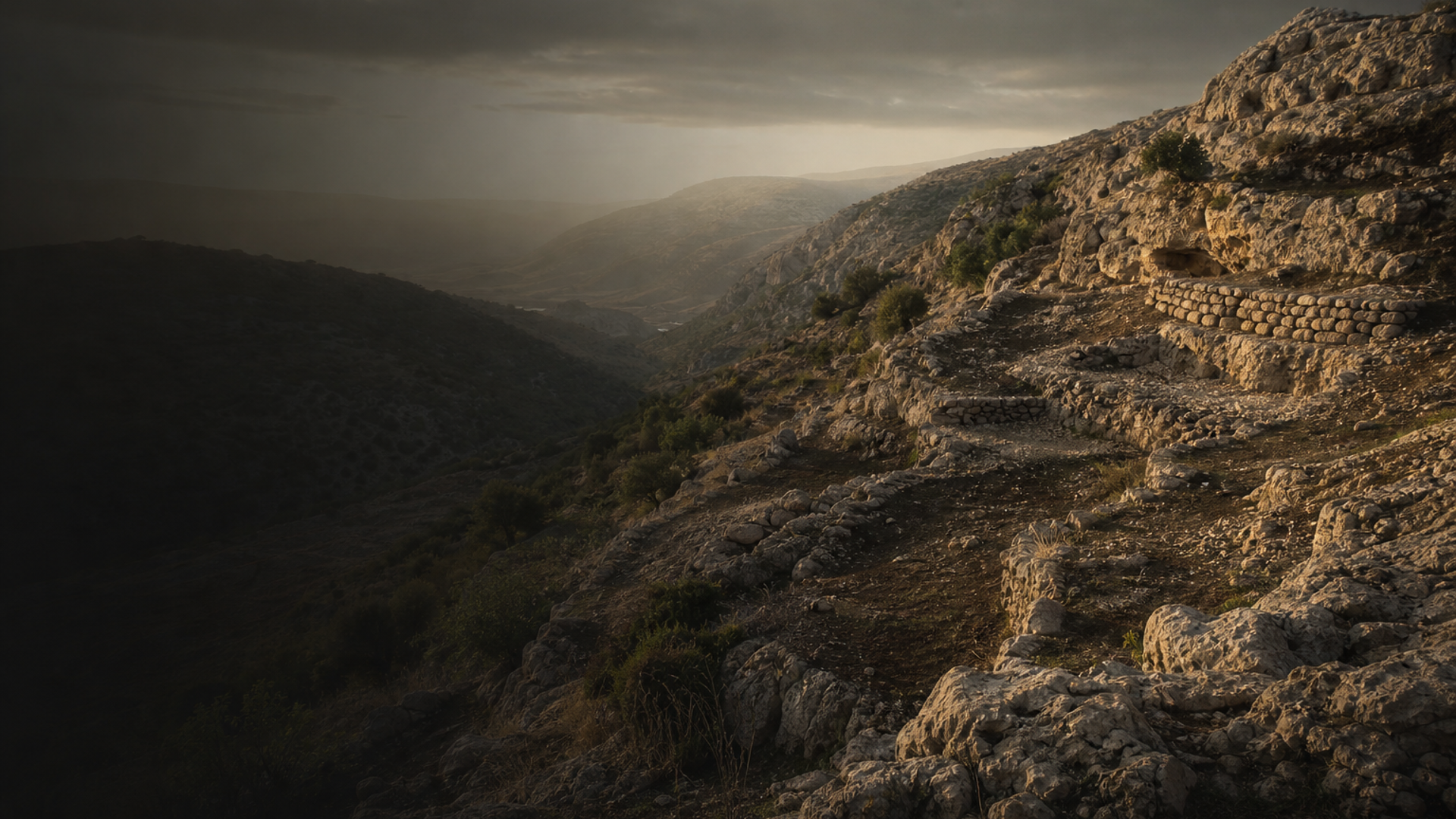

Caution is essential: genetic continuity does not imply cultural stasis, and modern population affinities are complex, shaped by many subsequent migrations. Nonetheless, combining archaeological context with ancient DNA allows us to map pathways of lineage, mobility, and interaction. Pki'in stands as a cinematic fragment of an evolving Levant—its people once moving along slopes and springs, leaving traces in both soil and genomes that researchers continue to interpret and reassemble.

  • Genetic patterns align with broader Near Eastern farmer ancestries
  • Combining DNA and archaeology helps trace long-term regional connections

AI 助手

AI 助手 由DNAGENICS公司制作

解锁此特性
Ask questions about the Voices of the Upper Galilee culture. Our AI assistant can explain genetic findings, historical context, archaeological evidence, and modern connections.
AI 样本分析

Voices of the Upper Galilee 文化是人类历史中值得了解的一章……

遗传分析揭示了与早期种群的联系,同时显示了独特的适应和文化创新的证据。 古代DNA样本提供了对迁徙模式、社会结构以及古代种群之间的生物关系的深刻见解。

这是人工智能分析的预览。 解锁全AI 助手, 以探索关于:

  • 遗传组成和祖先
  • 移徙模式和起源
  • 日常生活和文化习俗
  • 现代遗传遗产
使用优惠码 可减免 30% • 11月14日 到期




