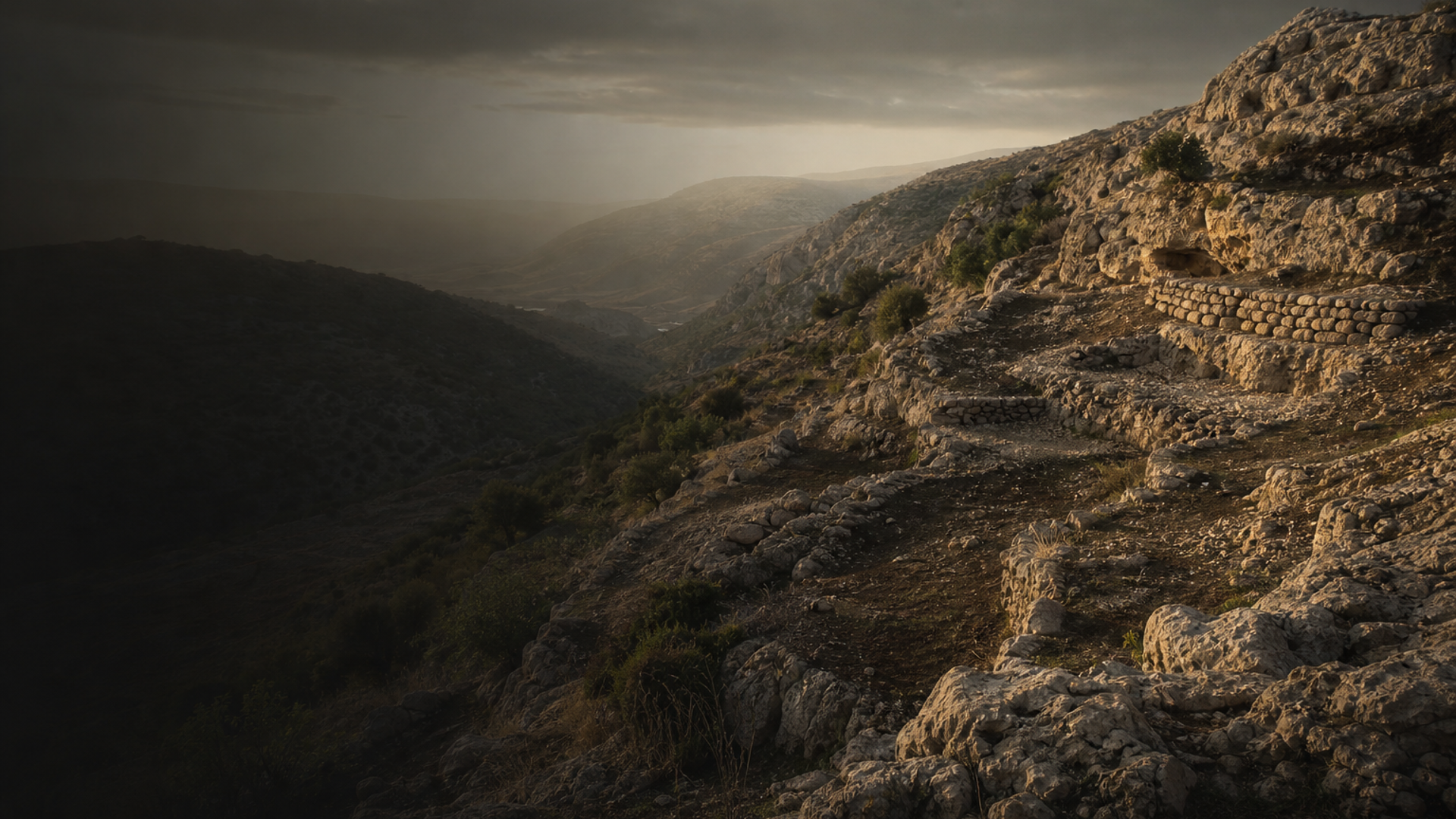
Ancient DNA from 22 individuals attributed to Israel_C (Pki'in, Upper Galilee; 4500–3500 BCE) provides a valuable window into the biological makeup of a Chalcolithic community. The Y-chromosome profile is notable for a predominance of haplogroup T (9 of 22 male-assigned samples), with a smaller presence of haplogroup E (1 sample). This concentration of T suggests paternal lineages that were relatively common in this community and are known from other Neolithic and Chalcolithic contexts in the Near East and Mediterranean, though the precise migratory or demographic processes behind this pattern remain uncertain.
Mitochondrial diversity is relatively broad: haplogroups T (4), K (3), J (3), H (2), and T2 (2) appear among the 22 individuals. Such maternal lineages are frequently observed across Neolithic and Chalcolithic populations of the Near East and reflect a mix of deep regional continuity and incoming affinities. Archaeogenetic data indicate these individuals largely fall within the spectrum of Near Eastern farmer-related ancestries, with no strong signal of steppe-derived ancestry at this date in this sample set.
While 22 samples provide a meaningful dataset, interpretations should remain cautious: population structure, kinship patterns, and mobility require denser sampling and contextual integration with burial and artifact data. Still, the genetic picture complements archaeology by revealing kinship markers and sex-biased lineage patterns that inform social organization and connectivity.