Western Mediterranean Bronze Age Voices

下载的 PDF 是图像副本。如需可选中文本及更好的辅助技术支持,请使用打印功能。

Western Mediterranean Bronze Age Voices

揭开一个失落的文明

正在加载考古记录……

正在收集古代记录

跳转到主内容
Western Mediterranean Bronze Age Voices
文明焦点

Western Mediterranean Bronze Age Voices

A genomic and archaeological portrait from Menorca to Gibraltar, 2468–813 BCE

2468 CE - 813 BCE
Spain, Gibraltar (Western Mediterranean)
6 Ancient Samples
滚动开始
Chapter I

剧情

了解 Western Mediterranean Bronze Age Voices 文化

Archaeological and ancient DNA evidence from 24 individuals (2468–813 BCE) across the Balearics and Gibraltar reveals a maritime Bronze Age network. Material culture from caves and tumuli pairs with a genetic mix of paternal R/P lineages and maternal K, H, J haplogroups, suggesting layered ancestry and island‑mainland connections.

Time Period

2468–813 BCE

Region

Spain, Gibraltar (Western Mediterranean)

Common Y-DNA

R (11), P (3)

Common mtDNA

K (7), H (6), J (4), H1j (3), U (2)

Chapter II

时间线

这种文化历史上的关键时刻

2468 BCE

Earliest sampled individual in the set

One individual from Menorca (Es Forat de ses Aritges) dates to 2468 BCE, marking the earliest genome in this Western Mediterranean assemblage.

Chapter III

Origins & Emergence

The Western_Mediterranean grouping—sampled from 24 individuals dated between 2468 and 813 BCE—emerges from archaeological contexts that read like a seafaring chronicle. Caves (Bray Cave, Gibraltar; El Espinoso cave, Asturias), island funerary hollows (Es Forat de ses Aritges, Menorca; Cova des Moro, Mallorca; Cova 127, Formentera) and the monumental Túmulo Mortorum at Cabanes (Castellón) form the primary archaeological footprint. Material traces—burials within rock shelters, collective interments in tumuli, and grave goods consistent with Late Bronze Age Iberian assemblages—point to communities adapted to coastal and insular life, with strong ties to mainland Iberia.

Archaeological data indicates continuity of local funerary practices across centuries alongside periods of intensified contact: Mallorcan Early Bronze Age layers show affinities with contemporaneous mainland crafts, while stratigraphic evidence from La Horna (Alicante) and El Sotillo (Laguardia, Álava) reveals exchange routes that likely traced coastal corridors. Limited evidence suggests episodic long‑distance ties across the western Mediterranean; seafaring was not merely practical but formative of social identity.

Genetic sampling across these sites provides a new lens: the assemblage contains both lineage signatures often linked to earlier Neolithic farmer expansions and paternal markers frequently associated with later Bronze Age dynamics. Archaeological signals therefore combine with genetic data to suggest an emergent regional identity forged by local continuity and incoming influences. Uncertainties remain about the timing and scale of those influences, and more samples would sharpen the picture.

  • 24 individuals span 2468–813 BCE across Balearics and Gibraltar
  • Key sites: Es Forat de ses Aritges, Bray Cave, Cova des Moro, Túmulo Mortorum
  • Archaeology indicates island‑mainland continuity with episodic external contacts
Chapter IV

Daily Life & Society

Life for communities represented in these sites would have been dominated by the rhythms of the sea and the contours of island topography. Archaeological assemblages—pottery forms, worked stone, and localized metalworking debris—suggest economies built around mixed farming, pastoralism, and coastal foraging, supplemented by exchange in metals, salt, and pottery with nearby mainland settlements. Caves and sheltered coves functioned both as habitation loci and places of memory: rock‑cut interments in Bray Cave and cave burials in Menorca and Formentera indicate ritualized treatment of the dead and a strong sense of place.

Social organization likely combined household-level production with broader kin networks. The presence of tumuli such as Túmulo Mortorum implies investment in communal monuments, perhaps reflecting emerging hierarchies or collective ancestor veneration. Craft specialization is visible in the distribution of worked brooches and metal fragments at La Horna and Cabanes, while coastal sites preserve evidence for boat use and maritime provisioning.

Gendered divisions of labor can be inferred cautiously from burial offerings and osteological data when available, but preservation biases and small sample sizes limit firm conclusions. Archaeological data indicates a resilient, maritime‑facing society where mobility—seasonal and longer-range—shaped daily rhythms and collective memory.

  • Mixed economy: farming, pastoralism, coastal foraging, and maritime exchange
  • Cave burials and tumuli point to ritualized ancestry and communal monuments
Chapter V

Genetic Profile

The genetic portrait from these 24 individuals reveals a layered ancestry. Paternal haplogroups are dominated by R (11 individuals) with a smaller representation of P (3). Maternal lineages are largely Neolithic and post‑Neolithic types: K (7), H (6, including H1j counted at 3), J (4), and U (2). This distribution suggests that maternal ancestries retain strong continuity with European Neolithic farmer lineages (notably K and J), while the prevalence of Y‑haplogroup R in the paternal record is consistent with wider Bronze Age patterns across western Europe.

Interpreting these patterns requires nuance. Y‑haplogroup R includes many sublineages, some associated in other studies with Bronze Age steppe‑related expansions; however, we cannot assign specific subclades without further resolution. Haplogroup P, rarer in these data, signals either under‑sampled local diversity or occasional arrivals from different population strands. Maternal haplogroups K and H are common in ancient and modern Europe and often reflect long‑standing Neolithic maternal continuity, while J and U point to older Near Eastern and Mesolithic contributions respectively.

Site‑level contrasts appear: some Balearic individuals carry a higher proportion of K and H variants consistent with island‑centered continuity, whereas Gibraltar samples (Bray Cave) show a mix that may reflect the promontory’s role as a contact zone. Given the sample count (24) and geographic spread, conclusions are robust at a regional scale but preliminary for fine‑grained demographic modeling. Additional genomes and higher coverage will help resolve timing, sex‑biased admixture, and specific migration routes.

  • Paternal skew toward R (11) with P present (3), suggesting Bronze Age paternal influxes
  • Maternal pool dominated by K, H, J—consistent with Neolithic farmer continuity
Chapter VI

Legacy & Modern Connections

The genetic and archaeological threads of this Western Mediterranean tapestry resonate into the present, but continuity is partial and complex. Many maternal haplogroups documented here (H, K, J) persist in modern Iberian and Balearic populations, indicating some enduring maternal ancestry lines. Paternal R lineages are also present today, though centuries of subsequent movement—Phoenician, Greek, Roman, medieval and modern migrations—have reshaped local gene pools.
Archaeologically, island and coastal burial traditions inform regional identities still celebrated in local heritage: tumuli, rock shelters, and maritime lore anchor community memory. Genetically, these ancient individuals illuminate formative episodes of mobility and connectivity in the western Mediterranean, highlighting how seafaring communities stitched together islands and mainland in the Bronze Age. While direct one‑to‑one descent is unlikely for most modern inhabitants, these genomes provide ancestral chapters that contribute to the deep genetic mosaic of Spain and Gibraltar. Ongoing sampling and integration with isotopic, archaeological, and historical data will further clarify these long arcs of connection.
  • Some maternal haplogroups match modern Iberian and Balearic frequencies, suggesting partial continuity
  • Ancient maritime networks contributed to the region’s long‑term genetic and cultural mosaic
Chapter VII

样本目录

6 份与 Western Mediterranean Bronze Age Voices 文化相关的古 DNA 样本,为研究该时期的人群提供遗传线索。

6 / 6 samples
纵向 样本 国家 大纪元 日期 文化 性别 Y-DNA mtDNA
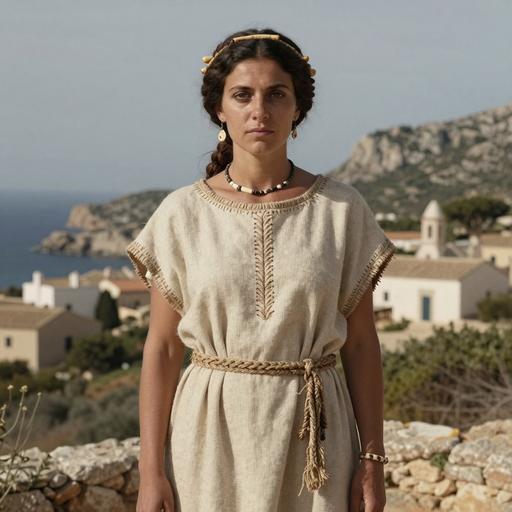
重建的肖像画 LBA individual, Spain
LBA individual, Spain
Spain Spain_Aritgues_LBA 1200-1000 BCE Western Mediterranean F - U5b2a
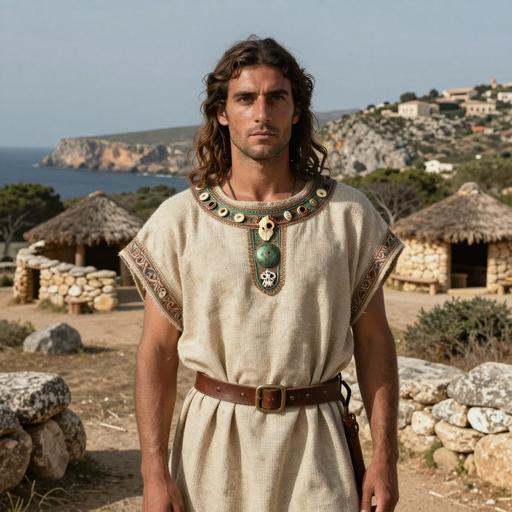
重建的肖像画 LBA individual, Spain
LBA individual, Spain
Spain Spain_Aritgues_LBA 1200-1000 BCE Western Mediterranean F - K1a
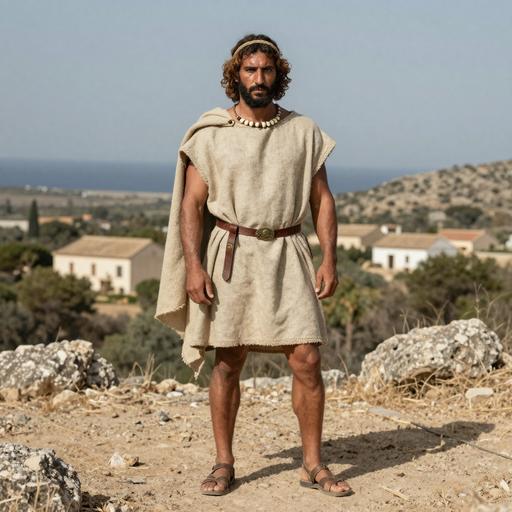
重建的肖像画 LBA individual, Spain
LBA individual, Spain
Spain Spain_Aritgues_LBA 1200-1000 BCE Western Mediterranean M R1b1a1b1a1a2 K1a4a1
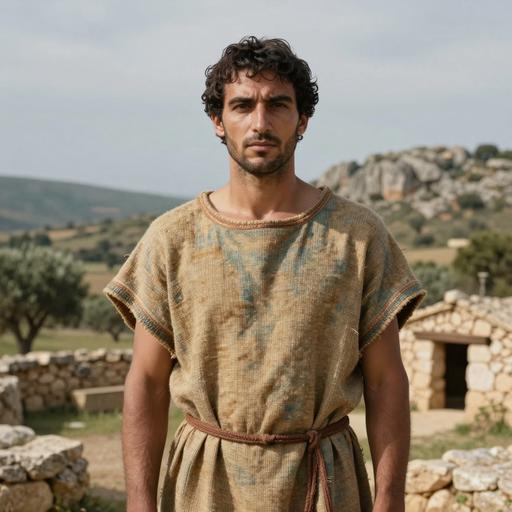
重建的肖像画 LBA individual, Spain
LBA individual, Spain
Spain Spain_Aritgues_LBA 1200-1000 BCE Western Mediterranean M R1b1a1b1a1a2a1 U5a2+16362
重建的肖像画 LBA individual, Spain
LBA individual, Spain
Spain Spain_Aritgues_LBA 1200-1000 BCE Western Mediterranean M R1b1a1b J2b1a
重建的肖像画 LBA individual, Spain
LBA individual, Spain
Spain Spain_Aritgues_LBA 1200-1000 BCE Western Mediterranean M R1b1a1b H10b
AI 电源

AI 助手

就 Western Mediterranean Bronze Age Voices 文化提问

AI 助手 由DNAGENICS公司制作

解锁此特性
Ask questions about the Western Mediterranean Bronze Age Voices culture. Our AI assistant can explain genetic findings, historical context, archaeological evidence, and modern connections.
AI 样本分析

Western Mediterranean Bronze Age Voices 文化是人类历史中值得了解的一章……

遗传分析揭示了与早期种群的联系,同时显示了独特的适应和文化创新的证据。 古代DNA样本提供了对迁徙模式、社会结构以及古代种群之间的生物关系的深刻见解。

这是人工智能分析的预览。 解锁全AI 助手, 以探索关于:

  • 遗传组成和祖先
  • 移徙模式和起源
  • 日常生活和文化习俗
  • 现代遗传遗产

探索更古老的文化

揭开古代世界文明的故事

使用优惠码 可减免 35% • 11月12日 到期