Xaro Early Iron Age Echoes

下载的 PDF 是图像副本。如需可选中文本及更好的辅助技术支持,请使用打印功能。

Xaro Early Iron Age Echoes

揭开一个失落的文明

正在加载考古记录……

正在收集古代记录

跳转到主内容
Xaro Early Iron Age Echoes
文明焦点

Xaro Early Iron Age Echoes

A brief, evocative look at Xaro (Botswana) between 700–1000 CE through bones and genes

700 CE - 1000 CE
Xaro, Botswana
滚动开始
Chapter I

剧情

了解 Xaro Early Iron Age Echoes 文化

Archaeological finds from Xaro, Botswana (700–1000 CE) reveal Early Iron Age lifeways tied to local ironworking and agro-pastoral landscapes. Ancient DNA from two individuals shows Y-haplogroup E and mtDNA L lineages; conclusions are preliminary given the small sample size.

Time Period

700–1000 CE

Region

Xaro, Botswana

Common Y-DNA

E (2)

Common mtDNA

L (2)

Chapter II

时间线

这种文化历史上的关键时刻

700 CE

Onset of Xaro Iron Age activity

Archaeological layers at Xaro begin to show ironworking residues and domestic debris, marking Early Iron Age occupation.

1000 CE

Late Early Iron Age horizon

Stratigraphy and dates suggest continuance or transformation of occupation through the late 1st millennium CE.

Chapter III

Origins & Emergence

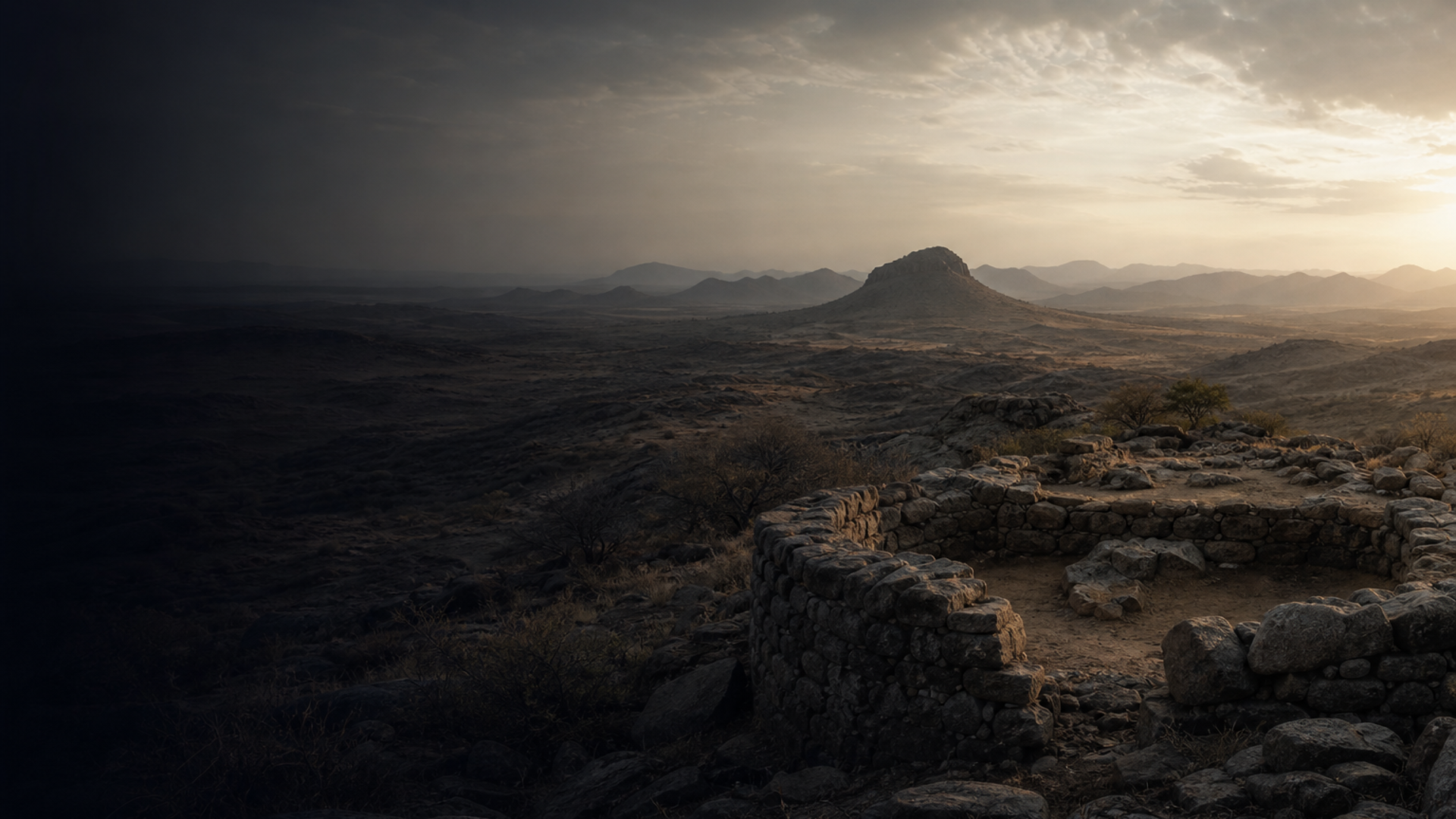
The Xaro Early Iron Age occupation sits within the cinematic landscapes of northeastern Botswana, where seasonal pans and savanna meet rocky kopjes. Radiocarbon and stratigraphic evidence place human activity at Xaro between roughly 700 and 1000 CE, a period when iron technology and new agricultural practices were spreading across southern Africa. Archaeological data indicates hearths, ironworking residues, and domestic pottery at the site, suggesting a settled, craft-producing community rather than fleeting camps.

Limited evidence suggests Xaro participated in regional networks of exchange — moving iron tools, pottery styles, and perhaps livestock across river valleys. Material culture resonates with broader Early Iron Age assemblages in the Kalahari margin, but local adaptations are visible in ceramic forms and subsistence residues. The archaeological record does not yet support a detailed demographic narrative: there is no large cemetery, and settlement size estimates remain provisional. As such, the story of Xaro’s emergence is reconstructed from fragments: slag-strewn floors, charred seeds, and the measured silence of absent architecture.

This site occupies a moment in the wider transformational arc of southern Africa, where incoming technologies and local ecologies combined to produce distinct community trajectories. Interpretations must remain cautious: current data is robust for describing activities, but limited for revealing the precise origins of Xaro’s inhabitants.

  • Dated occupation: ca. 700–1000 CE
  • Evidence for ironworking, domestic pottery, and agro-pastoralism
  • Regional connections likely but not yet fully documented
Chapter IV

Daily Life & Society

At Xaro, daily life would have been shaped by seasonal rhythms: planting and harvesting, managing small herds, and maintaining hearth and forge. Archaeological remains — charred grains, grinding stones, bone fragments, and iron slag — point to a mixed subsistence economy in which farming and animal husbandry were complemented by hunting and wild-gathering. Pottery sherds and hearth features imply household-focused production, while concentrations of slag and tuyère fragments mark localized smithing areas where iron tools and ornaments were fashioned.

Material culture evokes social practices: decorated ceramics may have signaled family identities or networks, while iron tools underpinned land clearance and craft production. The absence of large monumental architecture suggests communities organized around kin groups and open settlement patterns rather than hierarchical polities. Burials at or near Xaro are scarce in current records, limiting insights into status differentiation, age profiles, or mortuary ritual. Zooarchaeological traces indicate domesticates were important, but wild species remain part of the diet, reflecting flexible strategies in variable environments.

Archaeological interpretations emphasize everyday craft, seasonal mobility within home ranges, and community-level cooperation in ironworking and food production. Yet these reconstructions are provisional, built from a modest dataset that invites further excavation and interdisciplinary study.

  • Mixed farming, herding, hunting and gathering
  • Household-based ironworking and pottery production
Chapter V

Genetic Profile

Ancient DNA analysis at Xaro has so far produced two usable samples dated within the 700–1000 CE range. Both individuals carry Y-chromosome haplogroup E and mitochondrial haplogroup L. These lineages are widespread in sub-Saharan Africa today and in many ancient southern African contexts, and their presence at Xaro aligns with expectations for populations in this part of the continent.

However, the sample size is extremely small (n=2), so genetic inferences must be framed as preliminary. The shared presence of Y-haplogroup E does not by itself reveal detailed population history: E encompasses deep time diversity and local sublineages that require higher-resolution sequencing to interpret. Likewise, mtDNA L comprises multiple branches with varied geographical histories; without subclade resolution and broader comparative sampling, we cannot define precise maternal origins or migration trajectories.

Where genetics intersects with archaeology, the combined evidence suggests continuity with broader southern African Early Iron Age populations who practiced agro-pastoralism and ironworking. Limited genetic data are compatible with a local population rooted in the region, potentially influenced by movements associated with the Bantu-speaking expansions, but direct links remain speculative. Future sampling (larger numbers, improved genomic coverage) would allow tests of admixture, kinship within burial contexts, and links to contemporary groups in Botswana and neighboring regions.

  • Both sequenced individuals: Y-haplogroup E and mtDNA L
  • Sample size (n=2) is small — conclusions are preliminary
Chapter VI

Legacy & Modern Connections

Xaro’s material echoes persist in the cultural landscapes of modern Botswana: iron-smithing traditions, ceramic affinities, and agro-pastoral lifeways that have deep regional roots. Genetic signals found so far are consistent with broad sub-Saharan lineages seen today, suggesting continuity in some ancestral components, but the story remains incomplete. Contemporary communities in northeastern Botswana may retain cultural memories and practices that resonate with Early Iron Age lifeways, yet direct lineage claims require careful, community-engaged research.

The archaeological and genetic fragments from Xaro invite collaborative futures: expanded excavation, respectful sampling strategies, and dialogue with local stakeholders can enrich understanding of ancestry, identity, and the long-term human story on Botswana’s plains. For now, Xaro stands as a poignant reminder that even small assemblages—two genomes among many more to seek—can open windows onto ancient lives, while also underscoring the need for broader sampling to move from suggestion to robust narrative.

  • Material and genetic traces suggest long-term regional continuity
  • Broader sampling and community collaboration needed for deeper connections
AI 电源

AI 助手

就 Xaro Early Iron Age Echoes 文化提问

AI 助手 由DNAGENICS公司制作

解锁此特性
Ask questions about the Xaro Early Iron Age Echoes culture. Our AI assistant can explain genetic findings, historical context, archaeological evidence, and modern connections.
AI 样本分析

Xaro Early Iron Age Echoes 文化是人类历史中值得了解的一章……

遗传分析揭示了与早期种群的联系,同时显示了独特的适应和文化创新的证据。 古代DNA样本提供了对迁徙模式、社会结构以及古代种群之间的生物关系的深刻见解。

这是人工智能分析的预览。 解锁全AI 助手, 以探索关于:

  • 遗传组成和祖先
  • 移徙模式和起源
  • 日常生活和文化习俗
  • 现代遗传遗产

探索更古老的文化

揭开古代世界文明的故事

使用优惠码 可减免 35% • 11月12日 到期




