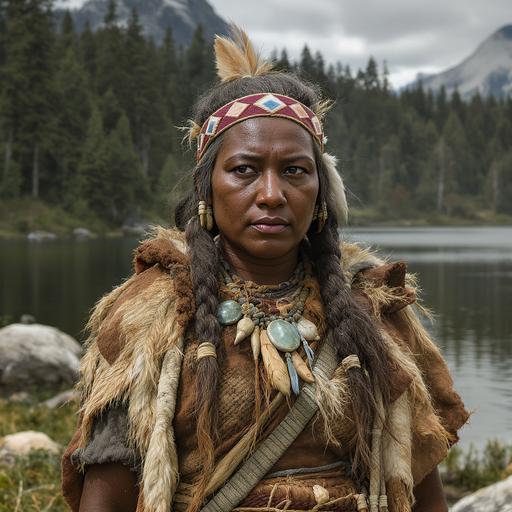
The Big Bar Site, located in the Middle Fraser Canyon of British Columbia, is an archaeologically significant location that offers insights into the lives of ancient Amerindian peoples in Canada around 5,700 years ago. Though specific detailed studies focusing solely on the Big Bar Site might be limited, we can contextualize and construct a picture of this period by considering broader regional archaeological findings and the known cultural practices of ancient inhabitants in this area.
Geographic and Environmental Context
The Middle Fraser Canyon is characterized by its rugged terrain, with steep canyon walls and the Fraser River cutting through the landscape. This environment would have been crucial for the native peoples, providing a variety of ecological zones in close proximity: riverine, forested, and montane ecosystems. The river, in particular, would have served as an important resource for sustenance and travel.
Around 5,700 years ago, the climate in this region was undergoing transitions that influenced vegetation and animal distributions. The mid-Holocene period saw stabilization after dramatic climate shifts following the last Ice Age, leading to a gradual warming trend that affected the availability and variety of resources.
Cultural and Social Structure
Subsistence Patterns
The indigenous peoples of the Big Bar Site would have likely followed a semi-nomadic lifestyle, although with increasing sedentism due to abundant resources. The Fraser River is well-known for its salmon runs, which would have been a staple food source. Fishing techniques, likely involving sophisticated technology such as weirs and traps, demonstrate a deep understanding of local ecology.
Beyond fishing, hunter-gatherer activities would have included the hunting of deer, elk, and smaller mammals, as well as the gathering of plant materials like roots, berries, and nuts. The seasonal nature of different food sources would have dictated patterns of movement and settlement throughout the year.
Tool and Artifact Assemblage
Artifacts from this period typically include stone tools such as spear points, knives, scrapers, and ground stone implements. These tools reflect a transition from paleo-Indian traditions to technologies that are better suited for the boreal forests and riverine environments. The presence of microblade technology suggests a certain level of sophistication in hunting and craft making.
Additionally, the presence of bone tools and the use of organic materials like wood and sinew indicate a holistic use of available resources to manufacture tools, clothing, and possibly simple structures for habitation.
Societal Organization
Communities during this time were likely organized in kin-based bands, with social structures that emphasized cooperation and resource sharing. The collaborative effort necessary for efficient salmon fishing and processing indicates a communal lifestyle with shared labor responsibilities. Artifacts such as ornamental objects or burial goods might reflect social stratification or status differentiation based on roles like shaman or chief.
Cultural and Spiritual Beliefs
Spiritual and ceremonial practices of these ancient peoples would have been closely tied to their natural environment. The river, animals, and landscape features likely held spiritual significance, and their beliefs could be reflected in rock art or carvings, although such evidence might not be well-preserved.
The potential for ritual gatherings tied to salmon runs or seasonal events would have strengthened cultural cohesion, providing opportunities for collective gatherings that reinforced social bonds.
Conclusion
The Big Bar Site, while not extensively documented in isolation, forms part of a broader tapestry of ancient human life in the Middle Fraser region. Through archaeological evidence, we gain insight into a complex society that was adept at exploiting a challenging environment, employing sophisticated technologies, and developing rich cultural traditions. The legacy of these peoples is built into the region's historical and cultural landscape, reflecting resilience, adaptation, and a profound connection to the land.