Menu
Store
Blog
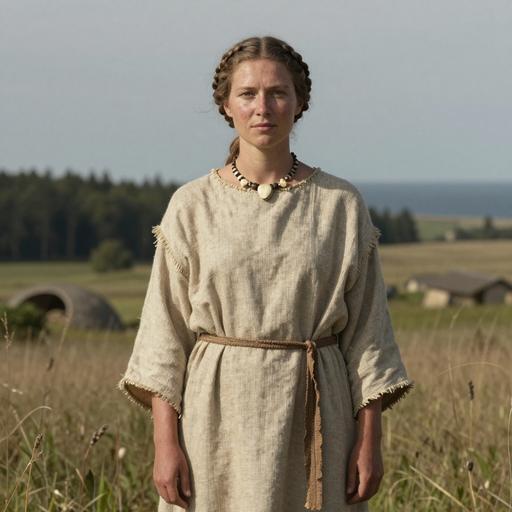
Portrait reconstruction of AVL001
Ancient Individual

A woman buried in Denmark in the Early Neolithic era

AVL001
3356 BCE - 3098 BCE
Female
Avlebjerg-Strøby Culture
Denmark
Scroll to begin
Chapter I

Identity

The biological and cultural markers that define this ancient individual

Sample ID

AVL001

Date Range

3356 BCE - 3098 BCE

Biological Sex

Female

mtDNA Haplogroup

K1b1a1

Cultural Period

Avlebjerg-Strøby Culture

Chapter II

Place

Where this individual was discovered

Country Denmark
Locality Strøby (Avlebjerg)
Coordinates 55.3833, 12.2820
Chapter III

Time

When this individual lived in the broader context of human history

AVL001 3356 BCE - 3098 BCE
Chapter IV

Story

The narrative of this ancient life

The Avlebjerg-Strøby Culture represents a fascinating subset of the broader prehistoric Nordic cultures that developed during the late Neolithic to early Bronze Age period (approximately 2400–1700 BCE). This culture is named after key archaeological sites in the region, particularly Avlebjerg and Strøby, located in what is today Denmark. The Avlebjerg-Strøby Culture is understood as a regional development within the Corded Ware culture complex, which spread across vast parts of Europe during the Neolithic.

Geographical Extent and Environment: The Avlebjerg-Strøby Culture was predominantly situated on the Danish islands, which provided a varied and rich environment for settlement. The landscape during this era was characterized by a mosaic of forests, wetlands, and open meadows, interspersed with rivers and coastal areas. This environment offered rich resources for fishing, hunting, and agriculture, which were crucial for sustaining the communities.

Societal Structure: The society of the Avlebjerg-Strøby Culture is believed to have been organized into small, kinship-based groups or clans. These groups were likely led by chieftains or elders, reflecting a hierarchical societal structure with leadership likely based on lineage and prowess. Evidence suggests the construction of megalithic graves and burial mounds, indicating a society that placed significant emphasis on ancestral worship and social status, with elite individuals often receiving more elaborate burials.

Economy and Subsistence: The economy was primarily based on a mix of agriculture and animal husbandry, with evidence of cultivated crops such as barley and wheat, alongside domesticated livestock including cattle, sheep, and pigs. Supplementary dietary contributions came from hunting local wildlife and fishing, exploiting the rich maritime resources. Archaeobotanical studies reveal the use of wild plants and berries, which played a role in the diet and possibly in rituals.

Material Culture and Technology: The Avlebjerg-Strøby Culture exhibited advanced tool-making skills, particularly in flint and later metalwork. Flint axes, pottery, and ornamentation are hallmark artifacts found at sites associated with this culture. The pottery often features corded or incised decorations, consistent with the wider Corded Ware traditions. As the culture progressed into the Bronze Age, there is evidence of increased metalworking, with bronze tools and weapons becoming more prevalent.

Art and Symbolism: Artistic expression in this culture is evident through jewelry and decorated pottery. Symbols on pottery might have held ritual significance or denoted ownership or identity. The artwork often reflects a keen attention to aesthetics and detail, indicative of the cultural values placed on craftsmanship.

Burial Customs: Burial customs in the Avlebjerg-Strøby Culture were elaborate, showcasing a range of practices from simple inhumations to complex stone chambers. The presence of grave goods, such as tools, ornaments, and pottery, placed alongside the deceased, indicates beliefs in an afterlife and the importance of equipping the dead for the journey beyond. The variation in burial types and goods also highlights social differentiation and status within the culture.

Interaction and Trade: There is evidence suggesting that the Avlebjerg-Strøby people participated in extensive trade networks. This is indicated by the presence of non-local materials, such as amber and certain types of metal, which were not sourced locally but found at burial sites and settlements. The culture's strategic location in the Nordic region likely facilitated contact with other contemporary cultures, promoting exchanges of ideas, goods, and technologies.

Cultural Legacy: The Avlebjerg-Strøby Culture laid down the foundational aspects of social organization, economic strategies, and cultural expressions that influenced subsequent cultures in Scandinavia. The transition from the late Neolithic to the early Bronze Age within this culture marked a period of significant transformation, embodying shifts in technology and societal structures that were essential in shaping the historical trajectory of the Nordic region.

The Avlebjerg-Strøby Culture remains a vital subject of study for archaeologists and historians, as it provides critical insights into the development of human societies in Northern Europe during a pivotal era of prehistory.

Chapter V

Context

Other ancient individuals connected to this sample

Sources

References

Scientific publications and genetic data

Scientific Publication

Repeated plague infections across six generations of Neolithic Farmers

Authors Seersholm FV, Sjögren KG, Koelman J
Abstract

In the period between 5,300 and 4,900 calibrated years before present (cal. BP), populations across large parts of Europe underwent a period of demographic decline1,2. However, the cause of this so-called Neolithic decline is still debated. Some argue for an agricultural crisis resulting in the decline3, others for the spread of an early form of plague4. Here we use population-scale ancient genomics to infer ancestry, social structure and pathogen infection in 108 Scandinavian Neolithic individuals from eight megalithic graves and a stone cist. We find that the Neolithic plague was widespread, detected in at least 17% of the sampled population and across large geographical distances. We demonstrate that the disease spread within the Neolithic community in three distinct infection events within a period of around 120 years. Variant graph-based pan-genomics shows that the Neolithic plague genomes retained ancestral genomic variation present in Yersinia pseudotuberculosis, including virulence factors associated with disease outcomes. In addition, we reconstruct four multigeneration pedigrees, the largest of which consists of 38 individuals spanning six generations, showing a patrilineal social organization. Lastly, we document direct genomic evidence for Neolithic female exogamy in a woman buried in a different megalithic tomb than her brothers. Taken together, our findings provide a detailed reconstruction of plague spread within a large patrilineal kinship group and identify multiple plague infections in a population dated to the beginning of the Neolithic decline.

Use code for 40% off Expires Feb 27