Menu
Store
Blog
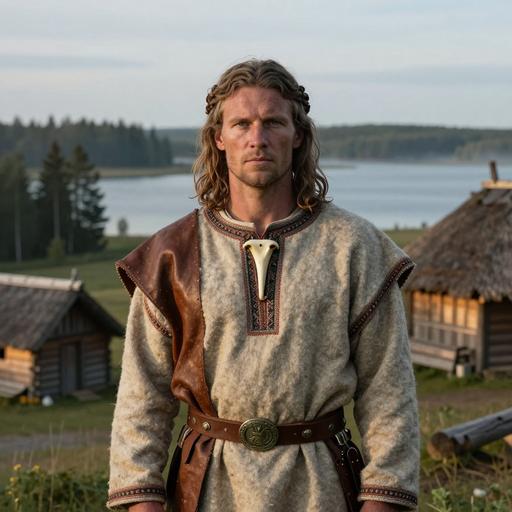
Portrait reconstruction of FIR001
Ancient Individual

A man buried in Sweden in the Bronze Age era

FIR001
1193 BCE - 1009 BCE
Male
Sweden Firse Sten (1193 BCE)
Sweden
Scroll to begin
Chapter I

Identity

The biological and cultural markers that define this ancient individual

Sample ID

FIR001

Date Range

1193 BCE - 1009 BCE

Biological Sex

Male

mtDNA Haplogroup

J1c5

Y-DNA Haplogroup

Not available

Cultural Period

Sweden Firse Sten (1193 BCE)

Chapter II

Place

Where this individual was discovered

Country Sweden
Locality Firse Sten
Coordinates 58.1531, 13.5686
Chapter III

Time

When this individual lived in the broader context of human history

FIR001 1193 BCE - 1009 BCE
Chapter IV

Story

The narrative of this ancient life

The era referred to as \Sweden Firse Sten" in 1193 BCE seems to diverge from known historical milestones or terminologies. The Nordic Bronze Age, however, does frame a period around this era, reflecting a vibrant and culturally significant epoch in Scandinavian prehistory. While the specific term "Firse Sten" does not correspond to recognized archaeological or historical documentation, a comprehensive description of the Nordic Bronze Age can provide insights into the general cultural landscape during this time in what is now Sweden.

The Nordic Bronze Age (circa 1700–500 BCE)

Geographic and Temporal Context

The Nordic Bronze Age is an archaeological era approximately spanning from 1700 to 500 BCE. This period is characterized by the increasing use of bronze in Scandinavia and encompasses the regions that are currently known as Denmark, Norway, and Sweden. Around 1193 BCE, this era was thriving with dynamic cultural developments influenced by both indigenous processes and interactions with other European communities.

Society and Culture

  1. Social Structure:

    • The society was organized in tribal communities, with evidence suggesting the presence of chieftains or leaders who wielded authority over these groups.
    • Social stratification likely existed, where the aristocracy exhibited wealth and power, often displayed through the accumulation of luxurious goods and burial practices.
  2. Economy and Trade:

    • The economy was largely agrarian, with advancements in agricultural techniques and livestock management.
    • Trade networks were expansive, reaching far across Europe. Bronze, not native to Scandinavia, indicated extensive trade relations, likely importing copper and tin from regions such as the British Isles and Central Europe.
    • Amber, richly found in the region, was a significant export, cherished and traded across Europe.
  3. Artifacts and Craftsmanship:

    • Bronze craftsmanship was highly developed, indicated by intricate weapons, tools, jewelry, and ritual objects found in archaeological sites.
    • Rock carvings and petroglyphs are abundant, often depicting scenes of daily life, religious iconography, and maritime activities, reflecting both artistic expression and social narratives.
  4. Religion and Beliefs:

    • Religion during this period was polytheistic, with a deep spiritual connection to nature, evident in ritualistic artifacts and burial rites.
    • Sacred sites, often near water bodies, and the sun were key components of religious belief, symbolized in sun wheels and boat motifs in carvings.
  5. Funerary Practices:

    • Burial practices during this age often involved tumuli (barrows), which were earthen mounds covering burial chambers.
    • Elaborate burial goods found in these sites demonstrate the significance of afterlife beliefs and social status.
  6. Daily Life:

    • Villages were typically composed of longhouses constructed from timber, thatch, and wattle.
    • The familial unit was the foundational societal structure, engaged in farming, animal husbandry, and tool-making.

Environmental and Climatic Influences

The Nordic climate during the Bronze Age was warmer than today, fostering fertile lands that supported agricultural prosperity. This climatic advantage contributed to the societal sustainability and expansion throughout the period.

Artistic and Cultural Exchanges

A notable feature of the Nordic Bronze Age was its integration within a broader European cultural milieu, evidenced by stylistic similarities in art and technology. This was a period of considerable syncretism, where local traditions fused with external influences.

Conclusion

While specific events or focuses under the name "Sweden Firse Sten" aren't documented in historical texts, the Nordic Bronze Age provides a rich context for understanding the culture in the region during approximately 1193 BCE. Characterized by their craftsmanship, societal structures, religious practices, and interactions through trade, this era was significant in laying foundational cultural norms and practices that influenced subsequent developments in Scandinavian history."

Chapter V

Context

Other ancient individuals connected to this sample

Sources

References

Scientific publications and genetic data

Scientific Publication

Repeated plague infections across six generations of Neolithic Farmers

Authors Seersholm FV, Sjögren KG, Koelman J
Abstract

In the period between 5,300 and 4,900 calibrated years before present (cal. BP), populations across large parts of Europe underwent a period of demographic decline1,2. However, the cause of this so-called Neolithic decline is still debated. Some argue for an agricultural crisis resulting in the decline3, others for the spread of an early form of plague4. Here we use population-scale ancient genomics to infer ancestry, social structure and pathogen infection in 108 Scandinavian Neolithic individuals from eight megalithic graves and a stone cist. We find that the Neolithic plague was widespread, detected in at least 17% of the sampled population and across large geographical distances. We demonstrate that the disease spread within the Neolithic community in three distinct infection events within a period of around 120 years. Variant graph-based pan-genomics shows that the Neolithic plague genomes retained ancestral genomic variation present in Yersinia pseudotuberculosis, including virulence factors associated with disease outcomes. In addition, we reconstruct four multigeneration pedigrees, the largest of which consists of 38 individuals spanning six generations, showing a patrilineal social organization. Lastly, we document direct genomic evidence for Neolithic female exogamy in a woman buried in a different megalithic tomb than her brothers. Taken together, our findings provide a detailed reconstruction of plague spread within a large patrilineal kinship group and identify multiple plague infections in a population dated to the beginning of the Neolithic decline.

Use code for 40% off Expires Feb 27