Menu
Store
Blog
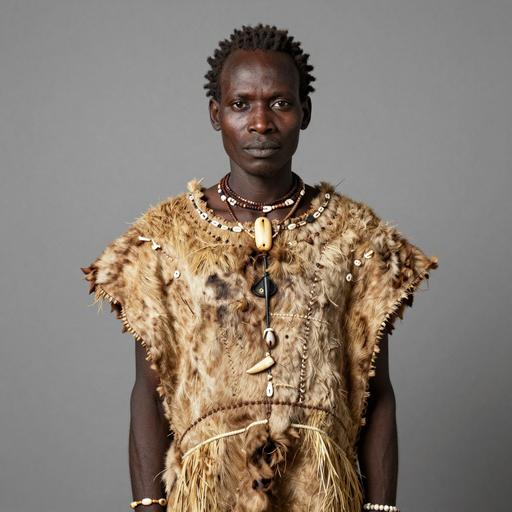
Portrait reconstruction of HYR002
Ancient Individual

A man buried in Kenya in the Neolithic era

HYR002
513 BCE - 386 BCE
Male
Hyrax Hill Pastoral Neolithic in Kenya
Kenya
Scroll to begin
Chapter I

Identity

The biological and cultural markers that define this ancient individual

Sample ID

HYR002

Date Range

513 BCE - 386 BCE

Biological Sex

Male

mtDNA Haplogroup

L5a1b

Y-DNA Haplogroup

E1b1b1b2b

Cultural Period

Hyrax Hill Pastoral Neolithic in Kenya

Chapter II

Place

Where this individual was discovered

Country Kenya
Locality Hyrax Hill. GrJj25
Coordinates -0.2755, 36.1030
Chapter III

Time

When this individual lived in the broader context of human history

HYR002 513 BCE - 386 BCE
Chapter IV

Story

The narrative of this ancient life

The Hyrax Hill site, located near Nakuru in Kenya, offers a fascinating glimpse into the Pastoral Neolithic era in East Africa, a period generally dated between 3000 and 1200 BCE. This era is marked by significant cultural and economic transformations in the region, characterized by the shift from hunting and gathering to pastoralism and agriculture. The Hyrax Hill site is one of the key archaeological sites that provide insight into the pastoral lifestyles and societal organization of the time.

Geographic and Environmental Context

Hyrax Hill is situated in the Kenyan Rift Valley, a geographical area known for its diverse ecosystems, ranging from savannahs to highlands. This variety provided ample resources for both the flora and fauna that would support human populations and their livestock. The climate during the Pastoral Neolithic period was relatively stable, contributing to the development and spread of pastoralist societies in the region. The site itself is located on a hill that would have offered strategic advantages for settlement, such as increased visibility and defensibility.

Cultural and Economic Practices

Subsistence Strategies

The defining feature of the Pastoral Neolithic era at Hyrax Hill is the adoption of pastoralism, particularly the herding of cattle, sheep, and goats. This shift from a reliance on wild resources to domesticated animals marks a significant transformation in subsistence strategies. Animal husbandry provided a more stable and predictable food source compared to foraging, allowing for population growth and more permanent settlements.

Archaeological evidence suggests the cultivation of crops, although to a lesser extent than livestock raising. The combination of pastoralism and limited agriculture suggests a mixed economy that could exploit the different environmental niches available in the region.

Material Culture

At Hyrax Hill, the material culture is typified by pottery, stone tools, and burial practices that provide insight into the socio-cultural aspects of the people. The ceramics found at the site are distinctive, with varied styles that suggest both functional uses and symbolic meanings. Pottery was likely used for storage, cooking, and possibly ritual purposes.

Stone tools discovered at Hyrax Hill include microliths, which were used in a variety of domestic activities. These tools indicate technological continuity and adaptation to new subsistence strategies. The presence of grinding stones also suggests some level of plant processing, aligning with the evidence of agricultural activities.

Settlement Patterns and Architecture

The remains of settlements at Hyrax Hill indicate semi-permanent structures that were likely made using organic materials such as wood and thatch. These structures suggest a level of societal organization with designated areas for living, cooking, and possibly communal gatherings.

Social and Ritual Life

Burial Practices

One of the most striking features of the Hyrax Hill site is its burial practices. Several cairns or stone-covered graves have been unearthed, signaling complex mortuary rituals. The graves often contain grave goods such as pottery, stone tools, and jewelry, indicating beliefs in an afterlife and the significance of the individuals buried there. The presence of these items suggests a society with social stratification or differentiation.

Art and Symbolism

The people of the Hyrax Hill culture likely engaged in symbolic and artistic expression, although direct evidence such as rock art is less abundant at this site compared to other areas in East Africa. However, the design and decoration of pottery may reflect artistic tendencies and symbolic communication.

Interaction and Trade

The Hyrax Hill community was not isolated. Evidence suggests interactions with neighboring cultures and communities, facilitated by pastoralism, which naturally encourages mobility. The exchange of goods such as pottery, livestock, and possibly even customs and ideas indicates a network of trade and cultural exchange throughout the region.

Decline and Legacy

The decline of the Hyrax Hill pastoralist society, as with other Pastoral Neolithic groups, could be attributed to several factors, including environmental changes, overgrazing, or socio-political dynamics such as competition or conflict with agricultural communities. The legacy of the Hyrax Hill culture and its contemporaries is evident in the continuing importance of pastoralism in East African societies today.

In summary, the Hyrax Hill site provides valuable insights into the Pastoral Neolithic era in Kenya, highlighting a period of significant cultural and economic transformation. This site underscores the adaptability and resilience of human societies in the face of environmental and social challenges, contributing to the rich tapestry of human history in East Africa.

Chapter V

Genetics

The genetic ancestry of this ancient individual

Ancient Genetic Admixture

This analysis compares the DNA profile of HYR002 with ancient reference populations, showing the genetic composition in terms of prehistoric ancestral groups.

Ancient Africans 47.2%
Neolithic Farmers 42.4%
Western Steppe Pastoralists 6.5%
Ancient Asians 4.0%

Modern Genetic Admixture

This analysis compares the DNA profile with present-day reference populations, showing what percentage of genetic makeup resembles modern populations from different regions.

Africa 87.1%
Northern East African 59.6%
Ethiopian 44.2%
Eastern African 15.4%
North African 14.8%
North African 10.0%
Egyptian 4.8%
West African 6.7%
Senegambian & Guinean 6.7%
Congolese & Southern East African 4.7%
South East African 4.7%
African Hunter-Gatherer 1.3%
Asia 13.0%
Arab, Egyptian & Levantine 12.6%
Levantine 10.0%
Arabian 2.5%

Closest Modern Populations

These are the modern populations showing the closest statistical alignment to A man buried in Kenya in the Neolithic era, ranked by genetic distance. Lower distance values indicate closer statistical similarity.

1
Somali
2.3653
2
Ethiopian Wolayta
2.6518
3
Somali Kenya
2.6900
4
Ethiopian Oromo
2.9985
5
Rendille
4.3506
6
Sudan Arab Kababish
5.8352
7
Iraqw
6.3683
8
Ethiopian Jew
7.5365
9
Ethiopian Amhara
8.2200
10
Ethiopian Agaw
8.3203
Chapter VI

Context

Other ancient individuals connected to this sample

Sources

References

Scientific publications and genetic data

Scientific Publication

Ancient genomes reveal complex patterns of population movement, interaction, and replacement in sub-Saharan Africa

Authors Wang K, Goldstein S, Bleasdale M
Abstract

Africa hosts the greatest human genetic diversity globally, but legacies of ancient population interactions and dispersals across the continent remain understudied. Here, we report genome-wide data from 20 ancient sub-Saharan African individuals, including the first reported ancient DNA from the DRC, Uganda, and Botswana. These data demonstrate the contraction of diverse, once contiguous hunter-gatherer populations, and suggest the resistance to interaction with incoming pastoralists of delayed-return foragers in aquatic environments. We refine models for the spread of food producers into eastern and southern Africa, demonstrating more complex trajectories of admixture than previously suggested. In Botswana, we show that Bantu ancestry post-dates admixture between pastoralists and foragers, suggesting an earlier spread of pastoralism than farming to southern Africa. Our findings demonstrate how processes of migration and admixture have markedly reshaped the genetic map of sub-Saharan Africa in the past few millennia and highlight the utility of combined archaeological and archaeogenetic approaches.

G25 Coordinates

The G25 coordinates for sample HYR002 can be used for detailed admixture analysis in our G25 Studio tool.

HYR002,-0.29791956,0.08919096,-0.02485514,-0.06463272,0.00033944,-0.03083396,-0.00993096,-0.00315258,0.11035078,-0.06984702,-0.00669052,-0.0036343,0.00345674,-0.00080782,0.0263781,-0.01279342,0.02335356,-0.00070744,0.00394822,-0.00153784,0.00185876,0.00142786,-0.00152458,-0.00082396,-0.00270739
Analyze in G25 Studio
Use code for 40% off Expires Mar 01