Menu
Store
Blog
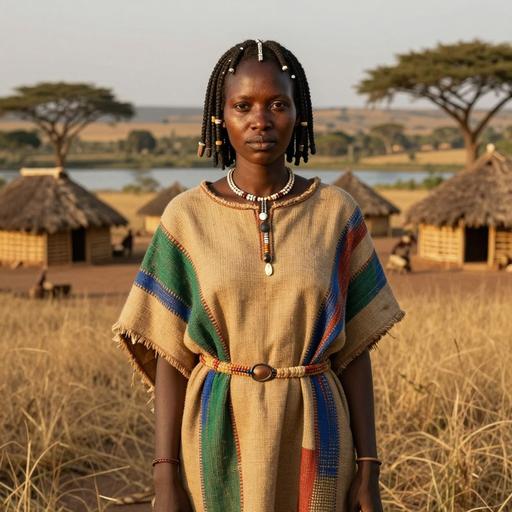
Portrait reconstruction of MUN001
Ancient Individual

A woman buried in Uganda in the Late Iron Age era

MUN001
1400 CE - 1600 CE
Female
Munsa Late Iron Age in Uganda
Uganda
Scroll to begin
Chapter I

Identity

The biological and cultural markers that define this ancient individual

Sample ID

MUN001

Date Range

1400 CE - 1600 CE

Biological Sex

Female

mtDNA Haplogroup

L3b1a1

Cultural Period

Munsa Late Iron Age in Uganda

Chapter II

Place

Where this individual was discovered

Country Uganda
Locality Munsa
Coordinates 0.8250, 31.3000
Chapter III

Time

When this individual lived in the broader context of human history

MUN001 1400 CE - 1600 CE
Chapter IV

Story

The narrative of this ancient life

The Munsa Late Iron Age (LIA) in Uganda represents a fascinating period and cultural phase in the history of the Bantu-speaking peoples in East Africa. This era is characterized by significant advancements in metallurgy, agriculture, social organization, and interaction with the environment. The Munsa archaeological site, which has yielded rich insights into this epoch, serves as a focal point for understanding the cultural and technological developments of the Bantu peoples during the LIA.

Geographical and Environmental Context

Munsa is located in the present-day western region of Uganda. The area is characterized by its rich volcanic soils, which are conducive to agriculture, and its strategic location between the Great Lakes of Africa. This made it an attractive settlement site for Bantu-speaking communities. The climate during the Late Iron Age was generally stable, supporting both agricultural and pastoral lifestyles.

Cultural and Social Organization

The Munsa LIA spans approximately 1000 AD to 1600 AD. During this time, Bantu communities in Uganda had developed settled agricultural societies. These communities were organized into hierarchical chiefdoms or kingdoms, with social structures becoming increasingly complex. Leadership was often centralized in the person of a chief or king who wielded both spiritual and political authority.

Technological and Agricultural Advancements

The hallmark of the Munsa LIA is the sophisticated use of iron metallurgy. Iron tools radically improved agricultural efficiency, facilitating the expansion of farming communities. The production of iron involved both smelting and smithing techniques, with evidence of furnaces found at archaeological sites like Munsa.

Agriculture was the backbone of the Munsa LIA economy, with banana cultivation, millet, and sorghum being staple crops. The use of iron hoes and other implements enabled more extensive and productive farming. In addition to crop farming, animal husbandry played a significant role, with communities raising cattle, goats, and sheep.

Trade and Interaction

The Munsa region was part of a broader network of trade that connected different Bantu communities and other cultural groups across East Africa. Goods such as iron products, pottery, and agricultural surpluses were commonly traded. There is also evidence of long-distance trade, with items like glass beads suggesting connections to Indian Ocean trade networks.

Art, Religion, and Rituals

Artistic expression within Munsa communities is often observed in pottery, which was both utilitarian and ceremonial. The pottery typically features intricate designs and serves as an indicator of cultural affiliations and regional exchanges.

Religion and spirituality were integral to life during the Munsa LIA. Ancestor worship and reverence for spirits played crucial roles, with spiritual leaders guiding religious rituals. Archaeological findings at Munsa suggest that certain spaces were designated for religious purposes, possibly including human or animal sacrifices, which were common in many Bantu spiritual traditions.

Decline and Legacy

The decline of the Munsa LIA culture can be attributed to a combination of factors, including environmental changes, overexploitation of resources, and possibly sociopolitical upheavals that led to the reorganization of communities. Despite these declines, the legacy of this period is significant. It laid the foundation for subsequent cultural and political developments in the region, including the emergence of powerful kingdoms like Bunyoro and Buganda.

Archaeological Significance

The archaeological site at Munsa remains one of the most important for understanding the Late Iron Age in Uganda. Excavations have uncovered various structures, artifacts, and ecofacts that provide insights into the everyday lives of its inhabitants. Defensive structures, such as ditches and embankments, have been discovered, indicating concerns with security and warfare.

In conclusion, the Munsa Late Iron Age era in Uganda represents a critical phase in the development of Bantu cultures in East Africa. It highlights the technological, social, and economic transformations that shaped this region and provided a foundation for the complex societies that would emerge in the centuries to follow.

Chapter V

Genetics

The genetic ancestry of this ancient individual

Ancient Genetic Admixture

This analysis compares the DNA profile of MUN001 with ancient reference populations, showing the genetic composition in terms of prehistoric ancestral groups.

Ancient Africans 93.1%
Neolithic Farmers 3.7%
Ancient Asians 3.2%

Modern Genetic Admixture

This analysis compares the DNA profile with present-day reference populations, showing what percentage of genetic makeup resembles modern populations from different regions.

Africa 99.4%
Northern East African 48.1%
Eastern African 48.1%
West African 42.4%
Nigerian 42.4%
African Hunter-Gatherer 5.0%
Congolese & Southern East African 3.9%
South East African 3.9%

Closest Modern Populations

These are the modern populations showing the closest statistical alignment to A woman buried in Uganda in the Late Iron Age era, ranked by genetic distance. Lower distance values indicate closer statistical similarity.

1
Bantu S.E.
4.0128
2
Bantu S.W.
7.0532
3
Makhuwa
8.6934
4
Ronga
8.8184
5
Nyaneka
8.8332
6
Ngumba
8.8709
7
Yao
9.0248
8
Chopi
9.1830
9
Mwani
9.2465
10
Tswa
9.3647
Chapter VI

Context

Other ancient individuals connected to this sample

Sources

References

Scientific publications and genetic data

Scientific Publication

Ancient genomes reveal complex patterns of population movement, interaction, and replacement in sub-Saharan Africa

Authors Wang K, Goldstein S, Bleasdale M
Abstract

Africa hosts the greatest human genetic diversity globally, but legacies of ancient population interactions and dispersals across the continent remain understudied. Here, we report genome-wide data from 20 ancient sub-Saharan African individuals, including the first reported ancient DNA from the DRC, Uganda, and Botswana. These data demonstrate the contraction of diverse, once contiguous hunter-gatherer populations, and suggest the resistance to interaction with incoming pastoralists of delayed-return foragers in aquatic environments. We refine models for the spread of food producers into eastern and southern Africa, demonstrating more complex trajectories of admixture than previously suggested. In Botswana, we show that Bantu ancestry post-dates admixture between pastoralists and foragers, suggesting an earlier spread of pastoralism than farming to southern Africa. Our findings demonstrate how processes of migration and admixture have markedly reshaped the genetic map of sub-Saharan Africa in the past few millennia and highlight the utility of combined archaeological and archaeogenetic approaches.

G25 Coordinates

The G25 coordinates for sample MUN001 can be used for detailed admixture analysis in our G25 Studio tool.

MUN001,-0.63078,0.06339,0.02363,0.02126,-0.00312,0.00798,0.0493,-0.03108,-0.01928,0.01568,0.00541,-0.02433,-0.01053,-0.00078,-0.00747,0.0031,0.00083,0.03968,-0.01803,0.00239,-0.00109,-0.00196,0.0018,0.00071,0.00057
Analyze in G25 Studio
Use code for 40% off Expires Mar 01