Menu
Store
Blog
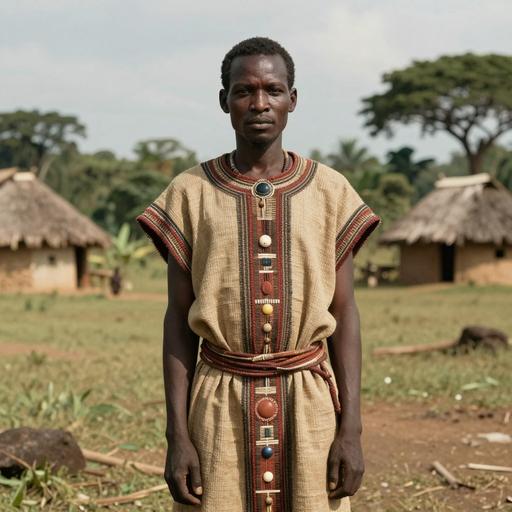
Portrait reconstruction of KIN002
Ancient Individual

A man buried in DR Congo in the Modern era

KIN002
1645 CE - 1950 CE
Male
Kindoki Protohistoric Era in Congo
DR Congo
Scroll to begin
Chapter I

Identity

The biological and cultural markers that define this ancient individual

Sample ID

KIN002

Date Range

1645 CE - 1950 CE

Biological Sex

Male

mtDNA Haplogroup

L1c3a1b

Y-DNA Haplogroup

E1b1a1a1d1a2

Cultural Period

Kindoki Protohistoric Era in Congo

Chapter II

Place

Where this individual was discovered

Country DR Congo
Locality Kindoki
Coordinates -5.0858, 15.1287
Chapter III

Time

When this individual lived in the broader context of human history

KIN002 1645 CE - 1950 CE
Chapter IV

Story

The narrative of this ancient life

The Kindoki Protohistoric Era in the Congo region refers to a period associated with the Bantu expansions that is characterized by cultural, technological, and social changes. This era, though not strictly documented in historical texts, can be pieced together through archaeological findings, oral traditions, linguistics, and comparative anthropology. It is an era marked primarily by the dynamic transitions that laid down the foundations for later historic developments in central Africa.

Geographical Context

The Congo Basin, with its vast rainforests, savannahs, and rich river systems, provided the backdrop for the Kindoki Protohistoric Era. This region, part of present-day Democratic Republic of the Congo and Republic of Congo, is characterized by ecological diversity that supported varied life ways. During this era, these lands facilitated the spread and interaction of Bantu-speaking peoples who were moving gradually from their heartlands in West-Central Africa.

Cultural Background

\Kindoki," in the context of Central African spiritual belief systems, pertains to spiritual power or mystical forces, reflecting the intrinsic woven nature of belief systems in societal frameworks. Although this term is used here to designate the era, its deep-rooted aspect in spiritual and daily life highlights the centrality of metaphysical beliefs in structuring protohistoric societies.

During this era, the Bantu migrations, beginning around 1000 BCE, played a crucial role. Communities were primarily organized in kinship-based clans and tribes with complex relationships governed by elders and spiritual leaders. These societies were deeply integrated through shared linguistic characteristics belonging to the Bantu language family, which itself offers insights into the migratory patterns of the people.

Technological Advancements

One of the most significant technological innovations of the Kindoki Protohistoric Era was the smelting and forging of iron. The introduction and refinement of ironworking technology revolutionized agricultural practices, enabling the deforestation needed for crop cultivation, such as yam and millet, and facilitating increased production and community expansion.

Other technological developments included pottery with distinctive patterns that serve as cultural markers for archaeologists and refined tool-making techniques. These advancements in material culture facilitated more efficient hunting, gathering, and later, agricultural production.

Social and Economic Structures

Socially, the era was marked by increasing complexity. The shift from nomadic to more settled agricultural societies supported larger populations and the development of fortified villages. As societies grew, so did the stratification of roles, with emergent leadership structures centered around chieftains or spiritual leaders, sometimes identified as possessing "kindoki" — spiritual power or authority.

Economically, communities were involved in subsistence farming but also participated in regional trade networks. Items like salt, copper, and later iron goods were exchanged across significant distances, pointing to a sophisticated understanding of the logistical and relational dynamics necessary for successful long-distance trade.

Spiritual and Religious Beliefs

In this protohistoric context, spiritual beliefs were integral to societal structures. The concept of "kindoki" as spiritual power governed both the natural and social world. Ritual specialists, diviners, and healers held significant influence, interpreting the will of the ancestors and spirits, which were believed to influence weather, fertility, health, and prosperity.

Rituals, ceremonies, and spiritual observances were therefore central to community cohesion. They served not only religious purposes but also played a critical role in maintaining social order and transmitting cultural knowledge and values across generations.

Conclusion

The Kindoki Protohistoric Era in the Congo signifies a transformative epoch that laid down the complex socio-cultural dynamics of later historical periods. Through the spread of the Bantu peoples and their interactions with other indigenous groups, this era forged a path of linguistic homogeneity, technological innovation, and spiritual depth that continued to define the region's cultural landscape. Understanding this era provides valuable insights into the formation and evolution of Central African societies as we know them today."

Chapter V

Genetics

The genetic ancestry of this ancient individual

Ancient Genetic Admixture

This analysis compares the DNA profile of KIN002 with ancient reference populations, showing the genetic composition in terms of prehistoric ancestral groups.

Ancient Africans 97.0%
Neolithic Farmers 3.0%

Modern Genetic Admixture

This analysis compares the DNA profile with present-day reference populations, showing what percentage of genetic makeup resembles modern populations from different regions.

Africa 99.1%
West African 68.4%
Nigerian 49.7%
Ghanaian, Liberian, Sierra Leonean 11.4%
Senegambian & Guinean 7.3%
Congolese & Southern East African 11.5%
South East African 11.5%
African Hunter-Gatherer 9.9%
Northern East African 9.3%
Eastern African 9.3%
Asia 0.9%
Chinese & Southeast Asian 0.8%
Indonesian Khmer Thai Myanma 0.8%

Closest Modern Populations

These are the modern populations showing the closest statistical alignment to A man buried in DR Congo in the Modern era, ranked by genetic distance. Lower distance values indicate closer statistical similarity.

1
Mende Sierra Leone
2.0604
2
Cameroon Aghem
2.3380
3
Cameroon Bafut
2.3805
4
Cameroon Mbo
2.4642
5
Tikar South
2.4646
6
Lemande
2.4829
7
Umbundu
2.8705
8
Cameroon Bakoko
3.0271
9
Ganguela
3.0392
10
Nyaneka
3.0710
Chapter VI

Context

Other ancient individuals connected to this sample

Sources

References

Scientific publications and genetic data

Scientific Publication

Ancient genomes reveal complex patterns of population movement, interaction, and replacement in sub-Saharan Africa

Authors Wang K, Goldstein S, Bleasdale M
Abstract

Africa hosts the greatest human genetic diversity globally, but legacies of ancient population interactions and dispersals across the continent remain understudied. Here, we report genome-wide data from 20 ancient sub-Saharan African individuals, including the first reported ancient DNA from the DRC, Uganda, and Botswana. These data demonstrate the contraction of diverse, once contiguous hunter-gatherer populations, and suggest the resistance to interaction with incoming pastoralists of delayed-return foragers in aquatic environments. We refine models for the spread of food producers into eastern and southern Africa, demonstrating more complex trajectories of admixture than previously suggested. In Botswana, we show that Bantu ancestry post-dates admixture between pastoralists and foragers, suggesting an earlier spread of pastoralism than farming to southern Africa. Our findings demonstrate how processes of migration and admixture have markedly reshaped the genetic map of sub-Saharan Africa in the past few millennia and highlight the utility of combined archaeological and archaeogenetic approaches.

G25 Coordinates

The G25 coordinates for sample KIN002 can be used for detailed admixture analysis in our G25 Studio tool.

KIN002,-0.61707488,0.05859232,0.02101062,0.01521762,0.00010742,0.00534906,-0.0181276,0.0271111,-0.03722764,0.0235833,0.00145368,-0.0005195,0.0119835,-0.00208544,0.00011276,-0.00240418,0.00344116,0.0105054,-0.00244136,-0.00071262,0.00308338,0.0012087,-0.00315962,0.00281442,-0.00271206
Analyze in G25 Studio
Use code for 40% off Expires Mar 01