Menu
Store
Blog
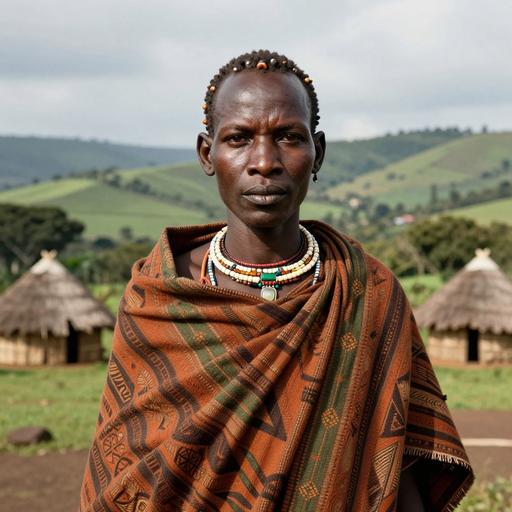
Portrait reconstruction of I19404
Ancient Individual

A man buried in Kenya in the Bantu era

I19404
1400 CE - 1700 CE
Male
Bungule People of Kenya
Kenya
Scroll to begin
Chapter I

Identity

The biological and cultural markers that define this ancient individual

Sample ID

I19404

Date Range

1400 CE - 1700 CE

Biological Sex

Male

mtDNA Haplogroup

L3

Y-DNA Haplogroup

E-M4254

Cultural Period

Bungule People of Kenya

Chapter II

Place

Where this individual was discovered

Country Kenya
Locality Bungule (Taita-Taveta)
Coordinates -3.8452, 38.6645
Chapter III

Time

When this individual lived in the broader context of human history

I19404 1400 CE - 1700 CE
Chapter IV

Story

The narrative of this ancient life

The Bungule people are not a widely recognized distinct ethnic group within Kenya, particularly under that specific name. Kenya is a diverse nation with over 40 ethnic groups, each with its own distinct culture, language, and traditions. Among these are the Swahili people, who primarily reside along the coastal regions of Kenya and have a rich history interwoven with the Indian Ocean trade networks.

If we are to explore an intricate description of what could be an imagined or lesser-known subgroup like the \Bungule" within the Swahili cultural framework, we might extrapolate from the known attributes of the Swahili culture and its historical influences.

Geography and Environment The hypothetical Bungule people would likely inhabit the coastal regions of Kenya. This region is characterized by its proximity to the Indian Ocean, providing fertile grounds for agriculture and fishing, along with coconut palm groves, mangrove forests, and coral reefs. The climate is tropical, with high humidity and seasonal monsoon winds that have historically influenced trade and cultural exchange.

Language and Communication While the Kiswahili language, derived from a Bantu base with heavy Arabic and Persian influences, is the lingua franca of the coastal regions, the Bungule might speak a dialect of Swahili enriched with unique local expressions or vocabulary, reflecting their interaction with other tribes, traders, and possibly the demands of their specific environmental settings.

Social Structure and Lifestyle The social structure of the Bungule might mirror the Swahili, with a strong emphasis on community, family, and Islam's guiding principles. Society could be hierarchically organized with elders and religious leaders holding significant authority. The extended family would play a central role in social life, with strong communal bonds and an emphasis on collective responsibility.

The Bungule might be adept at maritime activities, engaging in fishing, boat-building, and seafaring. They could also be skilled in agriculture, growing crops such as cassava, coconuts, and tropical fruits. Marketplaces would be vibrant centers of trade and social interaction, reflecting a fusion of local and international influence, in line with Swahili culture.

Cultural Practices and Traditions Rich in traditions, the Bungule's cultural practices might include music and dance styles typical of the coastal regions but with unique variations. Music would be a blend of African, Arab, and Persian influences, likely featuring instruments such as drums, tambourines, and wind instruments.

Wedding ceremonies, rite of passage rituals, and festivals would be colorful and elaborate, often showcasing intricate beadwork, woven fabrics, and henna designs used to adorn both men and women. Storytelling and poetry, essential components of Swahili culture, would be prevalent in Bungule society, serving both entertainment and educational purposes.

Religion and Spirituality Islam would be the predominant religion among the Bungule people, influencing every aspect of life, from legal systems to daily routines. However, traditional beliefs and practices could also coexist, with ancestral veneration and indigenous spiritual concepts playing a role in cultural identity.

Art and Architecture The Bungule people might live in towns characterized by Swahili architectural styles—think coral stone buildings, intricately carved doors, and spacious courtyards. Art would be expressed through wood carving, pottery, and textiles, showcasing a visual narrative of their history and beliefs.

Economic Activities Their economy might be centered on fishing, agriculture, and trade. The Bungule could engage in artisanal crafts and textiles, highly valued in local and regional markets, and tourism, taking advantage of the natural beauty and cultural richness of their coastal environment.

Interactions and Influences Historically, the Swahili coast has been a melting pot of cultures due to its strategic location along trade routes between Africa, the Middle East, India, and beyond. The Bungule people would thus reflect this multicultural heritage, with cuisine, dress, and daily life factors showing traces of African, Arab, Persian, Indian, and European influences.

In summary, while the Bungule are not recognized as an official ethnic group, imagining their culture within the framework of Swahili coastal traditions provides a captivating glimpse into how this people might inhabit a rich tapestry of African heritage and diverse historical exchanges."

Chapter V

Context

Other ancient individuals connected to this sample

Sources

References

Scientific publications and genetic data

Scientific Publication

Entwined African and Asian genetic roots of medieval peoples of the Swahili coast

Authors Brielle ES, Fleisher J, Wynne-Jones S
Abstract

The urban peoples of the Swahili coast traded across eastern Africa and the Indian Ocean and were among the first practitioners of Islam among sub-Saharan people1,2. The extent to which these early interactions between Africans and non-Africans were accompanied by genetic exchange remains unknown. Here we report ancient DNA data for 80 individuals from 6 medieval and early modern (AD 1250-1800) coastal towns and an inland town after AD 1650. More than half of the DNA of many of the individuals from coastal towns originates from primarily female ancestors from Africa, with a large proportion-and occasionally more than half-of the DNA coming from Asian ancestors. The Asian ancestry includes components associated with Persia and India, with 80-90% of the Asian DNA originating from Persian men. Peoples of African and Asian origins began to mix by about AD 1000, coinciding with the large-scale adoption of Islam. Before about AD 1500, the Southwest Asian ancestry was mainly Persian-related, consistent with the narrative of the Kilwa Chronicle, the oldest history told by people of the Swahili coast3. After this time, the sources of DNA became increasingly Arabian, consistent with evidence of growing interactions with southern Arabia4. Subsequent interactions with Asian and African people further changed the ancestry of present-day people of the Swahili coast in relation to the medieval individuals whose DNA we sequenced.

Use code for 40% off Expires Feb 27