Menu
Store
Blog
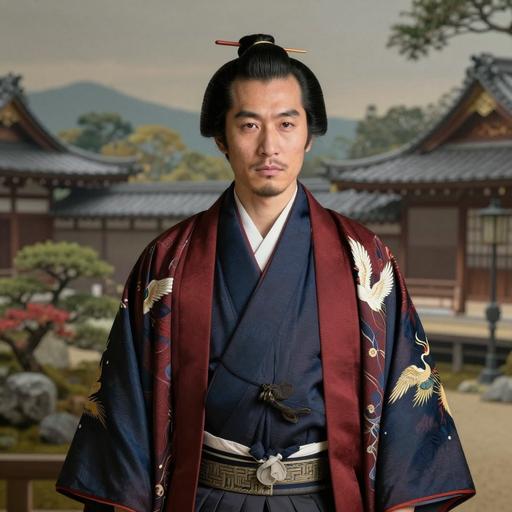
Portrait reconstruction of NAG035
Ancient Individual

A man buried in Japan in the Iron Age era

NAG035
1650 CE - 1950 CE
Male
Historical Japan
Japan
Scroll to begin
Chapter I

Identity

The biological and cultural markers that define this ancient individual

Sample ID

NAG035

Date Range

1650 CE - 1950 CE

Biological Sex

Male

mtDNA Haplogroup

Not available

Y-DNA Haplogroup

Not available

Cultural Period

Historical Japan

Chapter II

Place

Where this individual was discovered

Country Japan
Locality Nagabaka
Chapter III

Time

When this individual lived in the broader context of human history

NAG035 1650 CE - 1950 CE
Chapter IV

Story

The narrative of this ancient life

Historical Japan is a term that encompasses a wealth of cultural, social, and political developments, spanning thousands of years. Each period in Japan's history is distinguished by unique attributes, from its ancient myths to its modern advancements. Below is an extensive and detailed description of the major eras and cultural aspects of historical Japan:

Ancient Japan (Prehistory - 538 AD)

Jomon Period (c. 14,000 - 300 BC):

  • The Jomon period is notable for the early settlement of the Japanese archipelago.
  • Named after its distinctive pottery with cord-marked designs, it reflects one of the oldest known ceramic cultures in the world.
  • The society was primarily composed of hunter-gatherers and fishermen, living in pit dwellings.

Yayoi Period (300 BC - 250 AD):

  • This period saw the introduction of rice cultivation, metal tools, and weaving from the Asian mainland.
  • Yayoi culture represented more advanced agricultural practices and the establishment of permanent villages.
  • There is evidence of social stratification, with differential burial practices suggesting varying levels of wealth and power.

Kofun Period (250 - 538 AD):

  • Named after the large tomb mounds built for the ruling class, the Kofun period marks further stratification and the emergence of a politically unified society under a central authority.
  • It was during this time that Shinto, the indigenous spirituality of Japan, began to take shape alongside the development of a proto-state and its military elite.

Classical Japan (538 - 1185 AD)

Asuka Period (538 - 710 AD):

  • The Asuka period is distinguished by the introduction of Buddhism from Korea and China, which brought significant cultural shifts alongside the influence of Confucianism.
  • The Taika Reform, initiated in 645 AD, was an attempt to centralize and strengthen imperial control, emulating Tang China's bureaucratic model.

Nara Period (710 - 794 AD):

  • The establishment of the capital at Nara marked a time of great cultural flourishing, heavily influenced by Chinese civilization.
  • A system of official duties and ranks was established, and the culture saw the compilation of Japan’s first written records, the \Kojiki" and "Nihon Shoki," important chronicles of Japanese mythology and history.

Heian Period (794 - 1185 AD):

  • The Heian period is often seen as a golden age of classical Japanese culture characterized by an aristocracy living in Kyoto, the new capital.
  • This era saw the flourish of courtly culture, with the writing of literary classics like "The Tale of Genji" by Murasaki Shikibu.
  • Buddhism continued to evolve, with the establishment of various sects such as Tendai and Shingon.

Feudal Japan (1185 - 1603 AD)

Kamakura Period (1185 - 1333 AD):

  • The Kamakura shogunate marked the rise of the samurai class and the establishment of a warrior government under the shogun.
  • Zen Buddhism became prominent, deeply influencing the samurai ethos and broader cultural practices.
  • Conflicts such as the Mongol invasions of Japan were notable events demonstrating unity and military resilience.

Muromachi Period (1336 - 1573 AD):

  • The Ashikaga shogunate, based in Kyoto, ushered in an era of cultural blossoming known as the Muromachi culture.
  • This period was characterized by the development of Noh theater, tea ceremonies, and Ikebana (flower arranging).
  • It was also a time of political instability, culminating in the Onin War and the subsequent Sengoku period of warring states.

Azuchi-Momoyama Period (1568 - 1600 AD):

  • Under leaders such as Oda Nobunaga and Toyotomi Hideyoshi, Japan saw attempts to unify the fragmented feudal states.
  • This period witnessed a flourishing of Momoyama culture, with advancements in castle architecture, and arts such as lacquerware and ceramics.

Edo Period (1603 - 1868 AD)

  • The Edo period, under the Tokugawa shogunate, was a time of relative peace, isolation, and economic growth, marked by strict social order.
  • The sakoku policy greatly restricted foreign influence and trade, while fostering internal development like vibrant urban cultures in Edo (modern Tokyo), Osaka, and Kyoto.
  • The evolving arts, including Ukiyo-e (woodblock prints), Kabuki theater, and the haiku form of poetry, characterized the culture.
  • Despite its isolation, Western Enlightenment ideas began to trickle in, especially during the late Edo period.

Modern Japan (1868 - Present)

While much has occurred since the Edo period, the Meiji Restoration of 1868 marked Japan's transition into a modernized, industrialized nation, integrating Western technologies and governance structures, transforming it into a global power.

Culture and Society

  • Language and Writing: The Japanese writing system, a blend of kanji (Chinese characters) and kana (syllabic scripts), evolved significantly through these periods.
  • Religion and Philosophy: Shinto and Buddhism have coexisted and shaped Japanese philosophy, aesthetics, and daily life.
  • Social Structure: The rigid social hierarchy, especially in feudal times, structured communities along class lines from the emperor and court aristocracy to samurai, peasants, and merchants.
  • Cuisine: Culinary practices have developed unique features like sushi, elaborate tea ceremonies, and diverse regional foods.

Overall, historical Japan is a rich tapestry of evolving societal norms, dynamic power structures, and intricate cultural expressions, continuously shaping and being shaped by the internal and external currents of its time."

Chapter V

Genetics

The genetic ancestry of this ancient individual

Ancient Genetic Admixture

This analysis compares the DNA profile of NAG035 with ancient reference populations, showing the genetic composition in terms of prehistoric ancestral groups.

Ancient Asians 90.1%
Neolithic Farmers 6.7%
Western Steppe Pastoralists 3.2%

Modern Genetic Admixture

This analysis compares the DNA profile with present-day reference populations, showing what percentage of genetic makeup resembles modern populations from different regions.

Asia 92.8%
Japanese & Korean 88.6%
Japanese 88.6%
Chinese & Southeast Asian 3.1%
Vietnamese 2.5%
Chinese 0.7%
Arab, Egyptian & Levantine 0.6%
Levantine 0.6%
Central Asian, Northern Indian & Pakistani 0.5%
Indian 0.5%
Africa 3.6%
West African 2.1%
Nigerian 2.1%
North African 0.7%
Egyptian 0.7%
African Hunter-Gatherer 0.7%
Europe 2.9%
Northwestern European 2.9%
Scandinavian 2.2%
Northwestern European 0.6%
America 0.7%
America 0.7%
Native American 0.7%

Closest Modern Populations

These are the modern populations showing the closest statistical alignment to A man buried in Japan in the Iron Age era, ranked by genetic distance. Lower distance values indicate closer statistical similarity.

1
Yugur
3.9583
2
Mongola
4.3738
3
Japanese
4.4717
4
Korean Antu
4.7417
5
Tu
4.7509
6
Hui
4.8137
7
Korean
4.8292
8
Han Shanxi
4.8680
9
Manchu Jinzhou
4.9304
10
Bonan
4.9553
Chapter VI

Context

Other ancient individuals connected to this sample

Sources

References

Scientific publications and genetic data

Scientific Publication

Triangulation supports agricultural spread of the Transeurasian languages

Authors Robbeets M, Bouckaert R, Conte M
Abstract

The origin and early dispersal of speakers of Transeurasian languages-that is, Japanese, Korean, Tungusic, Mongolic and Turkic-is among the most disputed issues of Eurasian population history1-3. A key problem is the relationship between linguistic dispersals, agricultural expansions and population movements4,5. Here we address this question by 'triangulating' genetics, archaeology and linguistics in a unified perspective. We report wide-ranging datasets from these disciplines, including a comprehensive Transeurasian agropastoral and basic vocabulary; an archaeological database of 255 Neolithic-Bronze Age sites from Northeast Asia; and a collection of ancient genomes from Korea, the Ryukyu islands and early cereal farmers in Japan, complementing previously published genomes from East Asia. Challenging the traditional 'pastoralist hypothesis'6-8, we show that the common ancestry and primary dispersals of Transeurasian languages can be traced back to the first farmers moving across Northeast Asia from the Early Neolithic onwards, but that this shared heritage has been masked by extensive cultural interaction since the Bronze Age. As well as marking considerable progress in the three individual disciplines, by combining their converging evidence we show that the early spread of Transeurasian speakers was driven by agriculture.

G25 Coordinates

The G25 coordinates for sample NAG035 can be used for detailed admixture analysis in our G25 Studio tool.

NAG035,0.01599142,-0.41323616,0.0128011,-0.0491329,0.03493912,0.00724348,0.00667024,0.00529124,-0.00234318,0.00777132,-0.0671465,-0.00672768,0.00929966,-0.01012208,-0.00848262,-0.00515766,-0.00048286,0.001514,0.00120916,-0.00484452,0.0144994,-0.00841102,0.00455792,0.0045092,-0.02127739
Analyze in G25 Studio
Use code for 40% off Expires Feb 27