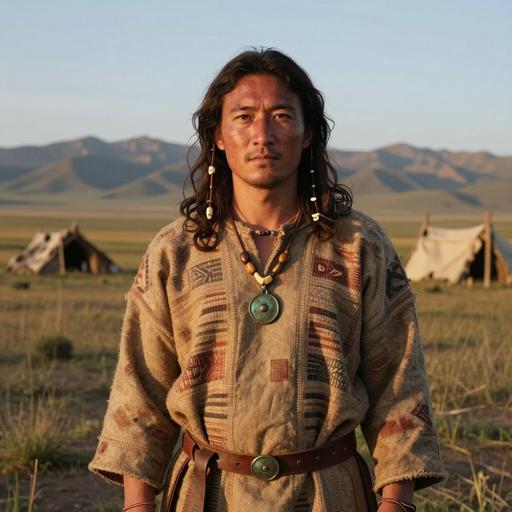
The Afanasievo culture is an archaeological culture of the early Bronze Age, primarily located in the Altai Mountains and the Yenisei River region, and it dates from approximately 3300 to 2500 BCE. Historically, it has been associated with the early Indo-European migrations into the eastern steppes of Eurasia. Recently, archaeological and genetic research has shown that this culture extended into parts of what is now Xinjiang, China, where the Ayituohan culture is identified.
Geographical Setting
The Ayituohan area within Xinjiang represents an extension of the broader Afanasievo cultural complex. This region is characterized by rugged terrains, including mountainous areas and arid plains, which presented both challenges and opportunities for the Bronze Age societies inhabiting them. The location is strategic, lying along what later became important Silk Road routes, allowing for connections with various cultures.
Material Culture
The Afanasievo culture is noted for its distinctive material artifacts, including ceramics and metalwork. In the Ayituohan context, these artifacts often resemble those found in the Altai-Sayan regions, suggesting strong cultural ties. Pottery from this era is typically simple but functional, characterized by pointed bases, which are suitable for semi-nomadic life. Decoration, when present, is often minimal and geometric.
Metal objects, primarily copper and bronze items such as tools, weapons, and ornaments, indicate an advanced level of metallurgical knowledge. These artifacts point towards a society that was utilizing and possibly producing metal goods, which were crucial for both everyday life and as status symbols in this growing community.
Burial Practices
Afanasievo burial customs reveal important insights into their social structure and beliefs. This culture typically employed kurgans, or burial mounds, which were often accompanied by grave goods. These mounds were built in stone-lined chambers, indicating a mix of nomadic and settled elements in their lifestyle. Burials often included pottery, weapons, and personal adornments, which suggest beliefs in an afterlife where such items could be needed.
The graves at Ayituohan show similarities with the broader Afanasievo customs, suggesting a continuation of these practices even as the culture spread geographically. This indicates strong cultural continuity, and possibly the importance of maintaining cultural identity across different environments.
Economy and Subsistence
The Afanasievo were primarily pastoralists, relying heavily on cattle, sheep, and horses for subsistence. The presence of horse remains suggests that they were among the early cultures to domesticate the horse, which was crucial for their mobility and the transport of goods. In the Ayituohan region, hunting and gathering would have supplemented their diet, with evidence pointing to the utilisation of natural resources like local flora and game.
Social Structure
The social organization of the Afanasievo culture, while not entirely understood, is thought to have been clan-based with a mix of egalitarian and hierarchical elements. The presence of differentiated grave goods implies some level of social stratification. Warfare and trade likely played significant roles in social dynamics, especially given their mobility and connections with adjacent regions.
Genetic and Cultural Legacy
Genetic studies indicate that the Afanasievo people were closely related to other early Indo-Europeans, sharing many genetic markers with populations further west, like those of the Yamnaya culture. This suggests that they played a significant role in the spread of Indo-European languages across Eurasia.
Culturally, the Afanasievo influence is noted in subsequent civilizations throughout Central Asia. Their presence in Xinjiang, particularly in Ayituohan, potentially acted as a catalyst for further cultural syncretism as the region later became a melting pot for various Eurasian influences through the Silk Road links.
Conclusion
The Ayituohan manifestation of the Afanasievo culture in Xinjiang represents a fascinating intersection of geography, culture, and history. As early Eurasian nomads, they set a foundation for subsequent interactions and cultural developments in the region, playing a part in the grand narrative of human history through their movements and exchanges across ancient Eurasia. Their legacy, observed through archaeological and genetic evidence, highlights the intricate network of prehistoric migrations and cultural transmissions that shaped the vast landscapes of Central Asia and beyond.