Menu
Store
Blog
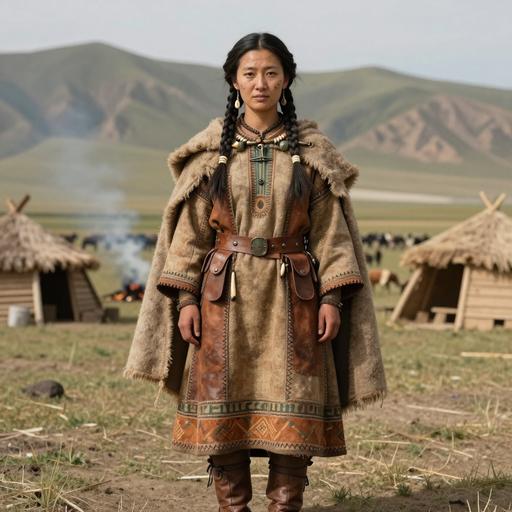
Portrait reconstruction of AYIM22BN
Ancient Individual

A woman buried in China in the Bronze Age era

AYIM22BN
2850 BCE - 2650 BCE
Female
Bronze Age Afanasievo Culture Ayituohan, Xinjiang, China
China
Scroll to begin
Chapter I

Identity

The biological and cultural markers that define this ancient individual

Sample ID

AYIM22BN

Date Range

2850 BCE - 2650 BCE

Biological Sex

Female

mtDNA Haplogroup

T2d1a

Cultural Period

Bronze Age Afanasievo Culture Ayituohan, Xinjiang, China

Chapter II

Place

Where this individual was discovered

Country China
Locality Xinjiang. Ayituohan
Coordinates 48.2856, 86.2708
Chapter III

Time

When this individual lived in the broader context of human history

AYIM22BN 2850 BCE - 2650 BCE
Chapter IV

Story

The narrative of this ancient life

The Afanasievo culture is an archaeological culture of the early Bronze Age, primarily located in the Altai Mountains and the Yenisei River region, and it dates from approximately 3300 to 2500 BCE. Historically, it has been associated with the early Indo-European migrations into the eastern steppes of Eurasia. Recently, archaeological and genetic research has shown that this culture extended into parts of what is now Xinjiang, China, where the Ayituohan culture is identified.

Geographical Setting

The Ayituohan area within Xinjiang represents an extension of the broader Afanasievo cultural complex. This region is characterized by rugged terrains, including mountainous areas and arid plains, which presented both challenges and opportunities for the Bronze Age societies inhabiting them. The location is strategic, lying along what later became important Silk Road routes, allowing for connections with various cultures.

Material Culture

The Afanasievo culture is noted for its distinctive material artifacts, including ceramics and metalwork. In the Ayituohan context, these artifacts often resemble those found in the Altai-Sayan regions, suggesting strong cultural ties. Pottery from this era is typically simple but functional, characterized by pointed bases, which are suitable for semi-nomadic life. Decoration, when present, is often minimal and geometric.

Metal objects, primarily copper and bronze items such as tools, weapons, and ornaments, indicate an advanced level of metallurgical knowledge. These artifacts point towards a society that was utilizing and possibly producing metal goods, which were crucial for both everyday life and as status symbols in this growing community.

Burial Practices

Afanasievo burial customs reveal important insights into their social structure and beliefs. This culture typically employed kurgans, or burial mounds, which were often accompanied by grave goods. These mounds were built in stone-lined chambers, indicating a mix of nomadic and settled elements in their lifestyle. Burials often included pottery, weapons, and personal adornments, which suggest beliefs in an afterlife where such items could be needed.

The graves at Ayituohan show similarities with the broader Afanasievo customs, suggesting a continuation of these practices even as the culture spread geographically. This indicates strong cultural continuity, and possibly the importance of maintaining cultural identity across different environments.

Economy and Subsistence

The Afanasievo were primarily pastoralists, relying heavily on cattle, sheep, and horses for subsistence. The presence of horse remains suggests that they were among the early cultures to domesticate the horse, which was crucial for their mobility and the transport of goods. In the Ayituohan region, hunting and gathering would have supplemented their diet, with evidence pointing to the utilisation of natural resources like local flora and game.

Social Structure

The social organization of the Afanasievo culture, while not entirely understood, is thought to have been clan-based with a mix of egalitarian and hierarchical elements. The presence of differentiated grave goods implies some level of social stratification. Warfare and trade likely played significant roles in social dynamics, especially given their mobility and connections with adjacent regions.

Genetic and Cultural Legacy

Genetic studies indicate that the Afanasievo people were closely related to other early Indo-Europeans, sharing many genetic markers with populations further west, like those of the Yamnaya culture. This suggests that they played a significant role in the spread of Indo-European languages across Eurasia.

Culturally, the Afanasievo influence is noted in subsequent civilizations throughout Central Asia. Their presence in Xinjiang, particularly in Ayituohan, potentially acted as a catalyst for further cultural syncretism as the region later became a melting pot for various Eurasian influences through the Silk Road links.

Conclusion

The Ayituohan manifestation of the Afanasievo culture in Xinjiang represents a fascinating intersection of geography, culture, and history. As early Eurasian nomads, they set a foundation for subsequent interactions and cultural developments in the region, playing a part in the grand narrative of human history through their movements and exchanges across ancient Eurasia. Their legacy, observed through archaeological and genetic evidence, highlights the intricate network of prehistoric migrations and cultural transmissions that shaped the vast landscapes of Central Asia and beyond.

Chapter V

Genetics

The genetic ancestry of this ancient individual

Ancient Genetic Admixture

This analysis compares the DNA profile of AYIM22BN with ancient reference populations, showing the genetic composition in terms of prehistoric ancestral groups.

Western Steppe Pastoralists 48.8%
European Hunter-Gatherers 17.6%
Neolithic Farmers 14.8%
Ancient Asians 13.9%
Ancient Native Americans 4.9%

Modern Genetic Admixture

This analysis compares the DNA profile with present-day reference populations, showing what percentage of genetic makeup resembles modern populations from different regions.

Europe 62.6%
Eastern European 47.9%
Northwestern European 14.7%
English 7.5%
Finnish 5.7%
Scandinavian 1.6%
Asia 29.3%
Central Asian, Northern Indian & Pakistani 22.0%
Pakistan 21.9%
Northern West Asian 7.3%
Caucasian 7.3%
America 7.9%
America 7.9%
Native American 7.9%

Closest Modern Populations

These are the modern populations showing the closest statistical alignment to A woman buried in China in the Bronze Age era, ranked by genetic distance. Lower distance values indicate closer statistical similarity.

1
Tatar Kazan
5.3474
2
Besermyan
6.1040
3
Tatar Mishar
6.4849
4
Komi A
7.0878
5
Udmurt
7.5403
6
Tatar Lipka
8.1056
7
Russian Leshukonsky
8.4696
8
Chuvash
8.6669
9
Pamiri Rushan
9.0618
10
Saami Kola
9.1236
Chapter VI

Context

Other ancient individuals connected to this sample

Sources

References

Scientific publications and genetic data

Scientific Publication

The genomic origins of the Bronze Age Tarim Basin mummies

Authors Zhang F, Ning C, Scott A
Abstract

The identity of the earliest inhabitants of Xinjiang, in the heart of Inner Asia, and the languages that they spoke have long been debated and remain contentious1. Here we present genomic data from 5 individuals dating to around 3000-2800 BC from the Dzungarian Basin and 13 individuals dating to around 2100-1700 BC from the Tarim Basin, representing the earliest yet discovered human remains from North and South Xinjiang, respectively. We find that the Early Bronze Age Dzungarian individuals exhibit a predominantly Afanasievo ancestry with an additional local contribution, and the Early-Middle Bronze Age Tarim individuals contain only a local ancestry. The Tarim individuals from the site of Xiaohe further exhibit strong evidence of milk proteins in their dental calculus, indicating a reliance on dairy pastoralism at the site since its founding. Our results do not support previous hypotheses for the origin of the Tarim mummies, who were argued to be Proto-Tocharian-speaking pastoralists descended from the Afanasievo1,2 or to have originated among the Bactria-Margiana Archaeological Complex3 or Inner Asian Mountain Corridor cultures4. Instead, although Tocharian may have been plausibly introduced to the Dzungarian Basin by Afanasievo migrants during the Early Bronze Age, we find that the earliest Tarim Basin cultures appear to have arisen from a genetically isolated local population that adopted neighbouring pastoralist and agriculturalist practices, which allowed them to settle and thrive along the shifting riverine oases of the Taklamakan Desert.

G25 Coordinates

The G25 coordinates for sample AYIM22BN can be used for detailed admixture analysis in our G25 Studio tool.

AYIM22BN,0.10627736,0.0197462,0.03768712,0.06519454,-0.02327846,0.01901124,-0.01115836,-0.01366398,-0.01309576,-0.02954922,0.00470346,-0.00520756,0.0093916,-0.00576414,-0.00429826,-0.00679402,-0.00933232,-0.003049,-0.0080559,-0.01077054,-0.00230254,0.00330676,-0.0114877,0.00335344,-0.00494412
Analyze in G25 Studio
Use code for 40% off Expires Mar 01