Menu
Store
Blog
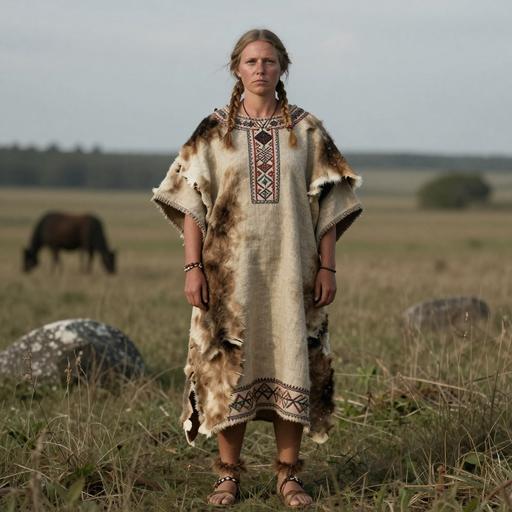
Portrait reconstruction of FRA108
Ancient Individual

A woman buried in Sweden in the Mesolithic era

FRA108
2911 BCE - 2881 BCE
Female
Swedish Frälsegården Hunter-Gatherers
Sweden
Scroll to begin
Chapter I

Identity

The biological and cultural markers that define this ancient individual

Sample ID

FRA108

Date Range

2911 BCE - 2881 BCE

Biological Sex

Female

mtDNA Haplogroup

K1a1a2

Cultural Period

Swedish Frälsegården Hunter-Gatherers

Chapter II

Place

Where this individual was discovered

Country Sweden
Locality Frälsegården
Coordinates 58.1644, 13.4547
Chapter III

Time

When this individual lived in the broader context of human history

FRA108 2911 BCE - 2881 BCE
Chapter IV

Story

The narrative of this ancient life

The Swedish Frälsegården Hunter-Gatherers represent a compelling subject when exploring the socio-cultural dynamics of pre-agricultural Nordic societies. This era is set in the Mesolithic period, roughly from 10,000 BCE to about 4000 BCE. During this time, the Scandinavian Peninsula was undergoing significant changes due to the aftermath of the last Ice Age. Here’s a comprehensive exploration of their culture and lifestyle:

Environmental Context

The climate of the post-glacial Nordic regions was characterized by a gradual warming trend, leading to the emergence of vast boreal forests, interspersed with lakes and rivers as the ice sheet retreated. This environment provided a rich variety of flora and fauna, which were integral to the subsistence and daily life of the Frälsegården communities.

Subsistence and Diet

The Frälsegården Hunter-Gatherers relied heavily on the abundant natural resources around them. Their diet was diverse, reflecting the rich biodiversity of their surroundings:

  1. Fauna: They hunted a wide range of animals such as elk, red deer, wild boar, and seals. Marine resources played a significant role, with fish and shellfish being staples, especially in coastal communities.

  2. Flora: They foraged for a wide variety of plant foods, including berries, nuts, and edible plants. Their knowledge of seasonal availability of these resources was likely sophisticated.

  3. Technological Adaptations: They employed an array of tools, including flint and bone implements, which indicates a detailed understanding of the materials available to them. Stone axes, fishing nets, and composite tools with microliths highlight their ingenuity.

Social Structure

The social structure of Frälsegården communities was likely egalitarian, typical of many hunter-gatherer societies. However, the evidence of seasonal gatherings and trade with neighboring groups suggests some level of social organization and possibly even elements of spiritual or ritualistic life:

  • Family Units and Bands: They lived in small, kin-based groups or bands that were flexible in size and capable of splitting or merging depending on environmental conditions and resource availability.

  • Trade and Exchange: There is evidence of exchange networks that extended across regions, indicating a degree of mobility and interaction, which was essential for the exchange of goods, ideas, and marriage partners.

Shelter and Settlement

The settlements of the Frälsegården Hunter-Gatherers were semi-permanent, characterized by structures that suggest an efficient use of the surrounding materials:

  • Habitations: They constructed simple shelters, possibly using hides and wooden frameworks, designed to be easily assembled and disassembled.

  • Site Location: Archaeological evidence shows that sites were often located near water sources, which provided both sustenance and a means of transport.

Cultural and Spiritual Life

The cultural aspects of the Frälsegården Hunter-Gatherers are less tangible but can be inferred from archaeological finds:

  • Art and Symbolism: Artifacts such as carved bone figurines, decorated tools, and rock carvings suggest a rich symbolic or artistic life.

  • Ritualistic Practices: The presence of burial sites with grave goods hints at beliefs in an afterlife and ritual practices, perhaps linked to animal spirits or natural elements.

  • Music and Dance: Though direct evidence is scarce, the discovery of flutes and other simple instruments suggests that music and dance were likely integral parts of social gatherings.

Conclusion

The Swedish Frälsegården Hunter-Gatherers exemplify a resilient and resourceful adaptation to the harsh Nordic environment of the Mesolithic period. Their ability to thrive in such dynamic conditions speaks to their advanced understanding of ecology, social cohesion, and cultural depth. As pre-agricultural peoples, they laid many of the foundational cultural traits which would later influence subsequent Neolithic communities and beyond in the Nordic regions. This era stands not merely as a prelude to agricultural development, but as a sophisticated and complex cultural system in its own right.

Chapter V

Context

Other ancient individuals connected to this sample

Sources

References

Scientific publications and genetic data

Scientific Publication

Repeated plague infections across six generations of Neolithic Farmers

Authors Seersholm FV, Sjögren KG, Koelman J
Abstract

In the period between 5,300 and 4,900 calibrated years before present (cal. BP), populations across large parts of Europe underwent a period of demographic decline1,2. However, the cause of this so-called Neolithic decline is still debated. Some argue for an agricultural crisis resulting in the decline3, others for the spread of an early form of plague4. Here we use population-scale ancient genomics to infer ancestry, social structure and pathogen infection in 108 Scandinavian Neolithic individuals from eight megalithic graves and a stone cist. We find that the Neolithic plague was widespread, detected in at least 17% of the sampled population and across large geographical distances. We demonstrate that the disease spread within the Neolithic community in three distinct infection events within a period of around 120 years. Variant graph-based pan-genomics shows that the Neolithic plague genomes retained ancestral genomic variation present in Yersinia pseudotuberculosis, including virulence factors associated with disease outcomes. In addition, we reconstruct four multigeneration pedigrees, the largest of which consists of 38 individuals spanning six generations, showing a patrilineal social organization. Lastly, we document direct genomic evidence for Neolithic female exogamy in a woman buried in a different megalithic tomb than her brothers. Taken together, our findings provide a detailed reconstruction of plague spread within a large patrilineal kinship group and identify multiple plague infections in a population dated to the beginning of the Neolithic decline.

Use code for 40% off Expires Feb 27