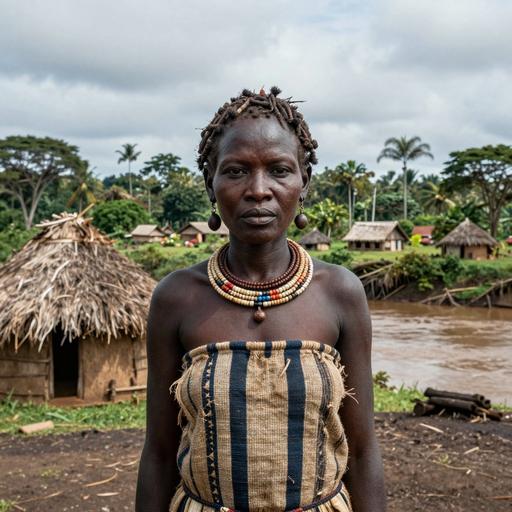
The Matangai Turu Iron Age in the Congo is a captivating and significant period in the historical and cultural evolution of the Bantu-speaking peoples in Central Africa. This era, situated within the broader timeframe of the Iron Age in Africa, is characterized by unique developments in metallurgy, social organization, subsistence strategies, and cultural practices. Below is an extensive and detailed description of this era and its cultural implications:
Geographic and Temporal Context
The Matangai Turu Iron Age primarily occupies the central region of the Congo Basin, extending into parts of what is today the Democratic Republic of the Congo (DRC) and neighboring regions. This era is generally situated between approximately 1,000 BCE to 500 CE, though specific timelines can vary based on regional variations and archaeological findings.
Metallurgical Advances
One of the hallmark features of the Matangai Turu Iron Age is the significant advancement in ironworking techniques. The introduction of iron smelting and forging revolutionized the tools and weaponry available to the Bantu-speaking communities. Iron implements, including hoes, axes, and spears, enhanced agricultural productivity, hunting capabilities, and societal warfare or defense mechanisms. The ability to produce durable and efficient tools opened up more land for cultivation and allowed for the exploitation of new resources, fueling population growth and societal development.
Agricultural and Subsistence Practices
During the Matangai Turu Iron Age, agricultural practices saw remarkable development, partly due to the improved tools. Communities engaged in shifting cultivation, growing crops like millet, sorghum, and later, with the spread of these crops, yams, and bananas. The fertile soils of the Congo Basin supported these practices, and excess production facilitated trade and the accumulation of surplus, which played a role in societal stratification. Additionally, the domestication and herding of animals such as cattle, goats, and chickens complemented the agrarian lifestyle.
Social Organization and Settlement Patterns
The social structures in Matangai Turu Iron Age societies were increasingly complex and hierarchical. Communities were often organized into chiefdoms, with a chief or a head leading several villages. The production of surplus agricultural goods led to wealth accumulation, which in turn, could lead to social stratification. Settlements became more permanent and larger, often strategically located near resources such as rivers, iron ore deposits, or fertile lands. The growth in settlement size indicates not only population growth but also increased social cohesion and organization.
Cultural and Artistic Expression
Culturally, the Matangai Turu Iron Age was rich with artistic expression and spiritual life. Pottery from this period demonstrates sophisticated design and utility, reflecting both aesthetic sensibilities and everyday functional needs. The motifs and styles found in pottery and other art forms point to a shared cultural heritage among Bantu-speaking groups, as well as regional diversity.
The spiritual beliefs during this era often revolved around ancestor worship, animism, and the veneration of natural forces or deities tied to agricultural fertility and community well-being. Rituals and ceremonies were integral to community life, involving music, dance, and symbolic art forms.
Trade and Interaction
Trade networks expanded significantly during the Matangai Turu Iron Age. With the growth of iron technology, communities could produce surplus goods for exchange. These trade networks facilitated not only the movement of goods like salt, iron tools, and agricultural products but also the transmission of ideas, cultural practices, and technologies. Connections with neighboring regions, and even distant cultures, spread innovations and influenced development, exemplifying the dynamic nature of these societies.
Legacy and Influence
The Matangai Turu Iron Age laid the groundwork for further societal complexities and developments in the region. As Bantu-speaking groups migrated out of the Congo Basin, they took with them knowledge and cultural practices, influencing other parts of Africa. The advancements in metallurgy, agriculture, and social organization during this era significantly contributed to the historical trajectory of Central and Southern Africa.
Overall, the Matangai Turu Iron Age in the Congo represents a vibrant period of technological innovation, social evolution, and cultural expression among the Bantu-speaking peoples, whose influence continues to be felt in various parts of the African continent.