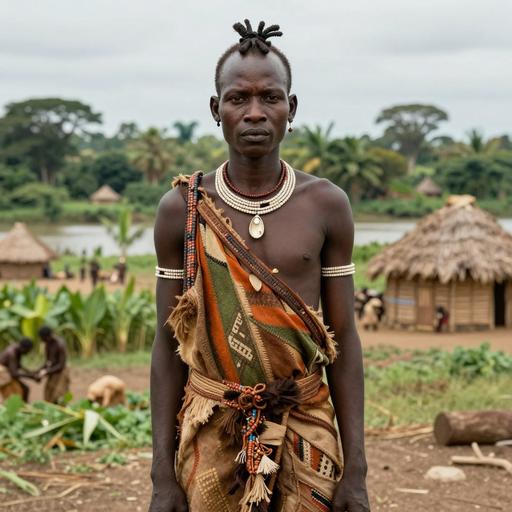
The Ngongo Mbata Protohistoric Era refers to a significant period in the history of the Congo region, predominantly associated with the Bantu-speaking peoples. This era is characterized by transitional developments that bridge the gap between prehistoric times and the documented historical era. It reflects a rich interplay of cultural, technological, and social advancements that occurred around the Lower Congo region, particularly in the area corresponding to present-day Democratic Republic of the Congo.
Geographical Setting and Timeframe:
The Ngongo Mbata Protohistoric Era is believed to have taken place between approximately 500 and 1700 AD, although precise dating can vary due to differing scholarly interpretations and availability of archaeological evidence. The region is centered around the Congo River basin, a crucial area for early Bantu expansion and settlement due to its fertile land, accessibility, and abundant natural resources.
Cultural Aspects:
This era is marked by the continued spread and influence of the Bantu linguistic and cultural group. The Bantu people, known for their migrations across Sub-Saharan Africa, played a vital role in spreading agriculture, metallurgy, and settled lifestyles. By the time of the Ngongo Mbata era, Bantu communities were well-established and had developed intricate social structures. This period is distinguished by the rise of small chiefdoms, which became precursors to more centralized polities in later centuries.
Social and Political Structures:
The Ngongo Mbata Protohistoric Era saw the emergence of hierarchical societies, characterized by increasingly centralized leadership. These societies were often led by local chieftains or kings who governed over villages and towns. Kinship and clan affiliations were fundamental to the political systems, influencing social roles and responsibilities. The region witnessed the formation of alliances and confederations among various communities, setting the stage for the dominant political entities like the Kingdom of Kongo that would later emerge.
Economy and Trade:
Economically, the era was marked by a mixture of subsistence agriculture, hunting, and gathering, with communities cultivating crops such as millet, sorghum, and yams. Ironworking and metallurgy were significant technological advances of this period, with iron tools and weapons enhancing agricultural productivity and warfare capabilities. Trade networks expanded, facilitating the exchange of goods such as salt, pottery, and metalworks with neighboring regions. These trade routes were crucial for cultural exchanges and the dissemination of technological innovations.
Cultural Artifacts and Archaeology:
Archaeological findings from the Ngongo Mbata area provide insights into the material culture of the era. Distinct pottery styles and funerary practices have been discovered, revealing the spiritual beliefs and daily life of these communities. Ceramics, often used for cooking and storage, display intricate designs and serve as cultural markers for tracing historical transitions and interactions with other groups.
Religious and Spiritual Beliefs:
The spiritual life of the Ngongo Mbata people was rich and varied, with religious practices deeply intertwined with everyday life. Animism and ancestor worship were prominent, and rituals often involved the veneration of the natural world and spirit ancestors. These beliefs were integral to maintaining social cohesion and played a role in legitimizing the authority of chiefs and religious leaders.
Legacy and Impact:
The Ngongo Mbata Protohistoric Era laid the foundational cultural, social, and political frameworks that would influence subsequent historical developments in the Congo region. The political structures and cultural practices established during this time contributed significantly to the evolution of more complex kingdoms, such as the prestigious Kingdom of Kongo.
In summary, the Ngongo Mbata Protohistoric Era represents a formative period in the history of the Congo Basin's Bantu-speaking communities. It was marked by significant developments in social organization, technology, economy, and culture, setting the stage for the rich historical tapestry that would evolve in the centuries to come.