Saltar al contenido principal
mtDNA · Materno linaje

M13

mtDNA Haplogroup M13

Un perfil de referencia de una rama de linaje. Compartir haplogrupos no demuestra una relación familiar ni una identidad cultural.

Perfil de referencia

Contexto de la rama

Contexto histórico de la rama de linaje mtDNA M13

Origins and Evolution

Haplogroup M13 sits within the larger macro-haplogroup M, a major branch of the non-African mitochondrial phylogeny that diversified rapidly after the Out-of-Africa dispersal. Given its position under the intermediate node M13'46'61, M13 most likely represents an early Paleolithic split of M that occurred as modern humans expanded across South and Southeast Asia. Coalescence time estimates for many M subclades typically fall in the range of ~40–60 kya; based on phylogenetic position and comparative age estimates for sibling clades, a plausible origin for M13 is in the Upper Paleolithic (on the order of 40–50 kya), although precise dating requires more sequence-based calibration and broader sampling.

Because M13 is a relatively rare and understudied lineage in many published datasets, interpretations of its internal structure and demographic history remain provisional. Ancient DNA sampling and expanded modern population surveys are necessary to refine timing and geography.

Subclades

As an intermediate clade within the M13'46'61 grouping, M13 may include downstream subclades identified in detailed mitogenome studies, but many of these remain sparsely sampled or are defined only by limited control-region variants in older studies. Known sister branches under the same parent (for example M46 and M61) help place M13 within a cluster of early M diversification across South and Southeast Asia. Where full mitochondrial genomes have been obtained, subclade definition improves; however, for M13 specifically, many putative subclades require further confirmation with complete mitogenomes.

Geographical Distribution

Based on available population genetics studies and reasonable phylogeographic inference, M13 is most reliably reported at low to moderate frequencies in parts of South Asia and at low frequencies across island Southeast Asia and Near Oceania. Scattered reports — often at very low frequency — exist in other regions, which can reflect ancient dispersals or more recent gene flow. Sampling bias (unequal sampling of indigenous and rural groups) and limited mitogenome resolution in some studies mean that apparent absences in some areas may simply reflect lack of data rather than true absence.

Key points about distribution:

  • Core signal: Likely centered in South or nearby regions of Southeast Asia where early M diversification is richest.
  • Island Southeast Asia / Near Oceania: Low-frequency occurrences may reflect ancient coastal dispersals or later maritime movements (including Austronesian-era gene flow) in some island populations.
  • Scattered occurrences: Occasional reports outside these regions can reflect long-distance dispersal, historic trade networks, or later migrations.

Historical and Cultural Significance

Because M13 is deep-rooted and generally rare, its most significant contribution is as a marker of early maternal diversification in South/Southeast Asia rather than being tied to a single archaeological culture. Interpretations in cultural terms are therefore cautious:

  • Paleolithic hunter-gatherer context: The origin timing places M13 within the Upper Paleolithic hunter-gatherer phase of human prehistory in South/Southeast Asia.
  • Neolithic and later periods: Low-frequency presence in some island and coastal populations means M13 could have been carried along coastal migration routes and later influenced by Neolithic farmer expansions and Austronesian movements; however, it is not a dominant Neolithic marker like some haplogroups associated strongly with farming expansions.
  • Modern population structure: In contemporary genetic surveys, M13 provides information about local maternal ancestry and deep regional continuity when observed in indigenous or isolated groups.

Conclusion

mtDNA M13 is best understood as a rare, ancient maternal lineage within macro-haplogroup M that likely arose in South or Southeast Asia in the Upper Paleolithic and persisted at low to moderate frequencies in the region. Its full phylogenetic complexity and precise prehistoric movements remain incompletely resolved due to limited sampling and mitogenome data; targeted whole-mitochondrial sequencing across understudied populations and integration with ancient DNA will clarify its subclades, age, and geographic history.

Puntos clave

  • Origins and Evolution
  • Subclades
  • Geographical Distribution
  • Historical and Cultural Significance
  • Conclusion
Perfil de referencia

Árbol y relaciones

Contexto filogenético y subclados

Trayectoria evolutiva

Sigue las ramas superiores registradas hasta M13. Las fechas son estimaciones y pueden cambiar al revisarse los datos de referencia.

Pasos Haplogrupo Antigüedad estimada Época arqueológica Tiempo transcurrido Subclados inmediatos Portadores modernos analizados Referencias antiguas
1 M13 Actual ~45,000 years ago Paleolithic 45,000 years 2 6 0
2 M13'46'61 - - - 1 9 0
3 M ~60,000 years ago Paleolithic 60,000 years 42 2,671 41
4 L3 ~70,000 years ago Paleolithic 70,000 years 7 30,162 6
5 L3'4 - - - 2 30,212 0
6 L3'4'6 - - - 2 30,216 0
7 L2'3'4'6 - - - 2 31,333 0
8 L2'3'4'5'6'7 - - - 2 31,349 0
9 L1'2'3'4'5'6'7 - - - 2 31,852 0
10 L ~160,000 years ago Paleolithic 160,000 years 2 32,236 5
Perfil de referencia

En el mundo

Distribución geográfica y presencia moderna

Origen registrado

South or Southeast Asia

Distribución moderna

The populations where mtDNA haplogroup M13 is found include:

  1. Various South Asian populations (including some tribal and rural groups in the Indian subcontinent)
  2. Island and coastal populations of Southeast Asia (Indonesia, Philippines and nearby archipelagos) reported at low frequency
  3. Austronesian-speaking groups in Madagascar and parts of the Indian Ocean rim in isolated cases
  4. Near Oceanian and Melanesian groups at low frequency in some surveys (potentially reflecting ancient coastal dispersals)
  5. Occasional, low-frequency reports in East African coastal populations, likely reflecting historical or recent gene flow
Contexto histórico

Una rama a través del tiempo

Formación estimada en una cronología histórica amplia. Los marcadores temporales aportan contexto y no implican relación con culturas concretas.

  1. ~50k años de antigüedad

    Paleolítico superior

    Desarrollo de herramientas, arte y diversidad cultural

  2. ~45k años de antigüedad

    Haplogrupo M13

    Formación estimada de esta rama de mtDNA; las fechas y ubicaciones son estimaciones de referencia.

    Esta rama
  3. ~20k años de antigüedad

    Último máximo glacial

    Máxima extensión de la última glaciación y aislamiento de poblaciones

  4. ~10k años de antigüedad

    Revolución neolítica

    Inicio de la agricultura y formación de comunidades sedentarias

  5. ~5k años de antigüedad

    Edad del Bronce

    Metalurgia, escritura y primeras civilizaciones

  6. ~3k años de antigüedad

    Edad del Hierro

    Herramientas de hierro y ampliación de redes comerciales

  7. ~2.5k años de antigüedad

    Antigüedad clásica

    Desarrollo de las civilizaciones griega y romana

  8. Actualidad

    Actualidad

    Época moderna

Perfil de referencia

Contexto arqueológico

Asociaciones arqueológicas registradas para la rama mtDNA M13

Asociaciones registradas

Estas etiquetas describen contextos arqueológicos registrados para las muestras de referencia enlazadas a M13. Una asociación no demuestra que todos los portadores pertenecieran a una cultura ni siguieran una ruta migratoria concreta.

British Neolithic Goyet Cave Gravettian Iberomaurusian Indonesian Hunter-Gatherer Culture Malaysian Neolithic Ostuni Culture Spanish Gravettian Vietnamese Neolithic
Las atribuciones culturales se basan en el contexto arqueológico de las muestras de ADN antiguo y pueden representar asociaciones regionales de periodos concretos.
Perfil de referencia

Catálogo de muestras

7 portadores de subclados del haplogrupo M13 (sin portadores directos en la selección de referencia actual)

7 mostradas · 7 muestras coincidentes

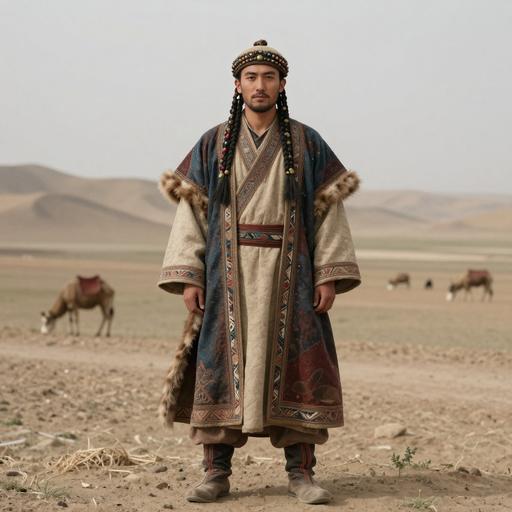
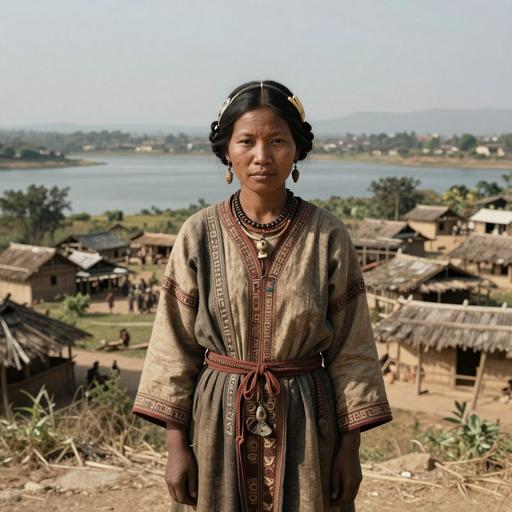
Los retratos son ilustraciones generadas con IA. Las etiquetas de muestra y los identificadores de acceso identifican los registros de referencia.

Retrato Muestra País Época Fecha Cultura mtDNA Coincidencia
Retrato ilustrativo de Xinjiang Xikakandasayi Historical individual, Xinjiang. Bayinguoleng(Bayingolin) Region. Qiemo(Qarqan/Cherchen) County. Xikakandasayi, China (254-406 CE) generado con IA
Identificador de muestra: C795
China China Xinjiang Xikakandasayi Historical 254-406 calCE Xikakandasayi Culture M13a1b Subclado
Retrato ilustrativo de Qinghai Dulan Wayan Reservoir Site Classical individual, Dulan Wayan reservoir site (Dulan County, Reshui town), China (706-883 CE) generado con IA
Identificador de muestra: BB2006
China Dulan-Wayan Culture 706-883 calCE (1220±20 BP, LZU-18106) Dulan-Wayan M13a2 Subclado
Retrato ilustrativo de Austronesian individual, West Peninsular Kelantan. Gua Cha Cave, Malaysia (744-398 BCE) generado con IA
Identificador de muestra: Ma912
Malaysia Malaysia LN 744 BCE - 398 BCE Malaysian Neolithic M13c Subclado
Retrato ilustrativo de Malaysia N individual, West Peninsular Kelantan. Gua Cha Cave, Malaysia (744-398 BCE) generado con IA
Identificador de muestra: Ma912
Malaysia Neolithic Malaysia 744 BCE - 398 BCE M13c Subclado
Retrato ilustrativo de Tibet Longsangquduo individual, Longsangquduo (Shigatse), China (900-1,200 CE) generado con IA
Identificador de muestra: C5154
China Tibetan Plateau (Longsangquduo) 900-1200 CE Longsangquduo Culture M13a2 Subclado
Retrato ilustrativo de Austroasiatic individual, Man Bac, Vietnam (1,889-1,742 BCE) generado con IA
Identificador de muestra: I1859
Vietnam Vietnam N 1889 BCE - 1742 BCE Vietnamese Neolithic M13b Subclado
Retrato ilustrativo de Vietnam N individual, Man Bac, Vietnam (1,889-1,742 BCE) generado con IA
Identificador de muestra: I1859
Vietnam Vietnam N 1889 BCE - 1742 BCE Vietnamese Neolithic M13b Subclado
MATERNAL LINAJE · ADN ANTIGUO

Mapa de pruebas de linajes antiguos

Sigue los clados superiores hasta esta rama y explora dónde se encontraron portadores antiguos.

Cargando observaciones antiguas...

Los marcadores son ubicaciones de hallazgos arqueológicos. Una línea discontinua representa una transición geográfica propuesta e incierta entre ramas consecutivas, apoyada en varias observaciones fechadas; no es una ruta de viaje exacta, un lugar de nacimiento ni una prueba de descendencia directa. Las muestras del clado parental pueden pertenecer a otras ramas descendientes. Se mantienen huecos cuando las pruebas son insuficientes. Las fechas de las muestras son distintas de las fechas de formación de los haplogrupos.

Perfil de referencia

Mapa de distribución de portadores

Distribución geográfica de muestras de ADN antiguo (7), portadores directos o de subclados de M13

Portador de un subclado
Filtro de periodo temporal
Todos los periodos
Mostrando todas las muestras
Perfil de referencia

Distribución temporal

Distribución de portadores por periodos arqueológicos

Perfil de referencia

Distribución geográfica

Recuentos por país registrado de las muestras. Reflejan la selección de referencia disponible, no frecuencias de población.

Perfil de referencia

Distribución por país y época

Compara los recuentos de muestras registradas por países y periodos arqueológicos. Selecciona una celda con datos para examinar una muestra.

Datos

Datos y procedencia

Información sobre las fuentes y la calidad de los datos

Última actualización 2026-06-14
Puntuación de confianza 50/100
Cobertura Low

Fuente de datos

La clasificación, las fechas estimadas y el contexto geográfico reflejan los datos de referencia registrados y pueden cambiar al revisarse las pruebas. La cobertura de muestras es desigual; las ubicaciones registradas y las asociaciones arqueológicas no establecen el origen personal ni la identidad cultural.