Menu
mtDNA Haplogroup • Maternal Lineage

M13

mtDNA Haplogroup M13

~14,000 years ago
Northeast Africa / Horn of Africa
3 subclades
Scroll to explore
Chapter I

The Story

The journey of mtDNA haplogroup M13

Origins and Evolution

mtDNA haplogroup M13 is best understood as a downstream branch of the broader M1 lineage, itself a distinctive branch of macro-haplogroup M that shows a pattern consistent with an Asian-derived founder followed by an early back-migration into Northeast Africa. Based on comparative diversity within M1 subclades and typical coalescence estimates for minor sub-lineages, M13 most likely formed in the Late Pleistocene to Early Holocene (roughly 14 kya, with uncertainty of several thousand years) within Northeast Africa or the adjacent Horn region. Its origin reflects local differentiation of M1 after the initial M1 presence was established in North-East Africa.

The phylogenetic placement of M13 within M1 indicates it carries private mutations that define it as a distinct maternal branch; these mutations accumulated after the split from other M1 subclades and record a period of regional isolation or founder effects in particular populations.

Subclades

As a relatively small and understudied subclade, M13 may contain a few downstream lineages in modern mitogenome datasets, but it is not among the numerically dominant M1 branches (such as M1a). When complete mitochondrial genomes are available, M13 can be resolved into private subbranches that help trace micro-demographic events (localized founder effects, endogamy, or small-scale expansions). Ongoing mitogenome sequencing in Northeast Africa and the Levant is likely to refine internal structure and reveal whether M13 split into stable regional subclades.

Geographical Distribution

The present-day distribution of M13 is patchy and centered on regions where M1 diversity is high. Highest relative frequencies and haplotype diversity are observed in the Horn of Africa and parts of northeastern Africa, consistent with an origin or long-term presence there. Lower-frequency occurrences appear in North African coastal populations, the southern Levant, and sporadically in Mediterranean Europe—typically reflecting both prehistoric gene flow and historical movements across the Mediterranean and the Red Sea.

Because M13 is rarer than some other M1 branches, its detection often depends on complete mitogenome screening rather than HVS-I surveys; targeted sequencing of under-sampled populations (e.g., Cushitic- and Afroasiatic-speaking groups) is likely to increase the number of identified M13 carriers and clarify its regional pattern.

Historical and Cultural Significance

M13, like other M1 subclades, provides a maternal genetic signal consistent with an early back-migration into Africa followed by local diversification. Where it occurs, M13 can complement archaeological and linguistic evidence for long-term continuity in Northeast Africa and the Horn, and it may mark maternal lines present in prehistoric North African cultural contexts (for example, Late Pleistocene Iberomaurusian/Capsian-related groups) and later Holocene communities. In historical-period samples, rare M13 occurrences in the Levant and Mediterranean may reflect episodic contact, trade, and migration across the Red Sea and Mediterranean corridors.

Because the haplogroup is relatively uncommon, it is not strongly associated with any single archaeological culture on its own, but it forms part of the mosaic of maternal lineages that document population continuity and exchange in Northeast Africa through the Late Pleistocene and Holocene.

Conclusion

mtDNA haplogroup M13 is a minor but informative branch of M1 that highlights regional maternal differentiation in Northeast Africa and the Horn. Its restricted, low-frequency distribution and phylogenetic placement point to a Late Pleistocene–Early Holocene origin with subsequent persistence in African populations and occasional spread into neighboring regions. Future complete mitogenome sampling across North-East Africa, the Horn, and the southern Levant will improve age estimates, reveal finer substructure, and clarify historical dispersal events involving M13.

Key Points

  • Origins and Evolution
  • Subclades
  • Geographical Distribution
  • Historical and Cultural Significance
  • Conclusion
Chapter II

Tree & Relationships

Phylogenetic context and subclades

Evolution Path

This haplogroup's evolutionary journey from its earliest ancestor to the present.

Steps Haplogroup Age Estimate Archaeology Era Time Passed Immediate Descendants Tested Modern Descendants Ancient Connections
1 M13 Current ~14,000 years ago 🏹 Mesolithic 14,000 years 3 7 0
2 M1 ~26,000 years ago 🦴 Paleolithic 26,000 years 7 119 3
3 M ~60,000 years ago 🦴 Paleolithic 60,000 years 11 1,200 41
4 L3 ~70,000 years ago 🦴 Paleolithic 70,000 years 11 17,621 6
5 L ~160,000 years ago 🦴 Paleolithic 160,000 years 7 18,987 5

Siblings (6)

Other branches from the same parent haplogroup

Chapter III

Where in the World

Geographic distribution and modern presence

Place of Origin

Northeast Africa / Horn of Africa

Modern Distribution

The populations where mtDNA haplogroup M13 is found include:

  1. Horn of Africa populations (Ethiopians, Eritreans, Somalis)
  2. Northeast African groups (Egyptians, Sudanese, Nubian-associated communities)
  3. North African Berber-speaking groups (Morocco, Algeria, Tunisia, Libya) at low to moderate frequency
  4. Levantine populations and Arabian Peninsula groups (low frequency)
  5. Mediterranean coastal populations in southern Europe (sporadic, low-frequency occurrences)
  6. Jewish communities with North African or Near Eastern ancestry (rare occurrences)
  7. Ancient North African archaeological remains (occasional detections in Late Pleistocene / Holocene contexts)
CHAPTER IV

When in Time

Your haplogroup in the context of human history

~20k years ago

Last Glacial Maximum

Peak of the last ice age, populations isolated

~14k years ago

Haplogroup M13

Your mtDNA haplogroup emerged in Northeast Africa / Horn of Africa

Northeast Africa / Horn of Africa
~10k years ago

Neolithic Revolution

Agriculture begins, settled communities form

~5k years ago

Bronze Age

Metalworking, writing, and early civilizations

~3k years ago

Iron Age

Iron tools, expanded trade networks

~2k years ago

Classical Antiquity

Greek and Roman civilizations flourish

Present

Present Day

Modern era

Your Haplogroup
Historical Era
Chapter IV-B

Linked Cultures

Ancient cultures associated with mtDNA haplogroup M13

Cultural Heritage

These ancient cultures have been linked to haplogroup M13 based on matching ancient DNA samples from archaeological excavations. The presence of this haplogroup in these cultures provides insights into the migrations and population movements of populations carrying this haplogroup.

British Neolithic Goyet Cave Gravettian Iberomaurusian Indonesian Hunter-Gatherer Culture Malaysian Neolithic Ostuni Culture Spanish Gravettian Vietnamese Neolithic
Culture assignments are based on archaeological context of ancient DNA samples and may represent regional associations during specific time periods.
Chapter V

Sample Catalog

7 subclade carriers of haplogroup M13 (no exact M13 samples sequenced yet)

7 / 7 samples
Portrait Sample Country Era Date Culture mtDNA Match
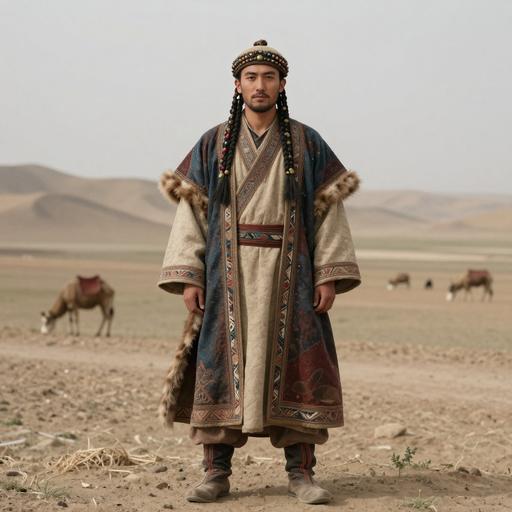
Portrait of ancient individual C795 from China, dated 254 CE - 406 CE
C795
China Historical Period Xikakandasayi, Xinjiang, China 254 CE - 406 CE Xikakandasayi Culture M13a1b Downstream
Portrait of ancient individual BB2006 from China, dated 706 CE - 883 CE
BB2006
China Dulan-Wayan Culture 706 CE - 883 CE Dulan-Wayan M13a2 Downstream
Portrait of ancient individual Ma912 from Malaysia, dated 744 BCE - 398 BCE
Ma912
Malaysia Late Neolithic Malaysia 744 BCE - 398 BCE Malaysian Neolithic M13c Downstream
Portrait of ancient individual Ma912 from Malaysia, dated 744 BCE - 398 BCE
Ma912
Malaysia Neolithic Malaysia 744 BCE - 398 BCE M13c Downstream
Portrait of ancient individual C5154 from China, dated 900 CE - 1200 CE
C5154
China Tibetan Plateau (Longsangquduo) 900 CE - 1200 CE Longsangquduo Culture M13a2 Downstream
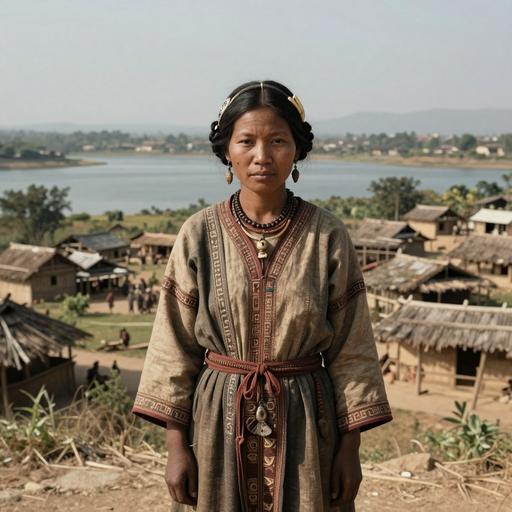
Portrait of ancient individual I1859 from Vietnam, dated 1889 BCE - 1742 BCE
I1859
Vietnam Neolithic Vietnam 1889 BCE - 1742 BCE Vietnamese Neolithic M13b Downstream
Portrait of ancient individual I1859 from Vietnam, dated 1889 BCE - 1742 BCE
I1859
Vietnam Neolithic Vietnam 1889 BCE - 1742 BCE Vietnamese Neolithic M13b Downstream
Chapter VI

Carrier Distribution Map

Geographic distribution of 7 ancient DNA samples (direct and subclade carriers of M13)

Subclade carrier
Time Period Filter
All Time Periods
Showing all samples
Chapter VII

Temporal Distribution

Distribution of carriers across archaeological periods

Chapter VIII

Geographic Distribution

Distribution by country of origin (direct and subclade carriers shown by default)

Chapter IX

Country × Era Distribution

Cross-tabulation of carrier countries and archaeological periods (direct and subclade carriers shown by default)

Data

Data & Provenance

Source information and data quality

Last Updated 2026-02-16
Confidence Score 50/100
Coverage Low
Data Source

We use the latest phylotree for MTDNA haplogroup classification and data.