Saltar al contenido principal
mtDNA · Materno linaje

M8A2

mtDNA Haplogroup M8A2

Un perfil de referencia de una rama de linaje. Compartir haplogrupos no demuestra una relación familiar ni una identidad cultural.

Perfil de referencia

Contexto de la rama

Contexto histórico de la rama de linaje mtDNA M8A2

Origins and Evolution

Haplogroup M8A2 is a sublineage of haplogroup M8, itself a branch of macro-haplogroup M. The M8 lineage gave rise to several daughter clades (including M8a and the CZ node that leads to haplogroups C and Z) that are characteristic of Northeast Asian and some Siberian maternal lineages. Based on its phylogenetic position and the coalescence times estimated for closely related M8 subclades in published studies, M8A2 most likely arose in Northeast Asia after the Last Glacial Maximum (LGM), roughly in the late Upper Paleolithic to early Holocene (on the order of ~10–20 kya). This timing is consistent with post-LGM population re-expansions and regional differentiation in eastern Siberia, the Amur/Primorye region, and the Japanese archipelago.

Because M8A2 occupies an intermediate node in the M8 phylogeny, it often appears in phylogenies and Phylotree annotations as a connector between the parental M8 lineages (including M8a and the M8A2'3 grouping) and more derived, geographically localized subclades. The limited number of high-resolution mitochondrial genomes explicitly labeled M8A2 in public datasets means that age and internal branching patterns remain somewhat uncertain and will benefit from denser sampling and ancient DNA calibration.

Subclades

The internal structure below M8A2 is only partially characterized in current phylogenies. Some downstream branches have been provisionally named in reference trees (for example, clades grouped under M8A2'3 in Phylotree-style nomenclature), but many of these subclades remain poorly sampled. As more complete mitogenomes from Siberia, the Russian Far East, northeastern China, Korea and Japan are generated, it is expected that new subclades will be defined and dated more precisely. At present, researchers should treat M8A2 as an intermediate node that links broader M8 diversity to localized lineages found in Northeast Asia and nearby regions.

Geographical Distribution

Available modern and ancient DNA evidence suggests a concentration of M8A2 and close relatives in Northeast Asia, including:

  • the Russian Far East and Siberian borderlands (Amur/Primorye, Kamchatka-adjacent regions)
  • northeastern China (Heilongjiang, Jilin, Liaoning) and populations with historical ties to these areas
  • the Japanese archipelago, particularly in analyses that include ancient Jomon and some modern northern Japanese groups

Frequencies are typically low to moderate at the population level and patchy geographically; the lineage is more noticeable in population-scale mitogenome studies that sample indigenous Siberian, Northeast Asian and northern Japanese groups. The picture from ancient DNA hints that M8-derived lineages were part of the maternal pool of post-LGM hunter-gatherer communities that contributed to the peopling of northeastern Eurasia and the early peopling of the Japanese islands.

Historical and Cultural Significance

While M8A2 itself is not tied to a single archaeological culture in the way some haplogroups have been linked to large steppe expansions, its distribution and age make it a plausible component of the maternal ancestry of several important regional cultural horizons:

  • Jomon (Japan): mitochondrial lineages related to M8 are present in Jomon-period remains; M8A2 or very closely related branches may have been part of the Jomon maternal diversity, indicating early settlement and continuity in northern Japan.
  • Neolithic and post-glacial hunter-gatherer groups of the Amur/Primorye region: the lineage likely existed among forager populations who inhabited the coastal and riverine environments of the Russian Far East and northeastern China during the late Pleistocene and early Holocene.

Because M8A2 samples are relatively rare in published panels, claims connecting it confidently to a single archaeological culture or large-scale migration event are premature; further ancient DNA and broad modern mitogenome surveys are required to resolve its cultural associations and demographic history.

Conclusion

M8A2 is an informative, but under-characterized, Northeast Asian mtDNA lineage nested within the M8 clade. Its inferred post-LGM origin and geographic concentration in the Russian Far East, northeastern China and northern Japan make it important for studies of postglacial re-expansion, regional continuity, and the maternal ancestry of East Asian and Siberian populations. Increased mitogenome sampling—especially ancient genomes from the Amur region, the Japanese archipelago (Jomon and later periods), and Siberia—will be necessary to refine its age, substructure and precise historical roles.

Puntos clave

  • Origins and Evolution
  • Subclades
  • Geographical Distribution
  • Historical and Cultural Significance
  • Conclusion
Perfil de referencia

Árbol y relaciones

Contexto filogenético y subclados

Trayectoria evolutiva

Sigue las ramas superiores registradas hasta M8A2. Las fechas son estimaciones y pueden cambiar al revisarse los datos de referencia.

Pasos Haplogrupo Antigüedad estimada Época arqueológica Tiempo transcurrido Subclados inmediatos Portadores modernos analizados Referencias antiguas
1 M8A2 Actual ~15,000 years ago Mesolithic 15,000 years 1 11 0
2 M8A2'3 - - - 1 12 0
3 M8A ~24,000 years ago Paleolithic 24,000 years 2 17 4
4 M8 ~42,000 years ago Paleolithic 42,000 years 2 873 5
5 M ~60,000 years ago Paleolithic 60,000 years 42 2,671 41
6 L3 ~70,000 years ago Paleolithic 70,000 years 7 30,162 6
7 L3'4 - - - 2 30,212 0
8 L3'4'6 - - - 2 30,216 0
9 L2'3'4'6 - - - 2 31,333 0
10 L2'3'4'5'6'7 - - - 2 31,349 0
11 L1'2'3'4'5'6'7 - - - 2 31,852 0
12 L ~160,000 years ago Paleolithic 160,000 years 2 32,236 5
Perfil de referencia

En el mundo

Distribución geográfica y presencia moderna

Origen registrado

Northeast Asia

Distribución moderna

The populations where mtDNA haplogroup M8A2 is found include:

  1. Indigenous groups of the Russian Far East (e.g., Amur and Primorye-area populations)
  2. Siberian northern groups (sampled individuals among Even, Evenk and some Yakut datasets)
  3. Northeastern Chinese populations (Heilongjiang, Jilin region groups)
  4. Northern Japanese populations and ancient Jomon-associated samples
  5. Koreans and northeastern Han Chinese in low frequencies
  6. Isolated occurrences in neighboring eastern Eurasian populations pending further study
Contexto histórico

Una rama a través del tiempo

Formación estimada en una cronología histórica amplia. Los marcadores temporales aportan contexto y no implican relación con culturas concretas.

  1. ~20k años de antigüedad

    Último máximo glacial

    Máxima extensión de la última glaciación y aislamiento de poblaciones

  2. ~15k años de antigüedad

    Haplogrupo M8A2

    Formación estimada de esta rama de mtDNA; las fechas y ubicaciones son estimaciones de referencia.

    Esta rama
  3. ~10k años de antigüedad

    Revolución neolítica

    Inicio de la agricultura y formación de comunidades sedentarias

  4. ~5k años de antigüedad

    Edad del Bronce

    Metalurgia, escritura y primeras civilizaciones

  5. ~3k años de antigüedad

    Edad del Hierro

    Herramientas de hierro y ampliación de redes comerciales

  6. ~2.5k años de antigüedad

    Antigüedad clásica

    Desarrollo de las civilizaciones griega y romana

  7. Actualidad

    Actualidad

    Época moderna

Perfil de referencia

Contexto arqueológico

Asociaciones arqueológicas registradas para la rama mtDNA M8A2

Asociaciones registradas

Estas etiquetas describen contextos arqueológicos registrados para las muestras de referencia enlazadas a M8A2. Una asociación no demuestra que todos los portadores pertenecieran a una cultura ni siguieran una ruta migratoria concreta.

Avar Avar Culture Chinese Bronze-Iron Dong Son Culture Late Medieval Mongolian Late Russian Iron Age Santa Rosa Island Culture Yellow River Culture
Las atribuciones culturales se basan en el contexto arqueológico de las muestras de ADN antiguo y pueden representar asociaciones regionales de periodos concretos.
Perfil de referencia

Catálogo de muestras

4 portadores directos y 8 portadores de subclados del haplogrupo M8A2

10 mostradas · 12 muestras coincidentes

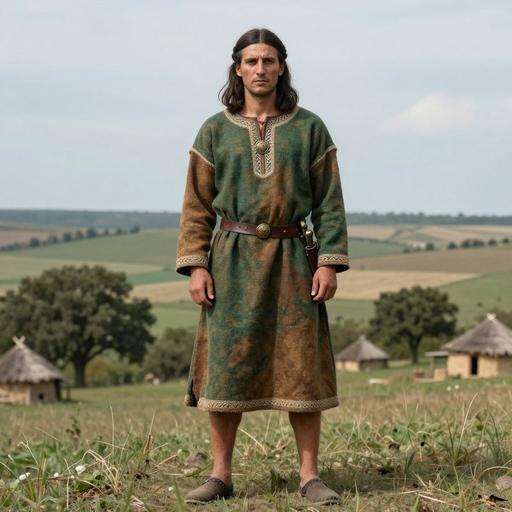
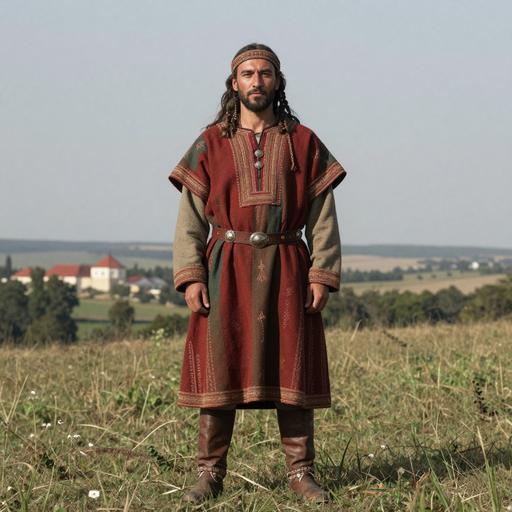
Los retratos son ilustraciones generadas con IA. Las etiquetas de muestra y los identificadores de acceso identifican los registros de referencia.

Retrato Muestra País Época Fecha Cultura mtDNA Coincidencia
Retrato ilustrativo de Austroasiatic individual, Nui Nap, Vietnam (44 BCE-61 CE) generado con IA
Identificador de muestra: I2948
Vietnam Vietnam BA 44 BCE - 61 CE Dong Son Culture M8a2 Direct
Retrato ilustrativo de Vietnam Ba individual, Nui Nap, Vietnam (44 BCE-61 CE) generado con IA
Identificador de muestra: I2948
Vietnam Vietnam BA 44 BCE - 61 CE Dong Son Culture M8a2 Direct
Retrato ilustrativo de Ancient Chinese Civilization individual, Henan province. Yingyang county. Wanggou village. Wanggou site, China (3,550-3,050 BCE) generado con IA
Identificador de muestra: WGM70
China Middle Neolithic Yellow River, China 3550 BCE - 3050 BCE Yellow River Culture M8a2 Direct
Retrato ilustrativo de China Mn individual, Henan province. Yingyang county. Wanggou village. Wanggou site, China (3,550-3,050 BCE) generado con IA
Identificador de muestra: WGM70
China Middle Neolithic China 3550 BCE - 3050 BCE M8a2 Direct
Retrato ilustrativo de Ancient Chinese Civilization individual, Henan province. Jiazuo city. Jiaozuoniecun site, China (250-50 BCE) generado con IA
Identificador de muestra: LGM41
China Late Bronze Age to Iron Age China 250 BCE - 50 BCE Chinese Bronze-Iron M8a2b Subclado
Retrato ilustrativo de China Ia individual, Henan province. Jiazuo city. Jiaozuoniecun site, China (250-50 BCE) generado con IA
Identificador de muestra: LGM41
China Iron Age China 250 BCE - 50 BCE M8a2b Subclado
Retrato ilustrativo de Middle Avar-o Low East Asia individual, Rákóczifalva-Bagi-földek (Jász-Nagykun-Szolnok Coiunty, Szolnok), Hungary (650-900 CE) generado con IA
Identificador de muestra: RKF029
Hungary Hungary MiddleAvar 650-900 CE Avar Culture M8a2b Subclado
Retrato ilustrativo de Middle Late Avar-o Low East Asia individual, Rákóczifalva-Bagi-földek (Jász-Nagykun-Szolnok Coiunty, Szolnok), Hungary (650-800 CE) generado con IA
Identificador de muestra: RKF031
Hungary Hungary MiddleLateAvar 650-800 CE Avar M8a2b Subclado
Retrato ilustrativo de Middle Late Avar-o Low East Asia individual, Rákóczifalva-Bagi-földek (Jász-Nagykun-Szolnok Coiunty, Szolnok), Hungary (650-800 CE) generado con IA
Identificador de muestra: RKF040
Hungary Hungary MiddleLateAvar 650-800 CE Avar M8a2b Subclado
Retrato ilustrativo de Middle Late Avar-o Low East Asia individual, Rákóczifalva-Bagi-földek (Jász-Nagykun-Szolnok Coiunty, Szolnok), Hungary (650-800 CE) generado con IA
Identificador de muestra: RKF141
Hungary Hungary MiddleLateAvar 650-800 CE Avar M8a2b Subclado
MATERNAL LINAJE · ADN ANTIGUO

Mapa de pruebas de linajes antiguos

Sigue los clados superiores hasta esta rama y explora dónde se encontraron portadores antiguos.

Cargando observaciones antiguas...

Los marcadores son ubicaciones de hallazgos arqueológicos. Una línea discontinua representa una transición geográfica propuesta e incierta entre ramas consecutivas, apoyada en varias observaciones fechadas; no es una ruta de viaje exacta, un lugar de nacimiento ni una prueba de descendencia directa. Las muestras del clado parental pueden pertenecer a otras ramas descendientes. Se mantienen huecos cuando las pruebas son insuficientes. Las fechas de las muestras son distintas de las fechas de formación de los haplogrupos.

Perfil de referencia

Mapa de distribución de portadores

Distribución geográfica de muestras de ADN antiguo (12), portadores directos o de subclados de M8A2

Portador directo Portador de un subclado
Filtro de periodo temporal
Todos los periodos
Mostrando todas las muestras
Perfil de referencia

Distribución temporal

Distribución de portadores por periodos arqueológicos

Perfil de referencia

Distribución geográfica

Recuentos por país registrado de las muestras. Reflejan la selección de referencia disponible, no frecuencias de población.

Perfil de referencia

Distribución por país y época

Compara los recuentos de muestras registradas por países y periodos arqueológicos. Selecciona una celda con datos para examinar una muestra.

Datos

Datos y procedencia

Información sobre las fuentes y la calidad de los datos

Última actualización 2026-06-14
Puntuación de confianza 50/100
Cobertura Low

Fuente de datos

La clasificación, las fechas estimadas y el contexto geográfico reflejan los datos de referencia registrados y pueden cambiar al revisarse las pruebas. La cobertura de muestras es desigual; las ubicaciones registradas y las asociaciones arqueológicas no establecen el origen personal ni la identidad cultural.

Un haplogrupo sigue una línea materna o paterna. La rama que se puede predecir depende de los marcadores presentes en el archivo de ADN. Cómo analizamos el ADN