Saltar al contenido principal
Cultura destacada

Caves of Mesolithic England

Fragile bones and ancient DNA from Somerset and Devon reveal post‑glacial lives

8751 CE - 7085 BCE
United Kingdom (Somerset, Devon)

La historia

Archaeological and genetic evidence from four Mesolithic individuals (8751–7085 BCE) found in Aveline's Hole, Gough's Cave and Kent's Cavern illuminates early post‑glacial England. Limited samples suggest ties to Western Hunter‑Gatherers but conclusions remain preliminary.

Time Period

8751–7085 BCE

Region

United Kingdom (Somerset, Devon)

Common Y-DNA

I2, I

Common mtDNA

U, B

Cronología

8751 BCE

Earliest sampled burial (Aveline's Hole)

One of the oldest analyzed Mesolithic samples in this set comes from Aveline's Hole, Somerset, dated to the early portion of the 8751–7085 BCE range.

7085 BCE

Latest sampled individual (Kent's Cavern)

The most recent sample in this group is dated near 7085 BCE, from a cave context in Devon reflecting continued Mesolithic occupation.

Origins & Emergence

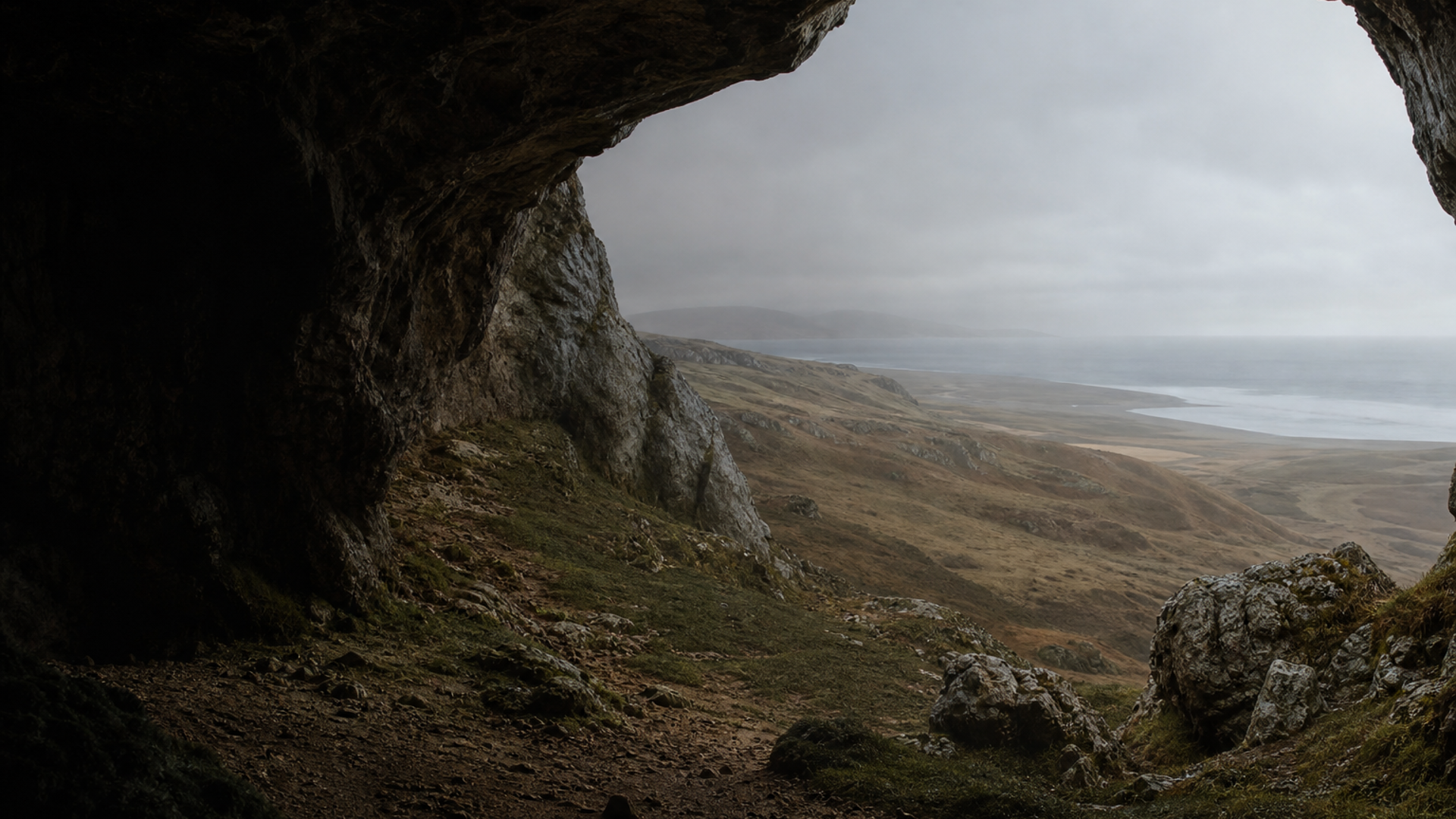
The Mesolithic inhabitants sampled from England occupy a landscape still reshaped by the end of the last Ice Age. Archaeological sites in limestone caves — Aveline's Hole (Burrington Combe), Gough's Cave (Cheddar) and Kent's Cavern (Torquay) — preserve human remains and material traces dated between 8751 and 7085 BCE. These locales speak to a coastal and upland frontier where rising sea levels and expanding woodlands created corridors for human movement.

Archaeological data indicates these people practiced mobile hunter‑gatherer lifeways adapted to river valleys, estuaries and patchy woodland. Lithic technology and faunal remains from these cave contexts imply seasonal rounds exploiting fish, shellfish, deer and small game. Limited evidence suggests structured treatment of the dead within caves — burials or curated remains — but the patterns are fragmentary.

Genetically, the samples align with broader post‑glacial networks in northwestern Europe. However, with only four individuals, any narrative of population origins remains provisional: the genetic picture is a faint film, promising more detail only as additional samples are recovered and analyzed.

  • Post‑glacial occupation of coastal and karst landscapes
  • Cave sites preserve burials and seasonal camps
  • Conclusions remain preliminary due to small sample size

Daily Life & Society

Life in Mesolithic England unfolded against a cinematic backdrop of newly forested hills and widening estuaries. Archaeological assemblages from the three caves show stone tools, butchered animal bones and occasional worked bone or antler — the material traces of hunting, fishing and hide working. Spatial patterns in caves suggest places of repeated human activity: hearths, discard zones and possible loci for ritual or mortuary behavior.

Comparative archaeology indicates small, mobile bands organized around kin networks, with seasonal movement between inland and coastal resources. The presence of multiple burials and modified human remains at some cave sites hints at complex social practices around death, though interpretive certainty is low. Archaeobotanical and zooarchaeological evidence is sparse for these particular samples, so reconstructions of diet and seasonality draw on regional Mesolithic parallels rather than direct site‑level proof.

Taken together, the archaeological record portrays resilient hunter‑gatherer communities negotiating a dynamic early Holocene environment, employing intimate knowledge of rivers, shores and woodlands to survive and reproduce socially.

  • Mobile hunter‑gatherer bands exploiting coastal and riverine resources
  • Cave contexts show repeated occupation and complex mortuary traces

Genetic Profile

Ancient DNA from these four individuals supplies a genetic window into early post‑glacial England. The Y‑chromosome results include haplogroups I2 and I — lineages commonly associated with Mesolithic Europe and the Western Hunter‑Gatherer (WHG) genetic cluster. On the mitochondrial side, three samples carry haplogroup U, a hallmark of Paleolithic and Mesolithic maternal lineages across Europe; one sample is assigned to B, an unexpected result that requires further verification.

Overall genome‑scale data (where available) place these individuals close to the WHG genetic profile documented elsewhere in northwestern Europe, consistent with archaeological expectations for long‑standing hunter‑gatherer populations. Genetics helps illuminate kinship, sex‑biased mobility and population continuity: the presence of I‑line Y haplogroups suggests paternal continuity with earlier European foragers, while mtDNA diversity points to maternal line variation within small groups.

Crucially, the sample count is only four. When sample size is below ten, patterns can be misleading: one atypical mtDNA lineage or a single Y assignment should not be overinterpreted. These genetic snapshots are valuable but preliminary; expanding the dataset will test whether observed haplogroups represent local continuity or are the product of small‑sample stochasticity.

  • Affiliation with Western Hunter‑Gatherer genetic cluster
  • Small sample size (n=4) makes genetic conclusions provisional

Legacy & Modern Connections

The genetic and archaeological traces from Mesolithic England form one thread in the deep tapestry of British ancestry. Elements of WHG ancestry detected in ancient samples survive, in diluted form, in later Neolithic and modern British populations. Archaeology shows how these early foragers shaped landscapes and resource knowledge that later communities inherited.

Yet the Mesolithic signature was not fixed: subsequent arrivals — Neolithic farmers and later Bronze Age movements — reshaped the genetic and cultural landscape. The small current dataset cautions against drawing direct lines to present‑day populations; instead, these individuals represent ancestral chapters whose full contribution will become clearer as more sites and genomes are studied. Ongoing research promises to resolve questions of continuity, migration and social change across millennia.

  • WHG ancestry contributes to the genetic mosaic of later Britain
  • Future sampling is essential to clarify long‑term continuity

Asistente de IA

Asistente de IA por DNAGENICS

Desbloquear esta función
Pregunta sobre la cultura Caves of Mesolithic England. El asistente con IA puede explicar hallazgos genéticos, contexto histórico, pruebas arqueológicas y conexiones modernas, con sus límites de interpretación.
Ejemplo de análisis con IA

La cultura Caves of Mesolithic England representa un capítulo de la historia humana...

El análisis genético permite estudiar similitudes con poblaciones anteriores y posibles adaptaciones. Las muestras de ADN antiguo aportan información para investigar patrones migratorios y relaciones entre poblaciones, con límites que dependen del estudio y del contexto arqueológico.

Esta es una vista previa del análisis con IA. Accede al asistente completo para explorar información sobre:

  • Composición y similitud genética
  • Patrones migratorios y orígenes
  • Vida cotidiana y prácticas culturales
  • Contexto genético moderno