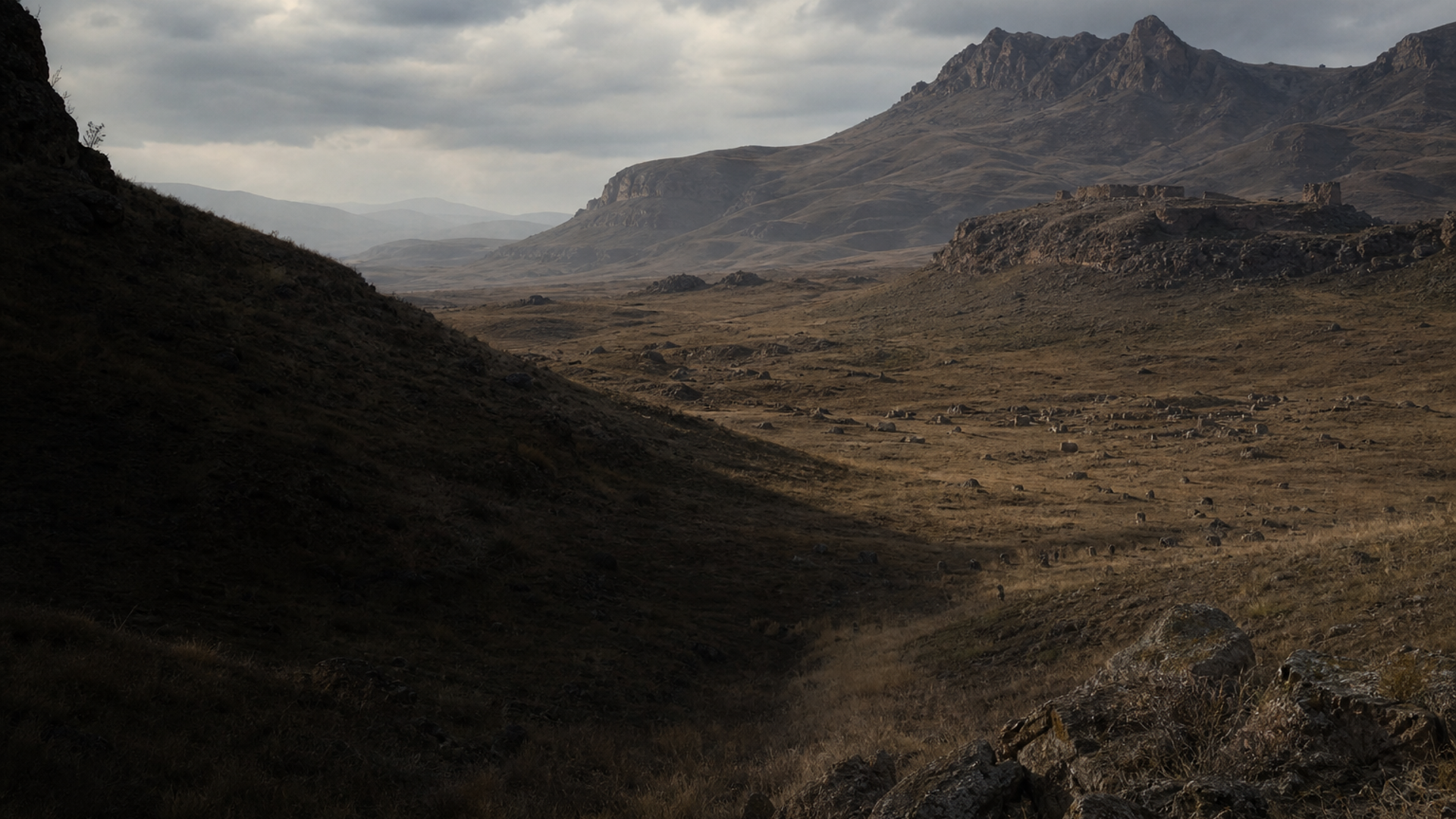
Archaeological contexts for these Late Iron Age burials suggest communities rooted in the highland landscapes of Armenia, where mixed farming, herding, and local craft production structured daily life. Funerary assemblages and cemetery organization (where preserved) indicate social differentiation: some burials are richer in grave goods and arranged with deliberate orientation, while others are modest. These contrasts reflect a society negotiating status and identity in an era of shifting political allegiances.
Material culture across the region — pottery styles, metalwork, and textile fragments where preserved — shows both local continuity and external influences, pointing to trade and cultural exchange along routes that connected Anatolia, the Iranian plateau, and the Caucasus. Archaeological data indicates that communities may have maintained long-term residence at established cemeteries like Harjis, creating multilayered mortuary landscapes that preserve life histories of families and lineages.
Because osteological and contextual data from these particular samples are limited, reconstructions of diet, mobility, and household organization remain tentative. Future isotopic and broader genomic surveys would sharpen our view of daily subsistence, childhood movement, and the interplay between local tradition and regional interaction.