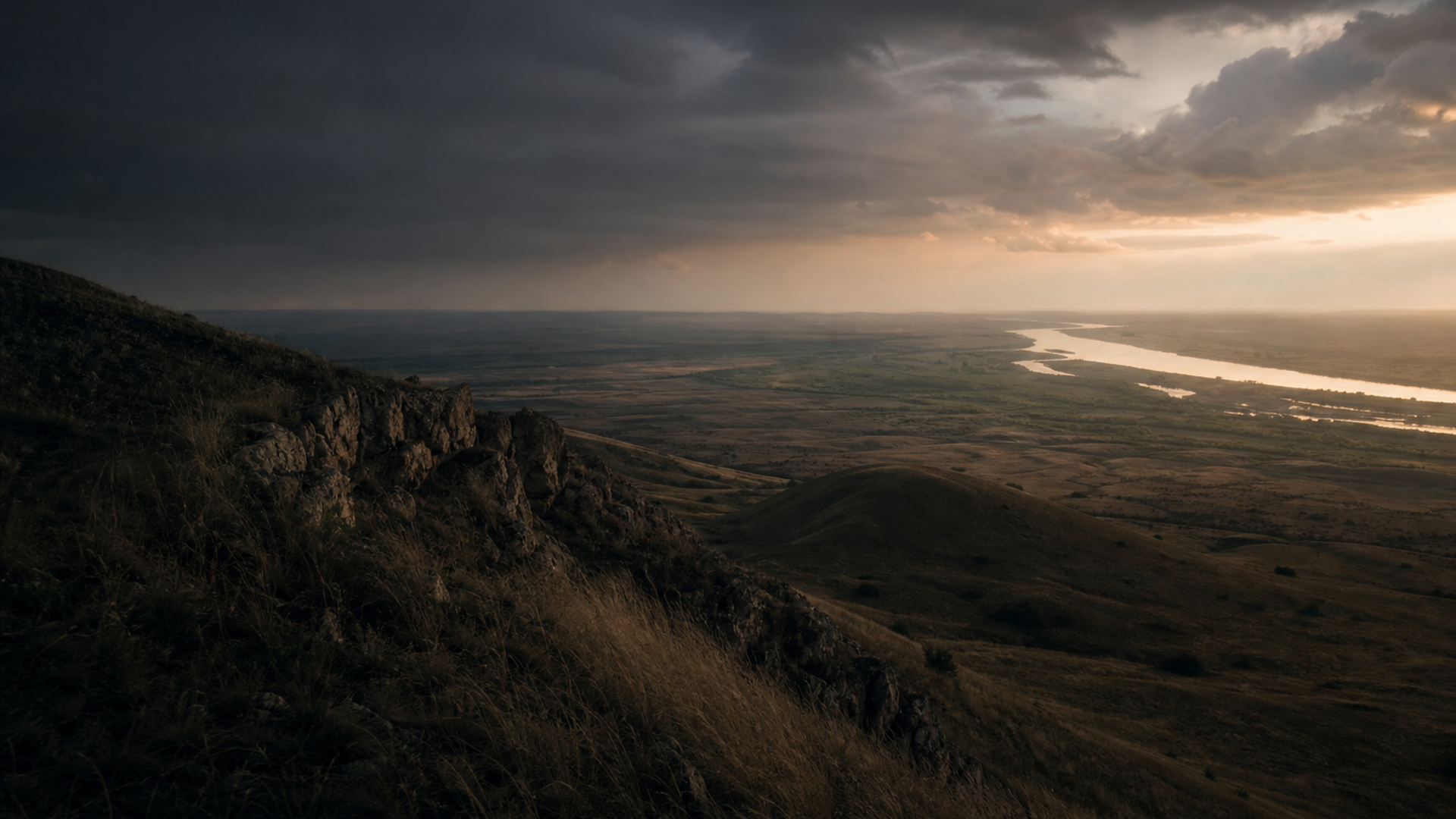
The Srubnaya horizon on the Samara plain unfolded in a landscape of riverine meadows, seasonal pastures, and riparian woodlands. Archaeological remains—animal bone assemblages dominated by cattle and sheep/goat, bronze implements, domestic pottery and grain impressions—suggest mixed pastoralism with opportunistic agriculture. Timber-framed graves (the eponymous "srub" or beam constructions) often include grave goods: weapons, simple ornaments, and occasional livestock offerings, hinting at social status differences and the importance of pastoral wealth.
Settlement traces are often ephemeral, reflecting mobile or semi-sedentary lifeways. The Volga and Samara rivers were natural highways: people, animals, and ideas moved along these corridors. Craft production included bronze-working and bone carving; raw materials such as copper may have traveled long distances. Burial variability—single inhumations, collective features, and differing grave goods—suggests heterogenous social organization rather than uniform hierarchy. Limited evidence suggests both patrilineal and wider kin-based networks, but demographic inferences remain tentative.
Cinematic image: dawn mist over the Volga, herders leading flocks past timber graves—an economy balanced between mobility and rooted landscape knowledge.