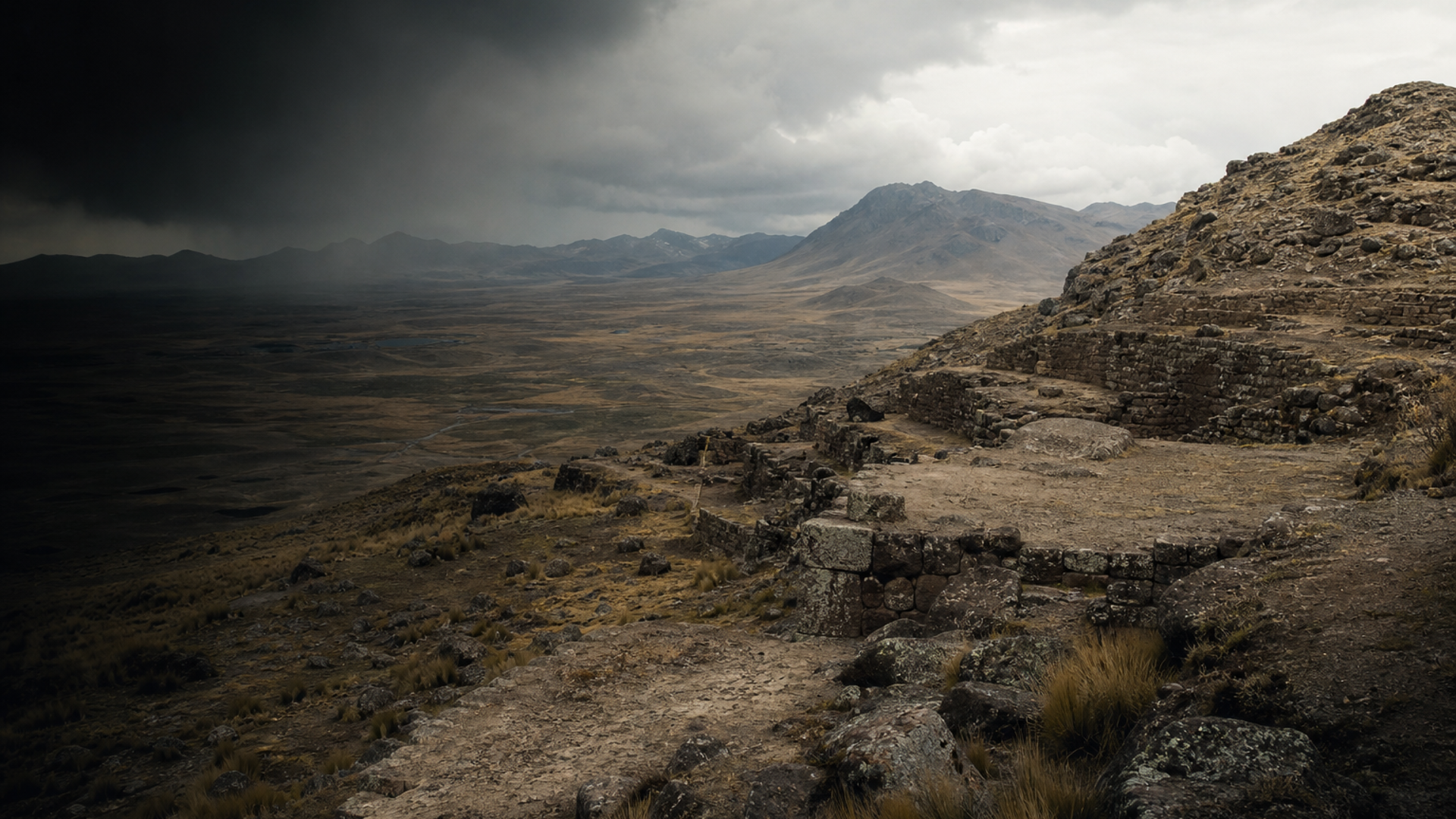
The genetic data from Totocachi are modest but evocative: the single sampled individual carries mitochondrial haplogroup B2. Haplogroup B2 is a well-documented maternal lineage throughout the Americas, common in many Andean and lowland populations. Its presence at Totocachi aligns with broad patterns of maternal continuity within the region but does not, by itself, reveal fine-grained demographic processes.
No Y-chromosome information is reported for this individual, so paternal affiliations remain unknown. With a single mitochondrial genome (n=1), population-level inferences are inherently tentative. Archaeological context suggests continuity with Tiwanaku-associated material culture; the mtDNA result is consistent with local maternal ancestry persisting into the late pre-contact era rather than indicating a major incoming maternal replacement.
When ancient genomes from multiple individuals and sites are compared, patterns emerge: shared maternal lineages can signal regional continuity, while distinct haplogroups or shifts in lineage frequencies can signal migration, admixture, or demographic churn. For Totocachi, the available genetic snapshot complements the archaeological record but must be framed as preliminary. Future sampling from Totocachi and surrounding highland sites would be required to test hypotheses about mobility, kinship, and the genetic legacy of Tiwanaku-era populations.
Language of uncertainty: limited sample size means these genetic interpretations are provisional and meant to motivate further, targeted ancient DNA sampling.