Aller au contenu principal
mtDNA · lignée Maternelle

A1

mtDNA Haplogroup A1

Profil de référence pour une branche de lignée. Des haplogroupes partagés n'établissent pas de lien familial ni d'identité culturelle.

Profil de référence

Contexte de la branche

Contexte historique de la branche de lignée mtDNA A1

Origins and Evolution

mtDNA haplogroup A1 is a subclade of the provisional parent AA1 and sits within the broader East Eurasian mtDNA diversity commonly represented by haplogroup A and its derivatives. Based on its phylogenetic position as an intermediate clade and on the demographic history of closely related A-lineages, A1 most plausibly arose in northeastern Eurasia (Siberia/Northeast Asia) during the Late Glacial to early Holocene period (approximately ~15 kya, post-Last Glacial Maximum). This timeframe is consistent with expansions and demographic restructuring that affected many northern Eurasian maternal lineages as ice sheets retreated and new ecological niches became available.

Because AA1 (the immediate parent) is currently characterized as an intermediate node in PhyloTree-style reconstructions, the exact mutational defining markers for A1 and its placement relative to other A-derived clades depend on additional whole-mitochondrial sequencing from under-sampled populations. The available phylogeographic pattern for A-like lineages supports a model in which A1 split from related East Eurasian branches during regional population differentiation in Siberia and adjacent areas.

Subclades

At present A1 is recognized as an intermediate clade that likely contains or will be split into finer subclades as more high-resolution mitogenomes are sequenced. Expected features of its substructure are:

  • Derivate branches defined by additional coding-region mutations and control-region motifs, which will clarify geographic microstructure (for example northern vs. more southerly distribution within Northeast Asia).
  • Restricted sublineages that may be more common in particular indigenous Siberian groups (for instance, relict lineages preserved in small hunter-gatherer populations) and others that appear more broadly in Northeast Asia.

Because sampling is still incomplete, researchers should treat the current A1 definition as provisional and likely to be refined with expanded whole-mtDNA datasets.

Geographical Distribution

A1 is primarily associated with northeastern Eurasia and Siberia and is found at low-to-moderate frequencies in several indigenous and regional populations. The distributional features inferred from related A-lineages and the phylogenetic position of A1 are:

  • Concentration in Siberia and northeastern Asia, reflecting survival of maternal lineages in high-latitude refugia and postglacial recolonization routes.
  • Presence at lower frequencies in neighboring Central Asian and East Asian groups due to gene flow and historic mobility across steppe and forest-steppe zones.
  • Possible, but limited, representation among descendant populations linked to Beringia, meaning that while A1 itself is not the dominant Native American founding lineage (that role is taken by subclades such as A2), genetic continuity through related A-lineages suggests A1-like maternal ancestry may have contributed to the pool of lineages that crossed Beringia in late Pleistocene expansions.

Overall, modern frequency is typically low to moderate and tends to be highest in small, often northern indigenous groups where genetic drift has preserved older maternal branches.

Historical and Cultural Significance

  • Postglacial expansions: A1 likely reflects maternal lineages that expanded locally after the Last Glacial Maximum as tundra and boreal landscapes changed, supporting hunter-gatherer and early forager communities in northern Eurasia.
  • Paleo-Siberian continuity: The haplogroup likely contributes to the genetic continuity observed in some Paleo-Siberian groups, and thus has relevance for interpreting the population history of the North Asian hunter-gatherer record.
  • Connection to Beringian/peopling models: Although A1 is not the primary founder haplogroup in the Americas, it sits within the same East Eurasian mtDNA radiation that supplied founding lineages to Beringia. Therefore A1 and its relatives are informative for reconstructing routes and timings of human movements across northeastern Eurasia.

Archaeogenetic associations are tentative because of limited ancient-DNA sampling from specific regions; future ancient mitogenomes from Siberia and Beringia will be decisive in testing hypotheses about A1’s historical roles.

Conclusion

mtDNA haplogroup A1 represents an East Eurasian maternal lineage rooted in northeastern Eurasia/Siberia, originating in the aftermath of the Last Glacial Maximum (~15 kya). As an intermediate clade under AA1, A1 documents regional maternal diversification among postglacial foragers and early Holocene populations. Further whole-mitochondrial sequencing and broader geographic sampling—especially of underrepresented Siberian and Beringian ancient remains—are needed to refine the subclade structure, exact age estimates, and the haplogroup's contribution to later population movements, including those related to the peopling of the Americas.

Points clés

  • Origins and Evolution
  • Subclades
  • Geographical Distribution
  • Historical and Cultural Significance
  • Conclusion
Profil de référence

Arbre et relations

Contexte phylogénétique et sous-clades

Voie évolutive

Suivez les branches parentes consignées jusqu'à A1. Les dates sont des estimations et peuvent évoluer lorsque les données de référence sont révisées.

Étapes Haplogroupe Âge estimé Époque archéologique Temps écoulé Descendants immédiats Descendants modernes testés Liens anciens
1 A1 Actuel ~15,000 years ago Mesolithic 15,000 ans 1 4 0
2 AA1 - - - 14 942 0
3 AA - - - 4 947 0
4 A ~30,000 years ago Paleolithic 30,000 ans 4 997 192
5 N ~60,000 years ago Paleolithic 60,000 ans 16 26,150 13
6 L3 ~70,000 years ago Paleolithic 70,000 ans 7 30,162 6
7 L3'4 - - - 2 30,212 0
8 L3'4'6 - - - 2 30,216 0
9 L2'3'4'6 - - - 2 31,333 0
10 L2'3'4'5'6'7 - - - 2 31,349 0
11 L1'2'3'4'5'6'7 - - - 2 31,852 0
12 L ~160,000 years ago Paleolithic 160,000 ans 2 32,236 5

Branches sœurs (13)

Autres branches issues du même haplogroupe parent

Profil de référence

Dans le monde

Distribution géographique et présence moderne

Origine consignée

Northeastern Eurasia / Siberia

Distribution moderne

The populations where mtDNA haplogroup A1 is found include:

  1. Indigenous Siberian groups (for example, relict hunter-gatherer populations such as Evenks, Nganasan, Yakut-associated communities)
  2. Northeast Asian populations (northern Han, Koreans, Mongolians — at low to moderate frequencies)
  3. Central Asian groups (Altaians, Kazakh steppe populations — occasional occurrences due to admixture)
  4. Beringia-descended and circumpolar peoples (potential limited representation among populations with ancient Beringian ancestry; requires confirmatory data)
  5. Isolated occurrences in modern urban or mixed populations across northern Eurasia due to recent mobility
Contexte historique

Une branche dans le temps

Formation estimée sur une chronologie historique large. Les repères de période servent de contexte et n'impliquent pas de lien avec des cultures particulières.

  1. Il y a ~20k ans

    Dernier maximum glaciaire

    Apogée de la dernière période glaciaire, populations isolées

  2. Il y a ~15k ans

    Haplogroupe A1

    Formation estimée de cette branche mtDNA ; les dates et les lieux sont des estimations de référence.

    Cette branche
  3. Il y a ~10k ans

    Révolution néolithique

    Début de l'agriculture et émergence de communautés sédentaires

  4. Il y a ~5k ans

    Âge du bronze

    Travail des métaux, écriture et premières civilisations

  5. Il y a ~3k ans

    Âge du fer

    Outils en fer, réseaux d'échanges élargis

  6. Il y a ~2.5k ans

    Antiquité classique

    Floraison des civilisations grecque et romaine

  7. Aujourd'hui

    Aujourd'hui

    Époque moderne

Profil de référence

Contexte archéologique

Associations archéologiques consignées pour la branche mtDNA A1

Associations consignées

Ces libellés décrivent des contextes archéologiques consignés pour des échantillons de référence liés à A1. Une association n'établit pas que tous les porteurs appartenaient à une culture ni qu'ils ont suivi une route migratoire précise.

Irkutsk Culture Kitoi Kuenga Culture Lokomotiv Culture Ob River Culture Russia_AltaiKrai_N Russia_AltaiKrai_N_Bolshemys Russia_Novosibirsk_N-1 Yenisei Culture
Les attributions culturelles reposent sur le contexte archéologique des échantillons d'ADN ancien et peuvent refléter des associations régionales à certaines périodes.
Profil de référence

Catalogue d'échantillons

6 porteurs de sous-clade de l'haplogroupe A1 (aucun porteur direct dans la sélection de référence actuelle)

6 affiché(s) · 6 échantillons correspondants

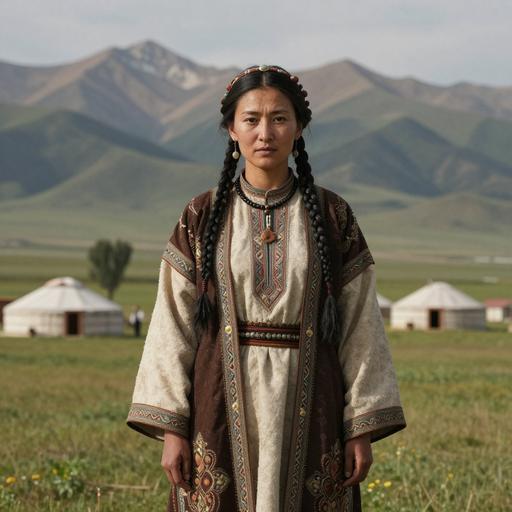
Les portraits sont des illustrations générées par IA. Les libellés d'échantillon et identifiants d'accès désignent les enregistrements de référence.

Portrait Échantillon Pays Époque Date Culture mtDNA Correspondance
Portrait illustratif généré par IA de Nomadic Steppe Cultures individual, Georgievsky Bugor, Kazakhstan (131-318 CE)
Identifiant d'échantillon : I11540
Kazakhstan Late Iron Georgievsky 131 CE - 318 CE Georgievsky Culture A1a Sous-clade
Portrait illustratif généré par IA de Steppe Lba individual, Georgievsky Bugor, Kazakhstan (131-318 CE)
Identifiant d'échantillon : I11540
Kazakhstan Late Bronze Age Steppe 131 CE - 318 CE A1a Sous-clade
Portrait illustratif généré par IA de Nomadic Steppe Cultures individual, Tian Shan. Central Steppe, Kyrgyzstan (236-531 CE)
Identifiant d'échantillon : DA80
Kyrgyzstan The Hun Period in Kyrgyzstan 236 CE - 531 CE Hunnic Period A1a Sous-clade
Portrait illustratif généré par IA de Hun individual, Tian Shan. Central Steppe, Kyrgyzstan (236-531 CE)
Identifiant d'échantillon : DA80
Kyrgyzstan The Huns 236 CE - 531 CE A1a Sous-clade
Portrait illustratif généré par IA de Avar individual, Rákóczifalva-Bagi-földek (Jász-Nagykun-Szolnok Coiunty, Szolnok), Hungary (580-804 CE)
Identifiant d'échantillon : RKO004
Hungary Hungary Avar 550-850 CE Avar A1a Sous-clade
Portrait illustratif généré par IA de Golden Horde Late Medieval individual, Ploske (Forest-steppe, Siversky Donets basin, Donetsk), Ukraine (1,184-1,416 CE)
Identifiant d'échantillon : UKR074-I
Ukraine Ukraine GoldenHorde LateMedieval 1200-1400 CE Ukraine_GoldenHorde_LateMedieval A1a Sous-clade
LIGNÉE MATERNELLE · ADN ANTIQUE

Carte des preuves de lignées antiques

Suivez les clades parents jusqu'à cette branche et explorez où des porteurs antiques ont été identifiés.

Chargement des observations antiques…

Les marqueurs indiquent des lieux de découvertes archéologiques. Un trait pointillé représente une transition géographique proposée et incertaine entre branches consécutives, appuyée sur plusieurs observations datées ; ce n'est pas un itinéraire exact, un lieu de naissance ni une preuve de descendance directe. Des échantillons de clades parents peuvent appartenir à d'autres branches descendantes. Des lacunes subsistent lorsque les preuves sont insuffisantes. Les dates d'échantillon diffèrent des dates de formation des haplogroupes.

Profil de référence

Carte de répartition des porteurs

Répartition géographique de 6 échantillons d'ADN ancien (porteurs directs et de sous-clade de A1)

Porteur de sous-clade
Filtre de période
Toutes les périodes
Affichage de tous les échantillons
Profil de référence

Répartition temporelle

Répartition des porteurs selon les périodes archéologiques

Profil de référence

Répartition géographique

Effectifs par pays d'échantillon consigné. Ils reflètent la sélection de référence disponible, pas des fréquences de population.

Profil de référence

Répartition pays × époque

Comparez les effectifs d'échantillons consignés selon les pays et les périodes archéologiques. Sélectionnez une cellule renseignée pour examiner un échantillon.

Données

Données et provenance

Informations sur les sources et qualité des données

Dernière mise à jour 2026-06-14
Score de confiance 50/100
Couverture Low

Source des données

La classification, les dates estimées et le contexte géographique reflètent les données de référence consignées et peuvent évoluer lorsque les éléments sont révisés. La couverture d'échantillons est inégale ; les lieux consignés et les associations archéologiques n'établissent pas une origine personnelle ni une identité culturelle.