Aller au contenu principal
mtDNA · lignée Maternelle

N

mtDNA Haplogroup N

Profil de référence pour une branche de lignée. Des haplogroupes partagés n'établissent pas de lien familial ni d'identité culturelle.

Profil de référence

Contexte de la branche

Contexte historique de la branche de lignée mtDNA N

Origins and Evolution

Haplogroup N is a primary non-African mitochondrial lineage that branched from L3 during the Late Pleistocene associated with the initial Out-of-Africa migration(s). Genetic dating and phylogenetic patterns place the origin of N at roughly ~55–65 thousand years ago (kya), probably in the Near East or northeastern Africa as modern humans expanded into Eurasia. N is a sister clade to haplogroup M; together M and N encompass nearly all non-African maternal diversity.

N itself rapidly diversified soon after its origin. One of its most important descendants is haplogroup R, which in turn gave rise to many of the well-known European, West Asian, South Asian and some Native American lineages. In addition to R, N also produced several independent branches (for example, lineages leading to A, X, N9, Y and others) that were important in early colonization and later regional differentiation across Eurasia and into the Americas and Oceania.

Subclades

Major subclades and descendant groups include:

  • R (descendant of N) — a hugely successful clade that generated many Eurasian and Native American haplogroups (H, V, J, T, U, B, etc.).
  • N1, N2, N9, and other basal N lineages — present in varying frequencies across West Eurasia and East Asia.
  • A and X — lineages derived from or placed within the broader N topology; these are important in East Asia and Native American prehistory (A widespread in Native Americans; X present in some North American groups).

Because many Eurasian haplogroups are downstream of N, the clinical and anthropological significance of N is mainly reflected via its descendants rather than a single common diagnostic mutation present across all populations.

Geographical Distribution

Haplogroup N and its descendant branches are broadly distributed across the non-African world. N-derived haplogroups dominate maternal lineages in Europe, West Asia, South Asia, East Asia, Southeast Asia, Oceania (via derived clades), and the Americas (via derived clades like A and B). Frequencies of basal N (N*) are often low or localized, but the combined presence of N and its descendants (especially R) makes this clade a major component of modern Eurasian and many Oceanian and Native American maternal gene pools.

Within Africa, true N lineages are generally rare but detectable at low frequencies in North Africa and northeastern Africa as a result of early migrations out of Africa and later back-migrations.

Historical and Cultural Significance

  • Upper Paleolithic expansion: N marks the maternal genetic signature of early modern human expansions into Eurasia during the Upper Paleolithic and is linked to coastal and inland dispersal routes taken by anatomically modern humans after leaving Africa.
  • Formation of regional populations: Descendants of N (particularly R and its subclades) were central to the formation of later Eurasian populations, contributing to the maternal makeup of hunter-gatherers and subsequent Neolithic farmer and Bronze Age groups across Europe and Asia.
  • Austronesian and Oceanic dispersals: N-derived lineages are part of the maternal signature carried by Austronesian-speaking peoples and were involved in the colonization of Island Southeast Asia, Near Oceania, and Remote Oceania (Lapita-related expansions).
  • Native American peopling: Some haplogroups important in the peopling of the Americas (A and B, which derive from the N/R lineage complex) trace their ultimate origin to this N-derived Eurasian maternal pool.

Ancient DNA studies repeatedly find lineages derived from N and R in early Eurasian remains, supporting the role of N-lineages in Paleolithic and later population movements.

Conclusion

Haplogroup N is a foundational maternal lineage outside Africa: it represents one of the key branching points immediately after the emergence of L3 and is ancestral to a large portion of present-day Eurasian, Oceanian, and Native American mtDNA diversity. Studies of N and its descendants illuminate major prehistoric migrations — the initial Out-of-Africa dispersal, Upper Paleolithic colonization of Eurasia, later Neolithic and Bronze Age movements, and island-hopping expansions into Oceania and the Americas.

Points clés

  • Origins and Evolution
  • Subclades
  • Geographical Distribution
  • Historical and Cultural Significance
  • Conclusion
Profil de référence

Arbre et relations

Contexte phylogénétique et sous-clades

Voie évolutive

Suivez les branches parentes consignées jusqu'à N. Les dates sont des estimations et peuvent évoluer lorsque les données de référence sont révisées.

Étapes Haplogroupe Âge estimé Époque archéologique Temps écoulé Descendants immédiats Descendants modernes testés Liens anciens
1 N Actuel ~60,000 years ago Paleolithic 60,000 ans 16 26,150 13
2 L3 ~70,000 years ago Paleolithic 70,000 ans 7 30,162 6
3 L3'4 - - - 2 30,212 0
4 L3'4'6 - - - 2 30,216 0
5 L2'3'4'6 - - - 2 31,333 0
6 L2'3'4'5'6'7 - - - 2 31,349 0
7 L1'2'3'4'5'6'7 - - - 2 31,852 0
8 L ~160,000 years ago Paleolithic 160,000 ans 2 32,236 5

Branches sœurs (6)

Autres branches issues du même haplogroupe parent

Profil de référence

Dans le monde

Distribution géographique et présence moderne

Origine consignée

Near East / Northeast Africa

Distribution moderne

The populations where mtDNA haplogroup N haplogroup N is found include:

  1. Western Europeans (e.g., populations with high R-derived haplogroups such as H, V)
  2. Near Eastern populations (Levant, Arabian Peninsula, Iran)
  3. South Asians (diverse Indian subcontinent groups)
  4. East Asians (Han Chinese, Japanese, Koreans)
  5. Southeast Asians and Austronesian-speaking populations (Philippines, Indonesia, Madagascar via Austronesian link)
  6. Indigenous Australians and Papuan groups (via derived N/R clades)
  7. Native American groups (through N-derived lineages such as A and B)
  8. North African populations (low frequencies due to ancient and historic gene flow)
  9. Central Asian and Siberian groups (various N-lineages including N9, Y, A)
  10. Ancient Eurasian hunter-gatherer and early farmer remains (archaeogenetic contexts)
Contexte historique

Une branche dans le temps

Formation estimée sur une chronologie historique large. Les repères de période servent de contexte et n'impliquent pas de lien avec des cultures particulières.

  1. Il y a ~70k ans

    Sortie d'Afrique

    Grande migration des humains modernes hors d'Afrique

  2. Il y a ~60k ans

    Haplogroupe N

    Formation estimée de cette branche mtDNA ; les dates et les lieux sont des estimations de référence.

    Cette branche
  3. Il y a ~50k ans

    Paléolithique supérieur

    Outils avancés, art et essor culturel

  4. Il y a ~20k ans

    Dernier maximum glaciaire

    Apogée de la dernière période glaciaire, populations isolées

  5. Il y a ~10k ans

    Révolution néolithique

    Début de l'agriculture et émergence de communautés sédentaires

  6. Il y a ~5k ans

    Âge du bronze

    Travail des métaux, écriture et premières civilisations

  7. Il y a ~3k ans

    Âge du fer

    Outils en fer, réseaux d'échanges élargis

  8. Il y a ~2.5k ans

    Antiquité classique

    Floraison des civilisations grecque et romaine

  9. Aujourd'hui

    Aujourd'hui

    Époque moderne

Profil de référence

Contexte archéologique

Associations archéologiques consignées pour la branche mtDNA N

Associations consignées

Ces libellés décrivent des contextes archéologiques consignés pour des échantillons de référence liés à N. Une association n'établit pas que tous les porteurs appartenaient à une culture ni qu'ils ont suivi une route migratoire précise.

Austria_Avar Bohemian Hunter-Gatherer Buran-Kaya Corded Ware Dzudzuana Early Avar Early Bronze Anatolia France_Megalithic_MN Funnel Beaker Culture Gonur Culture Hetian Culture Iraqi PPN Peștera cu Oase Welsh Neolithic
Les attributions culturelles reposent sur le contexte archéologique des échantillons d'ADN ancien et peuvent refléter des associations régionales à certaines périodes.
Profil de référence

Catalogue d'échantillons

7 porteurs directs et 6 porteurs de sous-clade de l'haplogroupe N

10 affiché(s) · 13 échantillons correspondants

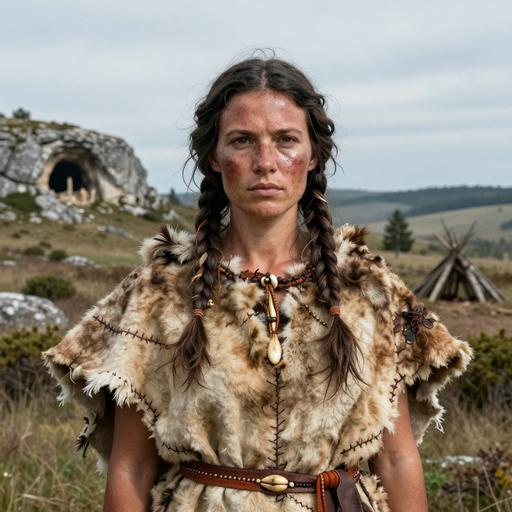
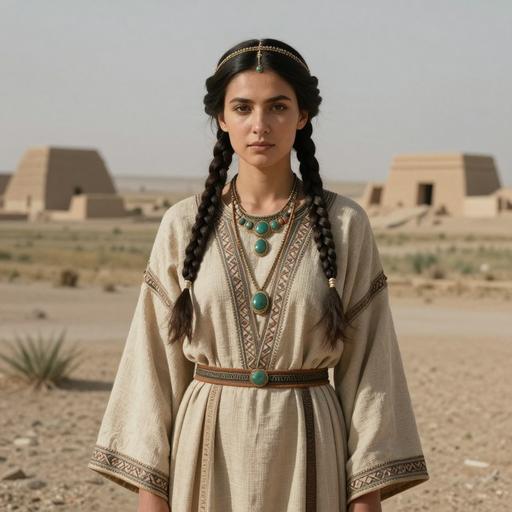
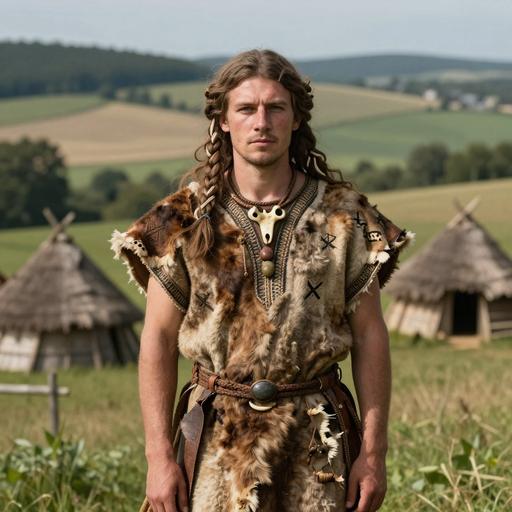
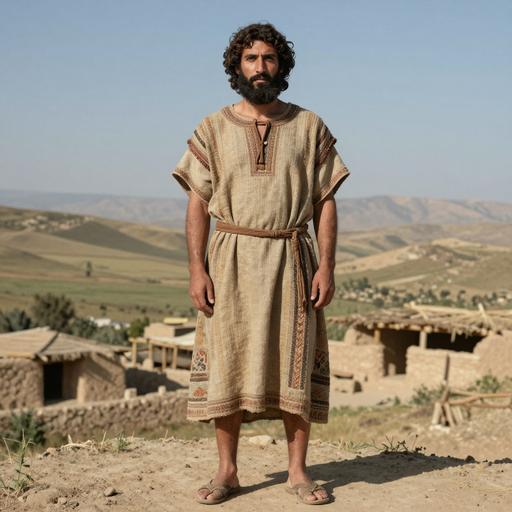
Les portraits sont des illustrations générées par IA. Les libellés d'échantillon et identifiants d'accès désignent les enregistrements de référence.

Portrait Échantillon Pays Époque Date Culture mtDNA Correspondance
Portrait illustratif généré par IA de Silk Road Civilizations individual, Xinjiang. Hetian Region. Luopu County. Hetian, China (1-400 CE)
Identifiant d'échantillon : C391
China Historical Period Hetian, Xinjiang, China 1 CE - 400 CE Hetian Culture N Direct
Portrait illustratif généré par IA de Elite Early Avar-o High East Asia individual, Bács-Kiskun County. Kunpeszér-Felsőpeszériút. Homokbánya, Hungary (541-643 CE)
Identifiant d'échantillon : KFP-7
Hungary Hungary EarlyAvar 541-643 calCE (1495±30 BP) Early Avar N Direct
Portrait illustratif généré par IA de European Neolithic individual, Bohemia. Kolín-Šťáralka, Czech Republic (3,800-3,500 BCE)
Identifiant d'échantillon : KOB003
Czech Republic Neolithic Funnel Beaker Culture, Bohemia, Czech Republic 3800 BCE - 3500 BCE Funnel Beaker Culture N Direct
Portrait illustratif généré par IA de Fertile Crescent Civilization individual, Bestansur, Iraq (8,000-7,000 BCE)
Identifiant d'échantillon : I8959
Iraq Iraq PPN 8000 BCE - 7000 BCE Iraqi PPN N Direct
Portrait illustratif généré par IA de Pre-Agricultural Caucasian individual, Dzudzuana Cave (Imereti, Raion Chiatura, Chiatura), Georgia (25,550-23,250 BCE)
Identifiant d'échantillon : I11857
Georgia Dzudzuana Cave Culture 25550 BCE - 23250 BCE Dzudzuana N Direct
Portrait illustratif généré par IA de Pre-Agricultural Caucasian individual, Dzudzuana Cave (Imereti, Raion Chiatura, Chiatura), Georgia (25,550-23,250 BCE)
Identifiant d'échantillon : I11857
Georgia Dzudzuana Cave Culture 25550 BCE - 23250 BCE Dzudzuana N Direct
Portrait illustratif généré par IA de European Hunter-Gatherers individual, Bohemia. Koněprusy Caves. Zlatý kůň, Czech Republic (33,749-30,151 BCE)
Identifiant d'échantillon : ZKU002
Czech Republic Upper Paleolithic to Hunter-Gatherer in Bohemia 33749 BCE - 30151 BCE Bohemian Hunter-Gatherer N Direct
Portrait illustratif généré par IA de Grand Est Bas Rhin EBA individual, Alsace. Lingolsheim, France (2,461-2,206 BCE)
Identifiant d'échantillon : TU918(SX32)
France Early Bronze Age Lingolsheim, Alsace, France 2461-2206 calBCE (3862±34 BP, BE-8009.1.1) Lingolsheim Culture N1 Sous-clade
Portrait illustratif généré par IA de BA1-1 individual, Gonur, Turkmenistan (2,500-1,600 BCE)
Identifiant d'échantillon : I6126
Turkmenistan Bronze Age Gonur 2500-1600 BCE Gonur Culture N2 Sous-clade
Portrait illustratif généré par IA de Czechia EBA Corded Ware individual, Bohemia. Vliněves, Czech Republic (2,880-2,670 BCE)
Identifiant d'échantillon : VLI015
Czech Republic Corded Ware Culture, Bohemia, Czech Republic 2900-2650 BCE Corded Ware N2 Sous-clade
LIGNÉE MATERNELLE · ADN ANTIQUE

Carte des preuves de lignées antiques

Suivez les clades parents jusqu'à cette branche et explorez où des porteurs antiques ont été identifiés.

Chargement des observations antiques…

Les marqueurs indiquent des lieux de découvertes archéologiques. Un trait pointillé représente une transition géographique proposée et incertaine entre branches consécutives, appuyée sur plusieurs observations datées ; ce n'est pas un itinéraire exact, un lieu de naissance ni une preuve de descendance directe. Des échantillons de clades parents peuvent appartenir à d'autres branches descendantes. Des lacunes subsistent lorsque les preuves sont insuffisantes. Les dates d'échantillon diffèrent des dates de formation des haplogroupes.

Profil de référence

Carte de répartition des porteurs

Répartition géographique de 13 échantillons d'ADN ancien (porteurs directs et de sous-clade de N)

Porteur direct Porteur de sous-clade
Filtre de période
Toutes les périodes
Affichage de tous les échantillons
Profil de référence

Répartition temporelle

Répartition des porteurs selon les périodes archéologiques

Profil de référence

Répartition géographique

Effectifs par pays d'échantillon consigné. Ils reflètent la sélection de référence disponible, pas des fréquences de population.

Profil de référence

Répartition pays × époque

Comparez les effectifs d'échantillons consignés selon les pays et les périodes archéologiques. Sélectionnez une cellule renseignée pour examiner un échantillon.

Données

Données et provenance

Informations sur les sources et qualité des données

Dernière mise à jour 2026-02-09

Source des données

La classification, les dates estimées et le contexte géographique reflètent les données de référence consignées et peuvent évoluer lorsque les éléments sont révisés. La couverture d'échantillons est inégale ; les lieux consignés et les associations archéologiques n'établissent pas une origine personnelle ni une identité culturelle.