Aller au contenu principal
mtDNA · lignée Maternelle

B2O

mtDNA Haplogroup B2O

Profil de référence pour une branche de lignée. Des haplogroupes partagés n'établissent pas de lien familial ni d'identité culturelle.

Profil de référence

Contexte de la branche

Contexte historique de la branche de lignée mtDNA B2O

Origins and Evolution

mtDNA haplogroup B2O is a downstream branch of the Native American maternal clade B2, which itself derives from East/Southeast Asian haplogroup B that entered the Americas via a Beringian-related founder population. Given the established age of B2 (on the order of ~15 kya) and patterns of internal diversification seen across the Americas, B2O most plausibly arose during the Holocene within the Americas as a local derivative of B2. Its estimated time depth (here taken as ~7 kya) places its emergence well after the initial Late Pleistocene peopling events and is consistent with lineage diversification driven by regional population structure and localized demographic processes.

Genetically, B2O appears to be a relatively rare and geographically localized terminal or near-terminal branch with limited reported internal diversity in published modern and ancient mtDNA datasets; this pattern is typical for many lower-frequency American subclades that expanded or persisted in particular ecological or cultural niches after the initial colonization.

Subclades

As of current population and ancient-DNA surveys, B2O shows little well-documented downstream structure and is treated as a terminal or shallowly diversified subclade of B2. Where additional private mutations have been reported, they tend to define very small lineages restricted to single populations or individual ancient samples. Continued high-resolution mitogenome sequencing of both modern Indigenous groups and archaeological specimens could reveal further internal substructure, but for now B2O is best characterized as a low-diversity, geographically restricted branch.

Geographical Distribution

B2O is primarily reported from Central America and the northern portion of South America, with sporadic low-frequency occurrences in neighboring regions. Its distribution pattern is consistent with a Holocene origin inside the Americas followed by limited local spread. Occurrences in northern North America, the Caribbean, or East Asia are uncommon and, where reported, may represent either recent admixture or misattributed/closely related B-lineage haplotypes rather than long-standing local B2O populations.

Ancient DNA has identified B2O (or closely related B2 derivatives) in at least two archaeological individuals, supporting an antiquity within the Americas and demonstrating continuity in some regions between prehistoric and present-day maternal lineages.

Historical and Cultural Significance

Because B2O is a low-frequency and regionally restricted mtDNA lineage, it does not map cleanly to a single well-known continental archaeological culture. Instead, its presence is most consistent with regional population histories in parts of Mesoamerica and adjacent northern South America: small-scale coastal and inland demographic processes, local continuity through the Holocene, and the formation of population structure during the Archaic and early Formative periods. Where B2O appears in ancient remains, it can help document maternal continuity at a site or within a region and contribute to reconstructions of prehistoric mobility and interaction.

From a cultural perspective, mtDNA lineages like B2O are most informative when combined with archaeological, isotopic, and autosomal genetic data: they provide a maternal-line window onto demographic events (founder effects, bottlenecks, local expansions) but do not by themselves determine cultural identity.

Conclusion

B2O represents a rare, derived American subclade of B2 that likely originated within the Americas during the Holocene and today is detectable at low frequencies in Indigenous populations of Central America and northern South America and in a small number of ancient individuals. Its limited diversity and localized distribution make it valuable for regional population-history studies, and additional mitogenome sampling (modern and ancient) will clarify its internal structure, exact geographic origins, and temporal dynamics.

Points clés

  • Origins and Evolution
  • Subclades
  • Geographical Distribution
  • Historical and Cultural Significance
  • Conclusion
Profil de référence

Arbre et relations

Contexte phylogénétique et sous-clades

Voie évolutive

Suivez les branches parentes consignées jusqu'à B2O. Les dates sont des estimations et peuvent évoluer lorsque les données de référence sont révisées.

Étapes Haplogroupe Âge estimé Époque archéologique Temps écoulé Descendants immédiats Descendants modernes testés Liens anciens
1 B2O Actuel ~7,000 years ago Neolithic 7,000 ans 1 7 2
2 B2 ~15,000 years ago Mesolithic 15,000 ans 21 946 4
3 B4B ~15,000 years ago Mesolithic 15,000 ans 3 972 0
4 B4B'D'E'J - - - 3 997 0
5 B4 ~28,000 years ago Paleolithic 28,000 ans 4 1,122 7
6 B4'5 ~40,000 years ago Paleolithic 40,000 ans 2 1,432 0
7 RA - - - 3 1,452 0
8 R ~55,000 years ago Paleolithic 55,000 ans 17 22,830 57
9 NA - - - 1 22,830 0
10 N ~60,000 years ago Paleolithic 60,000 ans 16 26,150 13
11 L3 ~70,000 years ago Paleolithic 70,000 ans 7 30,162 6
12 L3'4 - - - 2 30,212 0
13 L3'4'6 - - - 2 30,216 0
14 L2'3'4'6 - - - 2 31,333 0
15 L2'3'4'5'6'7 - - - 2 31,349 0
16 L1'2'3'4'5'6'7 - - - 2 31,852 0
17 L ~160,000 years ago Paleolithic 160,000 ans 2 32,236 5
Profil de référence

Dans le monde

Distribution géographique et présence moderne

Origine consignée

Central America / Northern South America

Distribution moderne

The populations where mtDNA haplogroup B2O is found include:

  1. Indigenous peoples of Central America (localized occurrences)
  2. Indigenous populations of northern South America (especially coastal and adjacent interior groups)
  3. Indigenous North American groups (low frequency, localized)
  4. Pre-contact Caribbean and coastal maritime communities (sporadic occurrences linked to regional networks)
  5. Modern admixed populations in the Americas (low frequency due to historic admixture)
  6. Individuals sampled in ancient DNA studies from Holocene archaeological contexts in the Americas
Contexte historique

Une branche dans le temps

Formation estimée sur une chronologie historique large. Les repères de période servent de contexte et n'impliquent pas de lien avec des cultures particulières.

  1. Il y a ~10k ans

    Révolution néolithique

    Début de l'agriculture et émergence de communautés sédentaires

  2. Il y a ~7k ans

    Haplogroupe B2O

    Formation estimée de cette branche mtDNA ; les dates et les lieux sont des estimations de référence.

    Cette branche
  3. Il y a ~5k ans

    Âge du bronze

    Travail des métaux, écriture et premières civilisations

  4. Il y a ~3k ans

    Âge du fer

    Outils en fer, réseaux d'échanges élargis

  5. Il y a ~2.5k ans

    Antiquité classique

    Floraison des civilisations grecque et romaine

  6. Aujourd'hui

    Aujourd'hui

    Époque moderne

Profil de référence

Contexte archéologique

Associations archéologiques consignées pour la branche mtDNA B2O

Associations consignées

Ces libellés décrivent des contextes archéologiques consignés pour des échantillons de référence liés à B2O. Une association n'établit pas que tous les porteurs appartenaient à une culture ni qu'ils ont suivi une route migratoire précise.

Ancient Beringian Argentina_Cordoba_600BP Argentina_Cordoba_700BP Argentina_SantiagodelEstero_400BP Lapa do Santo Pre-Columbian Tiwanaku Trail Creek Culture
Les attributions culturelles reposent sur le contexte archéologique des échantillons d'ADN ancien et peuvent refléter des associations régionales à certaines périodes.
Profil de référence

Catalogue d'échantillons

2 porteurs directs de l'haplogroupe B2O

2 affiché(s) · 2 échantillons correspondants

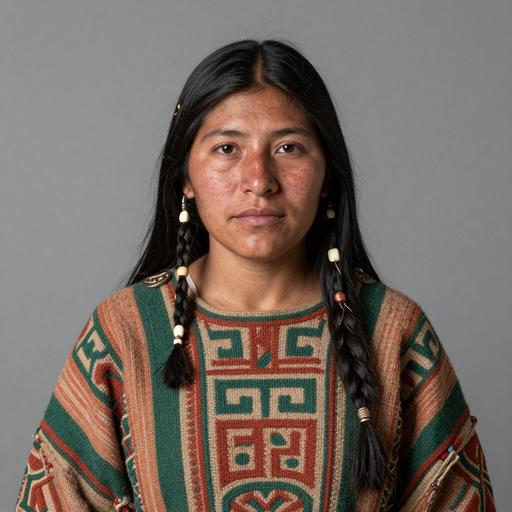
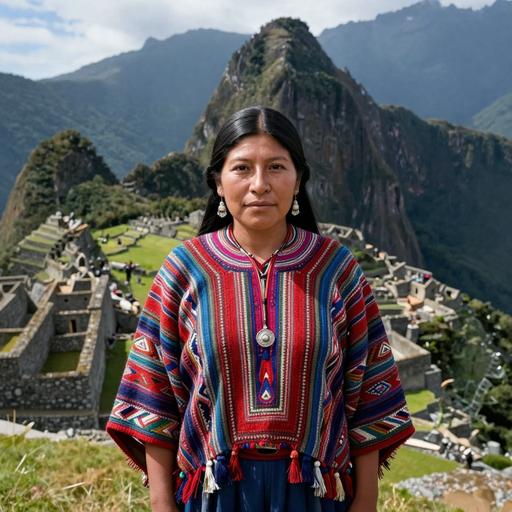
Les portraits sont des illustrations générées par IA. Les libellés d'échantillon et identifiants d'accès désignent les enregistrements de référence.

Portrait Échantillon Pays Époque Date Culture mtDNA Correspondance
Portrait illustratif généré par IA de Miraflores Titicaca Basin MHorizon individual, TiticacaBasin, Bolivia (700-1,000 CE)
Identifiant d'échantillon : MIS7
Bolivia Middle Horizon Miraflores, Bolivia 700-1000 CE Tiwanaku B2o Direct
Portrait illustratif généré par IA de Inca Civilization individual, Machu Picchu, Peru (1,420-1,532 CE)
Identifiant d'échantillon : MP61
Peru Pre-Columbian America 1420 CE - 1532 CE Pre-Columbian B2o Direct
LIGNÉE MATERNELLE · ADN ANTIQUE

Carte des preuves de lignées antiques

Suivez les clades parents jusqu'à cette branche et explorez où des porteurs antiques ont été identifiés.

Chargement des observations antiques…

Les marqueurs indiquent des lieux de découvertes archéologiques. Un trait pointillé représente une transition géographique proposée et incertaine entre branches consécutives, appuyée sur plusieurs observations datées ; ce n'est pas un itinéraire exact, un lieu de naissance ni une preuve de descendance directe. Des échantillons de clades parents peuvent appartenir à d'autres branches descendantes. Des lacunes subsistent lorsque les preuves sont insuffisantes. Les dates d'échantillon diffèrent des dates de formation des haplogroupes.

Profil de référence

Carte de répartition des porteurs

Répartition géographique de 2 échantillons d'ADN ancien (porteurs directs et de sous-clade de B2O)

Porteur direct
Filtre de période
Toutes les périodes
Affichage de tous les échantillons
Profil de référence

Répartition temporelle

Répartition des porteurs selon les périodes archéologiques

Profil de référence

Répartition géographique

Effectifs par pays d'échantillon consigné. Ils reflètent la sélection de référence disponible, pas des fréquences de population.

Profil de référence

Répartition pays × époque

Comparez les effectifs d'échantillons consignés selon les pays et les périodes archéologiques. Sélectionnez une cellule renseignée pour examiner un échantillon.

Données

Données et provenance

Informations sur les sources et qualité des données

Dernière mise à jour 2026-02-16
Score de confiance 50/100
Couverture Low

Source des données

La classification, les dates estimées et le contexte géographique reflètent les données de référence consignées et peuvent évoluer lorsque les éléments sont révisés. La couverture d'échantillons est inégale ; les lieux consignés et les associations archéologiques n'établissent pas une origine personnelle ni une identité culturelle.