Aller au contenu principal
mtDNA · lignée Maternelle

N9B1

mtDNA Haplogroup N9B1

Profil de référence pour une branche de lignée. Des haplogroupes partagés n'établissent pas de lien familial ni d'identité culturelle.

Profil de référence

Contexte de la branche

Contexte historique de la branche de lignée mtDNA N9B1

Origins and Evolution

N9B1 is a subclade of mtDNA haplogroup N9B, itself part of the broader East Asian macro-haplogroup N9. Based on the phylogenetic position of N9B1 beneath N9B and the known time-depth of N9B in the Late Upper Paleolithic, N9B1 most plausibly arose in the terminal Pleistocene or early Holocene (roughly ~14 kya, with uncertainty of a few thousand years). Its emergence is consistent with demographic events tied to island colonization, prolonged insular isolation, and local founder effects in the Japanese archipelago and adjacent northeast Asian coastal regions.

Lineage formation for N9B1 likely reflects the same processes that shaped other Jomon-associated maternal lineages: small effective population sizes, drift in relatively isolated groups, and persistence through the Holocene in populations with limited incoming maternal gene flow until more recent historic periods.

Subclades (if applicable)

As a downstream branch of N9B, N9B1 may itself contain further internal diversity (subclades) identified by additional private mutations in whole-mitochondrial genomes. Published ancient DNA and high-resolution modern mitogenome surveys have sometimes resolved sublineages within N9B-derived clades, but sampling remains sparse compared to continental East Asian haplogroups. Continued mitogenome sequencing of ancient Jomon and modern indigenous groups (Ainu, Ryukyuan) is required to refine the internal topology and age estimates of N9B1 subclades.

Geographical Distribution

N9B1 shows a geographically concentrated distribution centered on the Japanese archipelago with lower frequency and sporadic occurrences in neighboring regions. Highest frequencies and most consistent detections are in:

  • Northern and northeastern Japan (Hokkaido, Tohoku), where Jomon ancestry and continuity signals are strongest.
  • Ryukyu/Okinawa populations and some island groups, where insular persistence and drift have preserved indigenous maternal lineages.
  • Ainu and populations with elevated Jomon-derived ancestry.

Lower-frequency occurrences have been reported in mainland Northeast Asia (Korea, coastal Siberia groups such as Nivkh and Ulchi), scattered Han Chinese and other East Asian populations, and very rare finds in Southeast Asia or farther west that likely reflect later, limited gene flow or analytic artifacts. Ancient DNA detections in Jomon-era remains (several reported instances) support a long-term presence in the archipelago.

Historical and Cultural Significance

The distribution and temporal depth of N9B1 tie the haplogroup to Jomon-period hunter-gatherer populations of the Japanese islands, making it a useful marker for studies of prehistoric insular settlement, maternal continuity, and the genetic distinctiveness of indigenous groups such as the Ainu and some Ryukyuan communities. Because N9B1 is relatively enriched in regions with archaeological evidence for long-term habitation and cultural continuity (e.g., Jomon sites in Hokkaido and Tohoku), it is frequently cited in discussions about the maternal genetic legacy of pre-Neolithic and early Holocene populations of Japan.

N9B1's low frequency outside the archipelago and northeastern coastal fringe indicates limited large-scale female-mediated dispersals involving this lineage after its formation; where it does appear off-island, the occurrences are best interpreted as localized prehistoric contacts, historic movements, or recent admixture.

Conclusion

N9B1 is an informative maternal lineage for reconstructing the population history of the Japanese archipelago and adjacent northeast Asian coastal regions. Its origin in the terminal Pleistocene/early Holocene, association with Jomon-period remains, and persistence in modern indigenous groups make it an important haplogroup for studies of insular hunter-gatherer continuity, founder effects, and the maternal component of East Asian demographic history. Further high-resolution mitogenome sampling of ancient and modern populations will clarify internal branching within N9B1 and refine its chronology and geographic microstructure.

Points clés

  • Origins and Evolution
  • Subclades (if applicable)
  • Geographical Distribution
  • Historical and Cultural Significance
  • Conclusion
Profil de référence

Arbre et relations

Contexte phylogénétique et sous-clades

Voie évolutive

Suivez les branches parentes consignées jusqu'à N9B1. Les dates sont des estimations et peuvent évoluer lorsque les données de référence sont révisées.

Étapes Haplogroupe Âge estimé Époque archéologique Temps écoulé Descendants immédiats Descendants modernes testés Liens anciens
1 N9B1 Actuel ~14,000 years ago Mesolithic 14,000 ans 0 0 0
2 N9B ~18,000 years ago Mesolithic 18,000 ans 3 0 21
3 N9 ~25,000 years ago Paleolithic 25,000 ans 3 178 0
4 N ~60,000 years ago Paleolithic 60,000 ans 16 26,150 13
5 L3 ~70,000 years ago Paleolithic 70,000 ans 7 30,162 6
6 L3'4 - - - 2 30,212 0
7 L3'4'6 - - - 2 30,216 0
8 L2'3'4'6 - - - 2 31,333 0
9 L2'3'4'5'6'7 - - - 2 31,349 0
10 L1'2'3'4'5'6'7 - - - 2 31,852 0
11 L ~160,000 years ago Paleolithic 160,000 ans 2 32,236 5

Sous-clades (0)

Branche terminale, aucune sous-clade consignée

Branches sœurs (2)

Autres branches issues du même haplogroupe parent

Profil de référence

Dans le monde

Distribution géographique et présence moderne

Origine consignée

Northeast Asia (Japanese archipelago)

Distribution moderne

The populations where mtDNA haplogroup N9B1 is found include:

  1. Japanese populations (notably in Hokkaido, Tohoku, and Ryukyu/Okinawa regions)
  2. Ancient Jomon-era remains from the Japanese archipelago
  3. Ainu and Ryukyuan-related modern groups with elevated indigenous maternal ancestry
  4. Koreans and some Northeast Asian mainland populations (lower frequencies)
  5. Indigenous peoples of the Far East / coastal Siberia (e.g., Nivkh, Ulchi; sporadic occurrences)
  6. Han Chinese and other East Asian populations at low frequencies
  7. Southeast Asian populations (rare and localized occurrences)
  8. Central Asian and West Eurasian occurrences that are generally rare and attributable to later or sparse prehistoric gene flow
  9. Modern urban and mixed populations across East and Southeast Asia due to recent admixture
Contexte historique

Une branche dans le temps

Formation estimée sur une chronologie historique large. Les repères de période servent de contexte et n'impliquent pas de lien avec des cultures particulières.

  1. Il y a ~20k ans

    Dernier maximum glaciaire

    Apogée de la dernière période glaciaire, populations isolées

  2. Il y a ~14k ans

    Haplogroupe N9B1

    Formation estimée de cette branche mtDNA ; les dates et les lieux sont des estimations de référence.

    Cette branche
  3. Il y a ~10k ans

    Révolution néolithique

    Début de l'agriculture et émergence de communautés sédentaires

  4. Il y a ~5k ans

    Âge du bronze

    Travail des métaux, écriture et premières civilisations

  5. Il y a ~3k ans

    Âge du fer

    Outils en fer, réseaux d'échanges élargis

  6. Il y a ~2.5k ans

    Antiquité classique

    Floraison des civilisations grecque et romaine

  7. Aujourd'hui

    Aujourd'hui

    Époque moderne

Profil de référence

Contexte archéologique

Associations archéologiques consignées pour la branche mtDNA N9B1

Associations consignées

Ces libellés décrivent des contextes archéologiques consignés pour des échantillons de référence liés à N9B1. Une association n'établit pas que tous les porteurs appartenaient à une culture ni qu'ils ont suivi une route migratoire précise.

Early Jomon Jomon
Les attributions culturelles reposent sur le contexte archéologique des échantillons d'ADN ancien et peuvent refléter des associations régionales à certaines périodes.
Profil de référence

Catalogue d'échantillons

7 porteurs directs de l'haplogroupe N9B1

7 affiché(s) · 7 échantillons correspondants

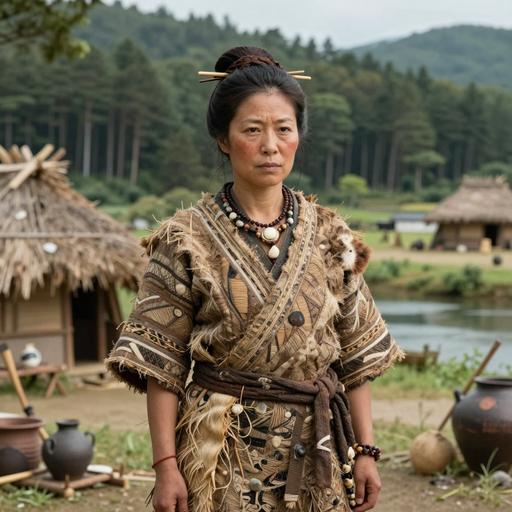
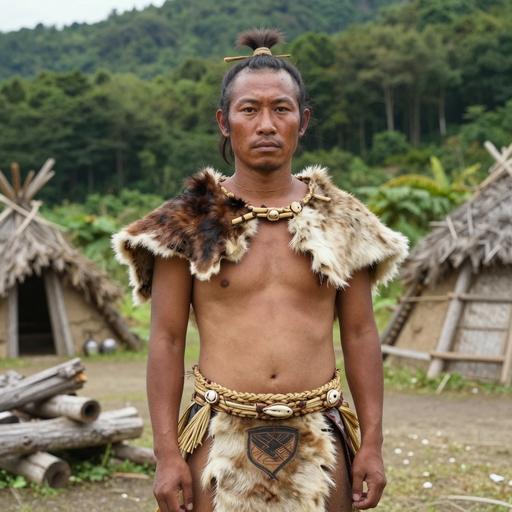
Les portraits sont des illustrations générées par IA. Les libellés d'échantillon et identifiants d'accès désignent les enregistrements de référence.

Portrait Échantillon Pays Époque Date Culture mtDNA Correspondance
Portrait illustratif généré par IA de East Asian individual, Honshu. Central Aichi. Ikawazu, Japan (897-803 BCE)
Identifiant d'échantillon : IK002
Japan The Jomon Period in Japan 897 BCE - 803 BCE Jomon N9b1 Direct
Portrait illustratif généré par IA de Japan Jomon individual, Honshu. Central Aichi. Ikawazu, Japan (897-803 BCE)
Identifiant d'échantillon : IK002
Japan The Jomon Period in Japan 897 BCE - 803 BCE Jomon N9b1 Direct
Portrait illustratif généré par IA de Soya Sub HG Jomon individual, Funadomari, Japan (1,500-1,000 BCE)
Identifiant d'échantillon : I6341
Japan Jomon Period Japan 1500-1000 BCE Jomon N9b1 Direct
Portrait illustratif généré par IA de Honshu Mid Late Jomon individual, Honshu. Funabashi. Kosaku Shell Midden, Japan (2,028-1,897 BCE)
Identifiant d'échantillon : JpKo13
Japan Japan Honshu MidLateJomon 2028-1897 calBCE (3608±22 BP, PLD-39691) Jomon N9b1 Direct
Portrait illustratif généré par IA de East Asian Hunter-Gatherers individual, Rokutsu Shell Mound, Japan (2,136-1,959 BCE)
Identifiant d'échantillon : I13886
Japan Jomon Period Japan 2136 BCE - 1959 BCE Jomon N9b1 Direct
Portrait illustratif généré par IA de East Asian Hunter-Gatherers individual, Rokutsu Shell Mound, Japan (2,191-1,982 BCE)
Identifiant d'échantillon : I13887
Japan Jomon Period Japan 2191 BCE - 1982 BCE Jomon N9b1 Direct
Portrait illustratif généré par IA de Honshu Early Jomon individual, Honshu. Toyama. Kureha Hills. Odake Shell Midden, Japan (3,967-3,801 BCE)
Identifiant d'échantillon : JpOd181
Japan Japan Honshu EarlyJomon 3967-3801 calBCE (5098±26 BP, PLD-41177) Early Jomon N9b1 Direct
LIGNÉE MATERNELLE · ADN ANTIQUE

Carte des preuves de lignées antiques

Suivez les clades parents jusqu'à cette branche et explorez où des porteurs antiques ont été identifiés.

Chargement des observations antiques…

Les marqueurs indiquent des lieux de découvertes archéologiques. Un trait pointillé représente une transition géographique proposée et incertaine entre branches consécutives, appuyée sur plusieurs observations datées ; ce n'est pas un itinéraire exact, un lieu de naissance ni une preuve de descendance directe. Des échantillons de clades parents peuvent appartenir à d'autres branches descendantes. Des lacunes subsistent lorsque les preuves sont insuffisantes. Les dates d'échantillon diffèrent des dates de formation des haplogroupes.

Profil de référence

Carte de répartition des porteurs

Répartition géographique de 7 échantillons d'ADN ancien (porteurs directs et de sous-clade de N9B1)

Porteur direct
Filtre de période
Toutes les périodes
Affichage de tous les échantillons
Profil de référence

Répartition temporelle

Répartition des porteurs selon les périodes archéologiques

Profil de référence

Répartition géographique

Effectifs par pays d'échantillon consigné. Ils reflètent la sélection de référence disponible, pas des fréquences de population.

Profil de référence

Répartition pays × époque

Comparez les effectifs d'échantillons consignés selon les pays et les périodes archéologiques. Sélectionnez une cellule renseignée pour examiner un échantillon.

Données

Données et provenance

Informations sur les sources et qualité des données

Dernière mise à jour 2026-02-16
Score de confiance 50/100
Couverture Low

Source des données

La classification, les dates estimées et le contexte géographique reflètent les données de référence consignées et peuvent évoluer lorsque les éléments sont révisés. La couverture d'échantillons est inégale ; les lieux consignés et les associations archéologiques n'établissent pas une origine personnelle ni une identité culturelle.