Saltar para o conteúdo principal
mtDNA · Materno linaje

H5C2

mtDNA Haplogroup H5C2

Um perfil de referência de um ramo de linhagem. Compartilhar haplogrupos não demonstra uma relação familiar ou uma identidade cultural.

Perfil de Referência

Contexto do ramo

Contexto histórico de la rama de linaje mtDNA H5C2

Origins and Evolution

mtDNA haplogroup H5C2 is a subclade of H5C, itself nested within the broader H5 branch of macro-haplogroup H. Given the coalescence age of H5C near the early Holocene (~8 kya) and the phylogenetic placement of H5C2 as a derived lineage, H5C2 most likely arose during the mid-to-late Holocene (estimated ~5 kya). Its emergence fits a pattern of post‑Neolithic diversification in maternal lineages that were originally spread by Near Eastern/Anatolian farming populations and subsequently reshaped by later localized founder events and regional demographic processes.

Subclades (if applicable)

H5C2 appears to be a relatively shallow and regionally restricted branch within H5C. Published phylogenies and survey datasets indicate limited internal diversity compared with older H subclades, which suggests a more recent origin and/or a history of serial founder effects. Where deeper resolution is available, H5C2 may be resolved into minor local subbranches in Mediterranean islands and parts of southern Europe; however, large-scale subclade structure remains sparse in public datasets, reflecting its low-to-moderate frequency and geographically patchy distribution.

Geographical Distribution

H5C2 is primarily observed around the Mediterranean basin and in adjacent European and West Asian regions. Modern population surveys and reported control-region/full-mitogenome matches place the lineage in southern Europe (notably Italy and Greece), parts of Iberia and southern France, the Balkans at lower frequencies, Anatolia and the Levant, the Caucasus, and sporadically in North Africa. Mediterranean islands (Sicily, Sardinia, Corsica) show occasional local enrichments consistent with founder effects. A small number of ancient DNA occurrences (several identified cases in curated databases) confirm that H5C2 has been present in archaeological contexts, supporting its post‑Neolithic antiquity.

Historical and Cultural Significance

Because H5C2 derives from a branch associated with Near Eastern farmer expansions (H5/H5C), its distribution reflects the interplay of Neolithic dispersals, subsequent Bronze Age and later population movements, and localized demographic events (maritime colonization, island founder effects, and regional continuity). H5C2's pattern — low-to-moderate frequency, concentration in southern/coastal Europe and nearby West Asia, and presence in some island populations — is consistent with maternal lineages that accompanied farming, then persisted and drifted in place or were transferred by later cultural networks (trade, colonization). The haplogroup is not commonly associated with steppe pastoralist expansions as a primary lineage, but it can co-occur in mixed maternal profiles in many European and Mediterranean archaeological and modern samples.

Conclusion

H5C2 is best interpreted as a relatively recent, geographically focused mtDNA lineage that emerged within the H5C family after the initial Neolithic dispersals from the Near East. Its presence across southern Europe, parts of the Near East, the Caucasus, North Africa, and Mediterranean islands — together with a small number of ancient DNA hits — indicates a history of regional continuity combined with episodic founder effects. Further whole-mitogenome sampling, especially from understudied Mediterranean and Anatolian contexts, will clarify its internal structure and finer-scale demographic history.

Pontos- Chave

  • Origins and Evolution
  • Subclades (if applicable)
  • Geographical Distribution
  • Historical and Cultural Significance
  • Conclusion
Perfil de Referência

Árvore e relações

Contexto filogenético e subclasse

Trajectória evolutiva

Sigue las ramas superiores registradas hasta H5C2. Las fechas son estimaciones y pueden cambiar al revisarse los datos de referencia.

Passos Haplogrupo Antiguidade estimada Época arqueológica Tempo decorrido Subclasses imediatas Portadores modernos analisados Referências antigas
1 H5C2 Actual ~5,000 years ago Bronze Age 5,000 years 0 8 0
2 H5C ~8,000 years ago Neolithic 8,000 years 3 22 23
3 H5 ~12,000 years ago Mesolithic 12,500 years 14 473 23
4 H5'36 - - - 2 482 0
5 H ~25,000 years ago Paleolithic 25,000 years 78 9,404 991
6 HV ~30,000 years ago Paleolithic 30,000 years 14 11,092 228
7 R0 ~15,000 years ago Mesolithic 15,000 years 2 11,230 4
8 R ~55,000 years ago Paleolithic 55,000 years 17 22,830 57
9 NA - - - 1 22,830 0
10 N ~60,000 years ago Paleolithic 60,000 years 16 26,150 13
11 L3 ~70,000 years ago Paleolithic 70,000 years 7 30,162 6
12 L3'4 - - - 2 30,212 0
13 L3'4'6 - - - 2 30,216 0
14 L2'3'4'6 - - - 2 31,333 0
15 L2'3'4'5'6'7 - - - 2 31,349 0
16 L1'2'3'4'5'6'7 - - - 2 31,852 0
17 L ~160,000 years ago Paleolithic 160,000 years 2 32,236 5

Subclados (0)

Rama terminal: não há subclasses registrados

Ramas hermanas (2)

Outros ramos do mesmo haplogrupo superior

Perfil de Referência

No mundo

Distribuição geográfica e presença moderna

Origem registada

Near East / West Asia

Distribuição moderna

The populations where MTDNA haplogroup H5C2 is found include:

  1. Southern European populations (Italy, Greece)
  2. Western European populations (Iberia, southern France)
  3. Eastern European and Balkan populations (Balkans, Poland, Ukraine at lower to moderate levels)
  4. Near Eastern and Anatolian populations (Turkey, Levant)
  5. Caucasus populations (Armenia, Georgia, Azerbaijan)
  6. Jewish communities (notably some Mediterranean/Ashkenazi contexts at low frequency)
  7. North African populations (Maghreb, at low to moderate frequencies)
  8. Mediterranean island populations (Sicily, Sardinia, Corsica with local founder signals)
Contexto Histórico

Uma ramificação através do tempo

Formação estimada em uma cronologia histórica ampla. Os marcadores temporais contribuem contexto e não implicam relação com culturas concretas.

  1. ~10k años de antigüedad

    Revolução neolítica

    Início da agricultura e formação de comunidades sedentárias

  2. ~5k años de antigüedad

    Idade do Bronze

    Metalurgia, escrita e primeiras civilizações

  3. ~5k años de antigüedad

    Haplogrupo H5C2

    Formação estimada deste ramo mtDNA; as datas e localizações são estimativas de referência.

    Este ramo
  4. ~3k años de antigüedad

    Idade do Ferro

    Ferramentas de ferro e ampliação de redes comerciais

  5. ~2.5k años de antigüedad

    Antiguidades clássicas

    Desenvolvimento das civilizações grega e romana

  6. Actualidad

    Actualidad

    Idade moderna

Perfil de Referência

Contexto arqueológico

Asociaciones arqueológicas registradas para la rama mtDNA H5C2

Associações registradas

Esses rótulos descrevem os contextos arqueológicos registrados para as amostras de referência vinculadas a H5C2. Uma associação não demonstra que todos os portadores pertenceram a uma cultura ou seguiram uma rota migratória específica.

Anglo-Saxon British Chalcolithic Corded Ware Daunian Culture English Jewish German Jewish Viking Viking Denmark Welsh Iron Age
As atribuições culturais baseiam-se no contexto arqueológico das amostras de DNA antigo e podem representar associações regionais de períodos concretos.
Perfil de Referência

Catálogo de amostras

4 portadores directos del haplogrupo H5C2

4 mostradas 4 amostras correspondentes

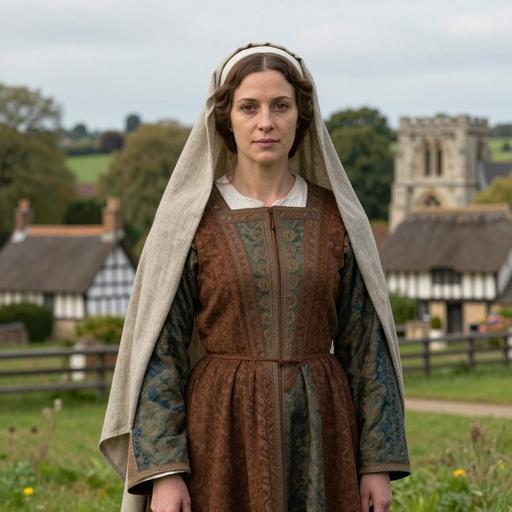
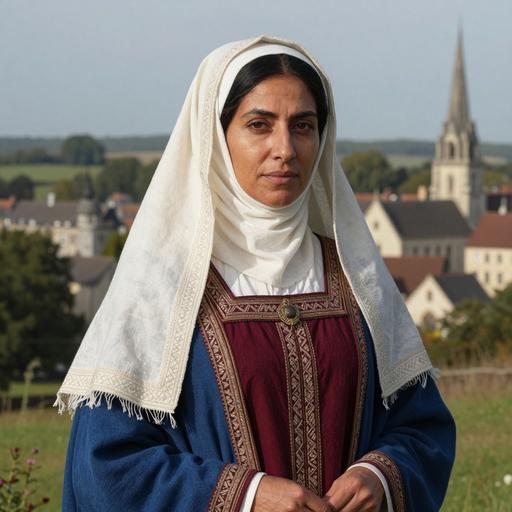
Os retratos são ilustrações geradas com IA. As etiquetas de amostra e os identificadores de acesso identificam os registros de referência.

Retrato Mostrar País Época Data Cultura mtDNA Corresponder
Retrato ilustrativo de England Medieval individual, well shaft (England, Norwich, Chapelfield Shopping Center), United Kingdom (1,045-1,261 CE) gerado com IA
Identificador de amostra: SB671
United Kingdom Medieval English Jewish 1045-1261 calCE (875±34 BP, Wk-16920) English Jewish H5c2 Direct
Retrato ilustrativo de Medieval English individual, well shaft (England, Norwich, Chapelfield Shopping Center), United Kingdom (1,157-1,219 CE) gerado com IA
Identificador de amostra: SB605
United Kingdom Medieval English Jewish 1157 CE - 1219 CE English Jewish H5c2 Direct
Retrato ilustrativo de Medieval English individual, well shaft (England, Norwich, Chapelfield Shopping Center), United Kingdom (1,157-1,219 CE) gerado com IA
Identificador de amostra: SB606
United Kingdom Medieval English Jewish 1157 CE - 1219 CE English Jewish H5c2 Direct
Retrato ilustrativo de Medieval Jewish-low East EU individual, Ackerhof (Thüringen, Thüringen, Erfurt-Kreisfreie Stadt), Germany (1,250-1,400 CE) gerado com IA
Identificador de amostra: I14739
Germany Germany Medieval Jewish 1250-1400 CE German Jewish H5c2 Direct
MATERNAL LINHAGEM · DNA ANTIGO

Mapa de testes de linhagems antigos

Siga os clados superiores até este ramo e explora onde se encontraram portadores antigos.

A carregar as observações antigas...

Os marcadores são locais de achados arqueológicos. Uma linha de descontínua representa uma transição geográfica proposta e incerta entre ramos consecutivos, apoiada em várias observações fechadas; não é uma rota de viagem exata, um local de nascimento ou um teste de descendência direta. As amostras do clado parental podem pertencer a outros ramos descendentes. As datas das amostras são distintas das datas de formação dos haplogrupos são mantidas.

Perfil de Referência

Mapa de distribuição de portadores

Distribuição geográfica das amostras de DNA antigo (4), portadores directos ou de subclasses de H5C2

Portador directo
Filtro de Período Temporária
Todos os períodos
Mostrar todas as amostras
Perfil de Referência

Distribuição temporária

Distribuição de portadores por períodos arqueológicos

Perfil de Referência

Distribuição geográfica

Recuentos por país registrado das amostras. Reflejam a seleção de referência disponível, não frequências de população.

Perfil de Referência

Distribuição por país e época

Compare as contagens de amostras registadas por países e períodos arqueológicos. Selecione uma célula com dados para examinar uma amostra.

Dados

Dados e proveniência

Informações sobre fontes e qualidade dos dados

Última actualização 2026-02-16
Pontuação de confiança 50/100
Cobertura Low

Fonte de Dados

A classificação, as datas estimadas e o contexto geográfico refletem os dados de referência registrados e podem mudar ao revisar os testes. A cobertura de amostras é desigual; os locais registrados e as associações arqueológicas não estabelecem a origem pessoal nem a identidade cultural.

Um haplogrupo acompanha uma única linhagem materna ou paterna. A previsão do ramo depende dos marcadores presentes no arquivo de DNA. Como analisamos o DNA