Saltar para o conteúdo principal
mtDNA · Materno linaje

R0A1A5

mtDNA Haplogroup R0A1A5

Um perfil de referência de um ramo de linhagem. Compartilhar haplogrupos não demonstra uma relação familiar ou uma identidade cultural.

Perfil de Referência

Contexto do ramo

Contexto histórico de la rama de linaje mtDNA R0A1A5

Origins and Evolution

R0A1A5 is a downstream subclade of R0A1A, itself part of the broader R0A branch of macro-haplogroup R. Given the placement of R0A1A in the phylogeny and published age estimates for R0A diversification in the Early Holocene, R0A1A5 most likely formed in the southern Arabian Peninsula during the mid-to-late Holocene. Its origin is consistent with regional demographic processes after the Last Glacial Maximum when population sizes and mobility increased across the southern Red Sea littoral.

The lineage likely emerged from an ancestral R0A1A population that had already undergone expansion across southern Arabia and into the Horn of Africa. Compared with the parental R0A1A clade (estimated ~9 kya), R0A1A5 appears younger and shows limited internal diversity in modern samples, suggesting either a more recent origin or subsequent drift and localized founder effects.

Subclades (if applicable)

At present R0A1A5 is reported as a terminal or near-terminal branch in available sequencing datasets, with few if any well-differentiated downstream subclades documented in public databases. The limited number of confirmed R0A1A5 mitogenomes suggests that the haplogroup has not undergone a major, wide-ranging radiation; instead its diversity is confined to a small number of localized lineages. Future high-resolution mitogenome sequencing in southern Arabia and the Horn of Africa could reveal additional internal structure.

Geographical Distribution

R0A1A5 is observed primarily in populations of the southern Arabian Peninsula and, through gene flow across the Red Sea, in the Horn of Africa. At lower and trace frequencies it has been detected in the southern Levant, parts of North Africa, and around the southern Mediterranean (southern Italy, Sicily, Greece) — consistent with historical and prehistoric maritime connections and episodic east–west movement across the Mediterranean and Red Sea corridors.

The clade is rare in large-sample surveys, and its geographic pattern is patchy: higher relative representation in localized southern Arabian communities, low-frequency presence in Ethiopian and Somali groups, and occasional detections in Levantine and North African samples. One ancient DNA occurrence in curated databases indicates that the lineage has been present in archaeological contexts, supporting its Holocene antiquity in the region.

Historical and Cultural Significance

Because R0A1A5 is a low-frequency, regionally restricted lineage, its primary value lies in illuminating micro-scale demographic events: Holocene postglacial expansions within southern Arabia, Red Sea maritime exchanges, and episodic gene flow into the Horn of Africa. Its presence is compatible with movements associated with Arabian Neolithic expansions, later Bronze–Iron Age South Arabian cultural networks, and continued historical interchange (trade, migration, and pastoralist contacts) across the Red Sea.

R0A1A5 is not tied to any single, widely distributed archaeological culture outside southern Arabia, but its distribution makes it a useful marker for studying south Arabian population continuity, Red Sea connectivity, and the genetic impact of small-scale founder events.

Conclusion

R0A1A5 is a rare, regionally informative mtDNA lineage derived from R0A1A that likely originated in the southern Arabian Peninsula in the mid-to-late Holocene. Its limited diversity and patchy distribution reflect localized demographic histories, Red Sea-mediated contacts with the Horn of Africa, and occasional long-distance dispersal into the Levant, North Africa, and the southern Mediterranean. Targeted mitogenome sequencing in southern Arabia and the Horn of Africa will improve resolution of its internal structure and timing.

Pontos- Chave

  • Origins and Evolution
  • Subclades (if applicable)
  • Geographical Distribution
  • Historical and Cultural Significance
  • Conclusion
Perfil de Referência

Árvore e relações

Contexto filogenético e subclasse

Trajectória evolutiva

Sigue las ramas superiores registradas hasta R0A1A5. Las fechas son estimaciones y pueden cambiar al revisarse los datos de referencia.

Passos Haplogrupo Antiguidade estimada Época arqueológica Tempo decorrido Subclasses imediatas Portadores modernos analisados Referências antigas
1 R0A1A5 Actual ~4,000 years ago Bronze Age 4,500 years 0 0 0
2 R0A1A ~9,000 years ago Neolithic 9,000 years 1 10 9
3 R0A1 ~9,000 years ago Neolithic 9,000 years 2 16 0
4 R0AA - - - 2 49 0
5 R0A ~20,000 years ago Mesolithic 20,000 years 1 79 15
6 R0A'B - - - 1 80 0
7 R0 ~15,000 years ago Mesolithic 15,000 years 2 11,230 4
8 R ~55,000 years ago Paleolithic 55,000 years 17 22,830 57
9 NA - - - 1 22,830 0
10 N ~60,000 years ago Paleolithic 60,000 years 16 26,150 13
11 L3 ~70,000 years ago Paleolithic 70,000 years 7 30,162 6
12 L3'4 - - - 2 30,212 0
13 L3'4'6 - - - 2 30,216 0
14 L2'3'4'6 - - - 2 31,333 0
15 L2'3'4'5'6'7 - - - 2 31,349 0
16 L1'2'3'4'5'6'7 - - - 2 31,852 0
17 L ~160,000 years ago Paleolithic 160,000 years 2 32,236 5

Subclados (0)

Rama terminal: não há subclasses registrados

Perfil de Referência

No mundo

Distribuição geográfica e presença moderna

Origem registada

Southern Arabian Peninsula

Distribuição moderna

The populations where mtDNA haplogroup R0A1A5 is found include:

  1. Arabian Peninsula populations (e.g., Yemen, southern Oman, southern Saudi Arabia)
  2. Horn of Africa populations (e.g., Ethiopia, Somalia, Eritrea)
  3. Levantine populations (e.g., Lebanon, Jordan, Palestine) at low frequency
  4. North African populations (e.g., Morocco, Algeria, Tunisia) at low frequency
  5. Southern European Mediterranean populations (e.g., Sicily, southern Italy, Greece) at trace/low frequency
  6. Diaspora and admixed populations across the Red Sea and Mediterranean basins
Contexto Histórico

Uma ramificação através do tempo

Formação estimada em uma cronologia histórica ampla. Os marcadores temporais contribuem contexto e não implicam relação com culturas concretas.

  1. ~10k años de antigüedad

    Revolução neolítica

    Início da agricultura e formação de comunidades sedentárias

  2. ~5k años de antigüedad

    Idade do Bronze

    Metalurgia, escrita e primeiras civilizações

  3. ~4.5k años de antigüedad

    Haplogrupo R0A1A5

    Formação estimada deste ramo mtDNA; as datas e localizações são estimativas de referência.

    Este ramo
  4. ~3k años de antigüedad

    Idade do Ferro

    Ferramentas de ferro e ampliação de redes comerciais

  5. ~2.5k años de antigüedad

    Antiguidades clássicas

    Desenvolvimento das civilizações grega e romana

  6. Actualidad

    Actualidad

    Idade moderna

Perfil de Referência

Contexto arqueológico

Asociaciones arqueológicas registradas para la rama mtDNA R0A1A5

Associações registradas

Esses rótulos descrevem os contextos arqueológicos registrados para as amostras de referência vinculadas a R0A1A5. Uma associação não demonstra que todos os portadores pertenceram a uma cultura ou seguiram uma rota migratória específica.

Avar Avar Culture Ghassulian Israel_Phoenician Jordanian Bronze Nubian Christian Persian Period Lebanon PPNB PPNC Roman Provincial Yamnaya Culture
As atribuições culturais baseiam-se no contexto arqueológico das amostras de DNA antigo e podem representar associações regionais de períodos concretos.
Perfil de Referência

Catálogo de amostras

1 portador directo del haplogrupo R0A1A5

1 mostradas 1 amostras correspondentes

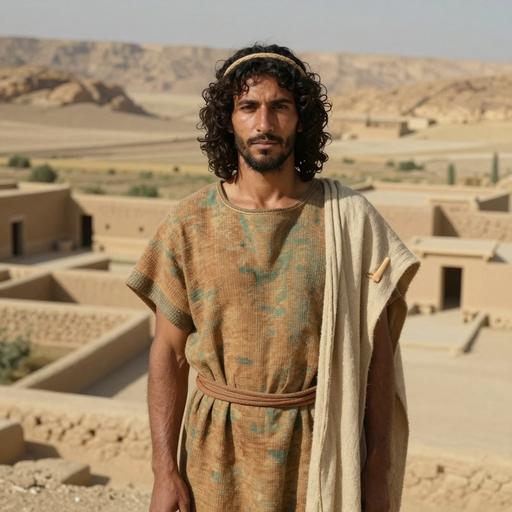
Os retratos são ilustrações geradas com IA. As etiquetas de amostra e os identificadores de acesso identificam os registros de referência.

Retrato Mostrar País Época Data Cultura mtDNA Corresponder
Retrato ilustrativo de Ancient Near Eastern Civilization individual, 'Ain Ghazal, Jordan (2,557-2,296 BCE) gerado com IA
Identificador de amostra: I1730
Jordan Jordan EBA 2557 BCE - 2296 BCE Jordanian Bronze R0a1a5 Direct
MATERNAL LINHAGEM · DNA ANTIGO

Mapa de testes de linhagems antigos

Siga os clados superiores até este ramo e explora onde se encontraram portadores antigos.

A carregar as observações antigas...

Os marcadores são locais de achados arqueológicos. Uma linha de descontínua representa uma transição geográfica proposta e incerta entre ramos consecutivos, apoiada em várias observações fechadas; não é uma rota de viagem exata, um local de nascimento ou um teste de descendência direta. As amostras do clado parental podem pertencer a outros ramos descendentes. As datas das amostras são distintas das datas de formação dos haplogrupos são mantidas.

Perfil de Referência

Mapa de distribuição de portadores

Distribuição geográfica das amostras de DNA antigo (1), portadores directos ou de subclasses de R0A1A5

Portador directo
Filtro de Período Temporária
Todos os períodos
Mostrar todas as amostras
Perfil de Referência

Distribuição temporária

Distribuição de portadores por períodos arqueológicos

Perfil de Referência

Distribuição geográfica

Recuentos por país registrado das amostras. Reflejam a seleção de referência disponível, não frequências de população.

Perfil de Referência

Distribuição por país e época

Compare as contagens de amostras registadas por países e períodos arqueológicos. Selecione uma célula com dados para examinar uma amostra.

Dados

Dados e proveniência

Informações sobre fontes e qualidade dos dados

Última actualização 2026-02-16
Pontuação de confiança 50/100
Cobertura Low

Fonte de Dados

A classificação, as datas estimadas e o contexto geográfico refletem os dados de referência registrados e podem mudar ao revisar os testes. A cobertura de amostras é desigual; os locais registrados e as associações arqueológicas não estabelecem a origem pessoal nem a identidade cultural.