Saltar para o conteúdo principal
mtDNA · Materno linaje

U2E2A1A

mtDNA Haplogroup U2E2A1A

Um perfil de referência de um ramo de linhagem. Compartilhar haplogrupos não demonstra uma relação familiar ou uma identidade cultural.

Perfil de Referência

Contexto do ramo

Contexto histórico de la rama de linaje mtDNA U2E2A1A

Origins and Evolution

mtDNA haplogroup U2E2A1A is a downstream branch of U2E2A1, itself part of the broader U2 family that has both West Eurasian and deep South Asian sublineages. Based on the position of U2E2A1A within the phylogenetic tree and the estimated coalescence time of its parent clade in the early Holocene, U2E2A1A most plausibly arose within the Indian subcontinent roughly ~6 thousand years ago (kya). Its emergence fits the pattern of localized diversification of maternal lineages in South Asia during the Holocene, a period of demographic change, increasing sedentism, and regional cultural developments.

Genetic drift in relatively small, endogamous social groups (caste and tribal communities) combined with geographic structure across the subcontinent likely shaped the present-day distribution and frequency of the clade. The lineage represents a localized maternal continuity from Holocene-era populations with occasional westward and northward movement detectable at low frequencies outside South Asia.

Subclades (if applicable)

As a defined subbranch of U2E2A1, U2E2A1A may show limited downstream structure in current public datasets; targeted whole-mtGenome sequencing across diverse South Asian populations is required to resolve finer subclades and internal diversity. At present, U2E2A1A is best considered a moderately young, regionally restricted subclade with potential micro-branches preserved within endogamous communities. Future studies with dense sampling and high-resolution sequencing will clarify whether multiple geographically structured subclades exist (for example, population-specific sublineages among tribal groups versus caste groups).

Geographical Distribution

The highest relative frequency and diversity of U2E2A1A is expected in South Asia, particularly among indigenous caste and tribal populations in India. Secondary occurrences appear at lower frequency in adjacent regions — Pakistan (Punjabi, Sindhi, Pashtun and Baloch groups), parts of the Iranian plateau and Near East, and across Central Asia (Kazakh, Uzbek, Tajik and related groups), consistent with historical population contacts, trade routes, and episodic migrations. Sporadic detections in Eastern/Central Europe and North Africa reported in some studies likely reflect rare long-distance gene flow, historical mobility, or sampling of admixed individuals rather than a major source area.

Ancient DNA evidence for the broader U2E2A1 clade and allied lineages shows occurrences in Holocene archaeological contexts in South and West Asia; U2E2A1A specifically may appear in a small number of archaeological samples or be identifiable with deeper sequencing of museum/archaeological remains from the region, indicating regional maternal continuity across the Neolithic to Bronze Age in some locales.

Historical and Cultural Significance

U2E2A1A's distribution among indigenous caste and tribal groups suggests a role as a retained maternal lineage through social endogamy and population subdivision. It likely predates many later cultural and linguistic shifts in the subcontinent and therefore represents a useful marker for studying maternal continuity across the Holocene in South Asia. Associations with archaeological cultures are indirect: the clade could have been present among early Holocene farming/foraging communities that contributed ancestry to later Chalcolithic and Bronze Age populations (including those associated with regional urbanizing traditions on the subcontinent). Low-frequency detections outside South Asia reflect episodes of contact (trade, pastoral mobility, small-scale migrations) rather than large-scale demographic replacement.

Conclusion

U2E2A1A is a regionally focused South Asian mtDNA subclade of U2E2A1 that likely arose in the Holocene and remains most common among indigenous caste and tribal groups in India, with lower-frequency presence in neighboring regions. It provides insight into maternal-line continuity and microevolutionary processes (drift, endogamy, local diversification) in the subcontinent. Increased sampling and whole-mitochondrial sequencing from diverse South Asian and adjacent populations — and targeted screening of archaeological remains — will improve resolution of its internal structure and historical dynamics.

Pontos- Chave

  • Origins and Evolution
  • Subclades (if applicable)
  • Geographical Distribution
  • Historical and Cultural Significance
  • Conclusion
Perfil de Referência

Árvore e relações

Contexto filogenético e subclasse

Trajectória evolutiva

Sigue las ramas superiores registradas hasta U2E2A1A. Las fechas son estimaciones y pueden cambiar al revisarse los datos de referencia.

Passos Haplogrupo Antiguidade estimada Época arqueológica Tempo decorrido Subclasses imediatas Portadores modernos analisados Referências antigas
1 U2E2A1A Actual ~6,000 years ago Chalcolithic 6,000 years 2 9 18
2 U2E2A1 ~9,000 years ago Neolithic 9,000 years 3 30 0
3 U2E2A ~12,000 years ago Neolithic 12,000 years 1 30 19
4 U2E2 ~12,000 years ago Neolithic 12,000 years 1 41 0
5 U2EA - - - 3 158 0
6 U2E ~18,000 years ago Mesolithic 18,000 years 1 236 45
7 U2A ~22,000 years ago Mesolithic 22,000 years 4 756 6
8 U2 ~45,000 years ago Paleolithic 45,000 years 3 829 37
9 U2'3'4'7'8'9 - - - 5 3,500 0
10 U ~46,000 years ago Paleolithic 46,000 years 5 5,557 110
11 R ~55,000 years ago Paleolithic 55,000 years 17 22,830 57
12 NA - - - 1 22,830 0
13 N ~60,000 years ago Paleolithic 60,000 years 16 26,150 13
14 L3 ~70,000 years ago Paleolithic 70,000 years 7 30,162 6
15 L3'4 - - - 2 30,212 0
16 L3'4'6 - - - 2 30,216 0
17 L2'3'4'6 - - - 2 31,333 0
18 L2'3'4'5'6'7 - - - 2 31,349 0
19 L1'2'3'4'5'6'7 - - - 2 31,852 0
20 L ~160,000 years ago Paleolithic 160,000 years 2 32,236 5

Ramas hermanas (2)

Outros ramos do mesmo haplogrupo superior

Perfil de Referência

No mundo

Distribuição geográfica e presença moderna

Origem registada

South Asia

Distribuição moderna

The populations where mtDNA haplogroup U2E2A1A is found include:

  1. Various Indian caste and tribal groups (India)
  2. Pakistani populations (Punjabi, Sindhi, Pashtun, Baloch groups)
  3. Central Asian populations (Kazakh, Uzbek, Tajik and related groups)
  4. Near Eastern populations on the Iranian Plateau and adjacent areas
  5. European populations at very low frequency (sporadic detections in Eastern/Central Europe)
  6. North African groups at low frequency (reported in some Berber-adjacent samples)
  7. Indigenous northern European groups in rare cases (reported in limited studies)
  8. Ancient Holocene archaeological samples from South Asia and adjacent West Asian contexts (sporadic ancient DNA detections)
Contexto Histórico

Uma ramificação através do tempo

Formação estimada em uma cronologia histórica ampla. Os marcadores temporais contribuem contexto e não implicam relação com culturas concretas.

  1. ~10k años de antigüedad

    Revolução neolítica

    Início da agricultura e formação de comunidades sedentárias

  2. ~6k años de antigüedad

    Haplogrupo U2E2A1A

    Formação estimada deste ramo mtDNA; as datas e localizações são estimativas de referência.

    Este ramo
  3. ~5k años de antigüedad

    Idade do Bronze

    Metalurgia, escrita e primeiras civilizações

  4. ~3k años de antigüedad

    Idade do Ferro

    Ferramentas de ferro e ampliação de redes comerciais

  5. ~2.5k años de antigüedad

    Antiguidades clássicas

    Desenvolvimento das civilizações grega e romana

  6. Actualidad

    Actualidad

    Idade moderna

Perfil de Referência

Contexto arqueológico

Asociaciones arqueológicas registradas para la rama mtDNA U2E2A1A

Associações registradas

Esses rótulos descrevem os contextos arqueológicos registrados para as amostras de referência vinculadas a U2E2A1A. Uma associação não demonstra que todos os portadores pertenceram a uma cultura ou seguiram uma rota migratória específica.

Anglo-Saxon Bulgarian Medieval East Yorkshire Mixed TRB-CWC Poznań Środka Culture Russia_AltaiKrai_N_Bolshemys Russia_Eneolithic_Caucasus Russia_Saratov_Eneolithic_Khvalynsk Russia_StavropolKrai_Eneolithic Saxon Dunum Srubnaya-Alakul Unetice Culture
As atribuições culturais baseiam-se no contexto arqueológico das amostras de DNA antigo e podem representar associações regionais de períodos concretos.
Perfil de Referência

Catálogo de amostras

6 portadores directos y 12 portadores de subclados del haplogrupo U2E2A1A

10 mostradas 18 amostras correspondentes

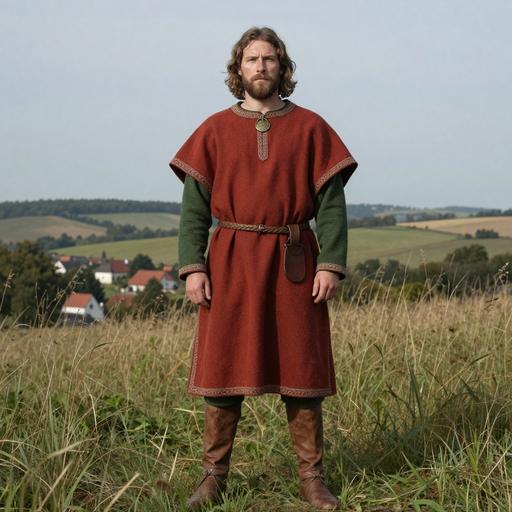
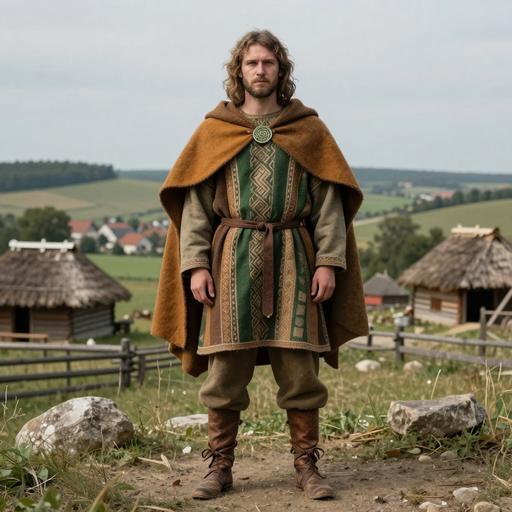
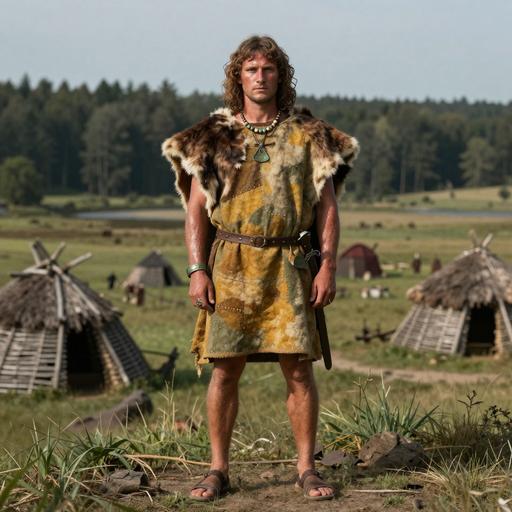
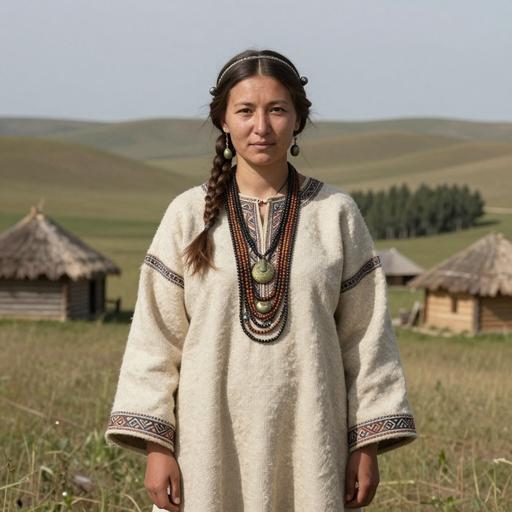
Os retratos são ilustrações geradas com IA. As etiquetas de amostra e os identificadores de acesso identificam os registros de referência.

Retrato Mostrar País Época Data Cultura mtDNA Corresponder
Retrato ilustrativo de England LIA MIA individual, England. East Riding of Yorkshire. East Coast Pipeline (field 16), United Kingdom (344-52 BCE) gerado com IA
Identificador de amostra: I22052
United Kingdom East Yorkshire Iron Age 344-52 calBCE (2128±27 BP, SUERC-52024) East Yorkshire U2e2a1a Direct
Retrato ilustrativo de England Early Medieval Saxon individual, England. North Yorkshire. Vale of Pickering. West Heslerton, United Kingdom (400-600 CE) gerado com IA
Identificador de amostra: I20649
United Kingdom England EarlyMedieval Saxon 400-600 CE Anglo-Saxon U2e2a1a Direct
Retrato ilustrativo de Germanic individual, Lower Saxony. Dunum, Germany (800-1,000 CE) gerado com IA
Identificador de amostra: DUN001
Germany Saxon Medieval Dunum, Germany 800 CE - 1000 CE Saxon Dunum U2e2a1a Direct
Retrato ilustrativo de Germany Dunum Saxon Medieval individual, Lower Saxony. Dunum, Germany (800-1,000 CE) gerado com IA
Identificador de amostra: DUN001
Germany Saxon Medieval Dunum, Germany 800 CE - 1000 CE Saxon Dunum U2e2a1a Direct
Retrato ilustrativo de IA individual, Poznań-Śródka (Greater Poland Province, Poznań), Poland (1,000-1,200 CE) gerado com IA
Identificador de amostra: PCA0238
Poland Iron Age Poznań Środka Culture 1000-1200 CE Poznań Środka Culture U2e2a1a Direct
Retrato ilustrativo de Ryahovets Medieval individual, Ryahovets (Gorna Oryahovitsa. Veliko Tarnovo), Bulgaria (1,051-1,217 CE) gerado com IA
Identificador de amostra: I17980
Bulgaria Medieval Bulgaria 1051-1217 calCE (895±15 BP, PSUAMS-8331) Bulgarian Medieval U2e2a1a Direct
Retrato ilustrativo de Norse individual, England. Oxford. St John's College Oxford, United Kingdom (880-1,000 CE) gerado com IA
Identificador de amostra: VK163
United Kingdom England Viking 880 CE - 1000 CE Viking U2e2a1a1 Subclado
Retrato ilustrativo de Viking individual, England. Oxford. St John's College Oxford, United Kingdom (880-1,000 CE) gerado com IA
Identificador de amostra: VK163
United Kingdom The Viking Age 880 CE - 1000 CE U2e2a1a1 Subclado
Retrato ilustrativo de Proto-Germanic individual, Mecklenburg-Vorpommern. Tollense battlefield, Germany (1,300-1,200 BCE) gerado com IA
Identificador de amostra: WEZ53
Germany Bronze Age Tollense Valley, Germany 1300 BCE - 1200 BCE Tollense Culture U2e2a1a2 Subclado
Retrato ilustrativo de Ceu Mlba individual, Mecklenburg-Vorpommern. Tollense battlefield, Germany (1,300-1,200 BCE) gerado com IA
Identificador de amostra: WEZ53
Germany Middle to Late Bronze Age Central Europe 1300 BCE - 1200 BCE U2e2a1a2 Subclado
MATERNAL LINHAGEM · DNA ANTIGO

Mapa de testes de linhagems antigos

Siga os clados superiores até este ramo e explora onde se encontraram portadores antigos.

A carregar as observações antigas...

Os marcadores são locais de achados arqueológicos. Uma linha de descontínua representa uma transição geográfica proposta e incerta entre ramos consecutivos, apoiada em várias observações fechadas; não é uma rota de viagem exata, um local de nascimento ou um teste de descendência direta. As amostras do clado parental podem pertencer a outros ramos descendentes. As datas das amostras são distintas das datas de formação dos haplogrupos são mantidas.

Perfil de Referência

Mapa de distribuição de portadores

Distribuição geográfica das amostras de DNA antigo (18), portadores directos ou de subclasses de U2E2A1A

Portador directo Portador de um subclasse
Filtro de Período Temporária
Todos os períodos
Mostrar todas as amostras
Perfil de Referência

Distribuição temporária

Distribuição de portadores por períodos arqueológicos

Perfil de Referência

Distribuição geográfica

Recuentos por país registrado das amostras. Reflejam a seleção de referência disponível, não frequências de população.

Perfil de Referência

Distribuição por país e época

Compare as contagens de amostras registadas por países e períodos arqueológicos. Selecione uma célula com dados para examinar uma amostra.

Dados

Dados e proveniência

Informações sobre fontes e qualidade dos dados

Última actualização 2026-02-16
Pontuação de confiança 50/100
Cobertura Low

Fonte de Dados

A classificação, as datas estimadas e o contexto geográfico refletem os dados de referência registrados e podem mudar ao revisar os testes. A cobertura de amostras é desigual; os locais registrados e as associações arqueológicas não estabelecem a origem pessoal nem a identidade cultural.