Saltar para o conteúdo principal
Y-DNA · Paterno linaje

I2A1B

Y-DNA Haplogroup I2A1B

Um perfil de referência de um ramo de linhagem. Compartilhar haplogrupos não demonstra uma relação familiar ou uma identidade cultural.

Perfil de Referência

Contexto do ramo

Contexto histórico de la rama de linaje Y-DNA I2A1B

Origins and Evolution

Y-DNA haplogroup I2a1b is a subclade within I2a1, itself part of the broader haplogroup I2 lineage that is widely interpreted as one of Europe’s oldest surviving paternal branches. Because it sits several steps downstream from the parent clade, I2a1b likely reflects a later diversification event within a postglacial European hunter-gatherer lineage rather than a very ancient, pan-European root lineage.

The most plausible origin for this subclade is Southeastern Europe, where the deeper I2 lineages appear to have persisted through the Late Glacial and Early Holocene. A time depth of roughly 14 kya is a reasonable estimate for the emergence of I2a1b, though the exact age depends on the current phylogenetic resolution and sampling of ancient and modern DNA.

Subclades

As an intermediate-to-downstream branch, I2a1b serves as a connector between broader I2a1 ancestry and more localized regional descendant lineages. In many Y-DNA phylogenies, clades at this level accumulate geographic signal quickly, so descendant branches may be strongly associated with particular Balkan, Carpathian, or Central European populations.

Because the tree is still being refined, the precise internal structure of I2a1b may vary by database and naming system. The important genetic pattern is that this lineage belongs to the European hunter-gatherer-associated I2 continuum, with later demographic growth likely shaped by Neolithic, Bronze Age, and historic-era population movements.

Geographical Distribution

I2a1b is found at low to moderate frequencies across a broad swath of Europe, with its strongest associations generally in Southeastern Europe and neighboring regions. It is especially consistent with populations in the Balkans, but it also appears in Central Europe, Eastern Europe, and in lower frequencies in Northern and Western Europe due to later dispersals.

In modern data, this haplogroup can appear in:

  • Balkan populations with deep regional continuity
  • East Slavic and neighboring Eastern European populations
  • Central European groups, including German- and Austrian-speaking populations
  • Scandinavian and Baltic populations at lower levels
  • British and Irish populations at low levels, often reflecting historic migration
  • Diaspora populations in the Americas and Australia

Historical and Cultural Significance

The broader I2 paternal lineage is often linked to European Mesolithic hunter-gatherers, making I2a1b part of a genetic legacy that predates the spread of agriculture in Europe. While direct one-to-one associations with specific archaeological cultures should be treated cautiously, this lineage is broadly compatible with populations that maintained continuity through the transition from foraging to mixed subsistence systems in Southeastern Europe.

Later expansions of I2-derived lineages may have been influenced by Neolithic demographic restructuring, Bronze Age mobility, and the formation of regional populations in the Balkans and Carpathian Basin. In more recent periods, the spread of I2a1b into northwestern and overseas populations likely reflects historical migrations, state formation, and modern diaspora movements rather than original deep-time origin outside Southeastern Europe.

Conclusion

I2a1b is a geographically informative subclade of haplogroup I2, representing a branch of Europe’s ancient paternal heritage that likely diversified in Southeastern Europe after the last Ice Age. Its modern distribution reflects both deep regional continuity in the Balkans and later dispersal into much of Europe, making it an important lineage for studies of European population history.

Pontos- Chave

  • Origins and Evolution
  • Subclades
  • Geographical Distribution
  • Historical and Cultural Significance
  • Conclusion
Perfil de Referência

Árvore e relações

Contexto filogenético e subclasse

Trajectória evolutiva

Sigue las ramas superiores registradas hasta I2A1B. Las fechas son estimaciones y pueden cambiar al revisarse los datos de referencia.

Passos Haplogrupo Antiguidade estimada Época arqueológica Tempo decorrido Subclasses imediatas Portadores modernos analisados Referências antigas
1 I2A1B Actual ~14,000 years ago Mesolithic 14,000 years 2 213 22
2 I2A1 ~16,000 years ago Mesolithic 16,000 years 2 933 0
3 I2A ~18,000 years ago Mesolithic 18,000 years 2 1,551 24
4 I2 ~20,000 years ago Mesolithic 20,000 years 2 1,785 10
5 I ~25,000 years ago Paleolithic 25,000 years 4 3,486 79

Ramas hermanas (1)

Outros ramos do mesmo haplogrupo superior

Perfil de Referência

No mundo

Distribuição geográfica e presença moderna

Origem registada

Southeastern Europe

Distribuição moderna

The populations where Y-DNA haplogroup I2a1b haplogroup I2A1B is found include:

  1. Balkan populations
  2. East Slavic populations
  3. Central European populations
  4. Scandinavian populations
  5. German and Austrian populations
  6. British and Irish populations
  7. Baltic populations
  8. Recent diaspora populations in the Americas and Australia

Presença regional

Southeast Europe (Balkans) High
Southern Europe (Italy, Sardinia, Adriatic coast) Moderate
Central Europe Moderate
Western Europe Low
Northern Europe Low
Southeastern Europe High
Eastern Europe Moderate
Contexto Histórico

Uma ramificação através do tempo

Formação estimada em uma cronologia histórica ampla. Os marcadores temporais contribuem contexto e não implicam relação com culturas concretas.

  1. ~20k años de antigüedad

    Último máximo glacial

    Máxima extensão da última glaciação e isolamento de populações

  2. ~14k años de antigüedad

    Haplogrupo I2A1B

    Formação estimada deste ramo Y-DNA; as datas e localizações são estimativas de referência.

    Este ramo
  3. ~10k años de antigüedad

    Revolução neolítica

    Início da agricultura e formação de comunidades sedentárias

  4. ~5k años de antigüedad

    Idade do Bronze

    Metalurgia, escrita e primeiras civilizações

  5. ~3k años de antigüedad

    Idade do Ferro

    Ferramentas de ferro e ampliação de redes comerciais

  6. ~2.5k años de antigüedad

    Antiguidades clássicas

    Desenvolvimento das civilizações grega e romana

  7. Actualidad

    Actualidad

    Idade moderna

Perfil de Referência

Contexto arqueológico

Asociaciones arqueológicas registradas para la rama Y-DNA I2A1B

Associações registradas

Esses rótulos descrevem os contextos arqueológicos registrados para as amostras de referência vinculadas a I2A1B. Uma associação não demonstra que todos os portadores pertenceram a uma cultura ou seguiram uma rota migratória específica.

Alföld Linear Pottery Cardial Culture Castelnovian Culture Iberian Neolithic Linear Pottery Culture Maglemosian Motala Culture Scottish Neolithic Sicilian Epigravettian Tagliente Culture Ukrainian Neolithic
As atribuições culturais baseiam-se no contexto arqueológico das amostras de DNA antigo e podem representar associações regionais de períodos concretos.
Perfil de Referência

Catálogo de amostras

12 portadores directos y 10 portadores de subclados del haplogrupo I2A1B

10 mostradas 22 amostras correspondentes

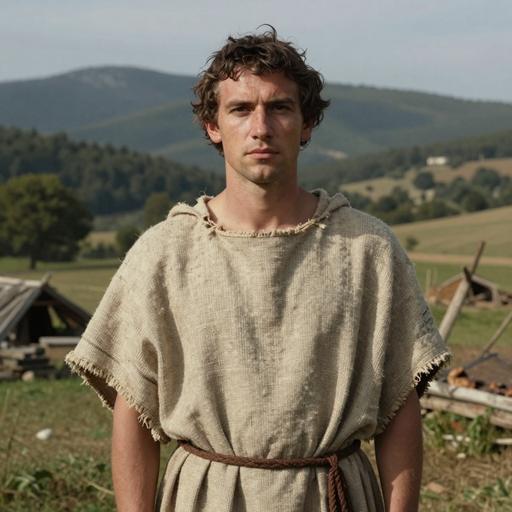
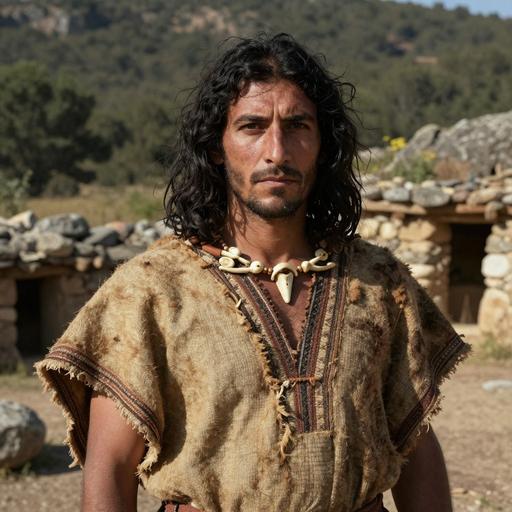
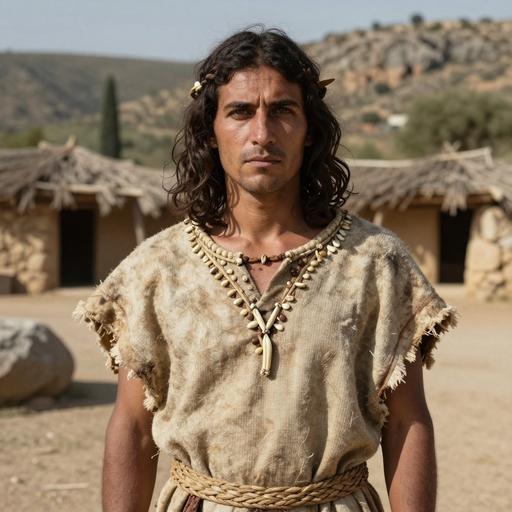
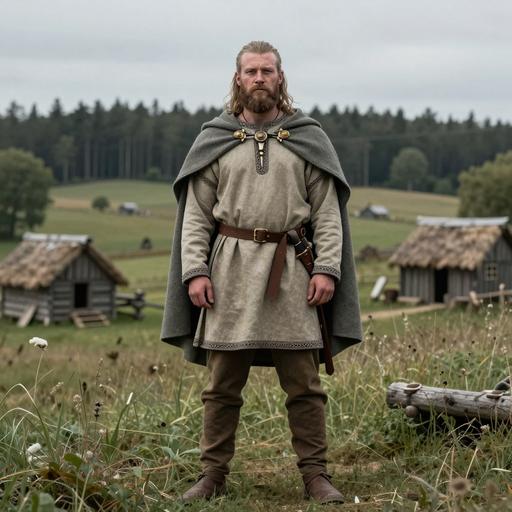
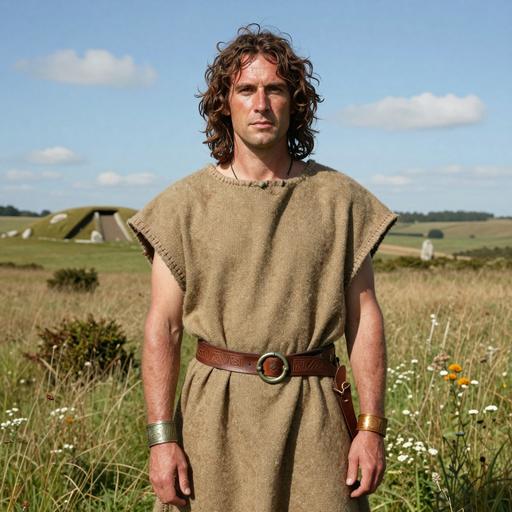
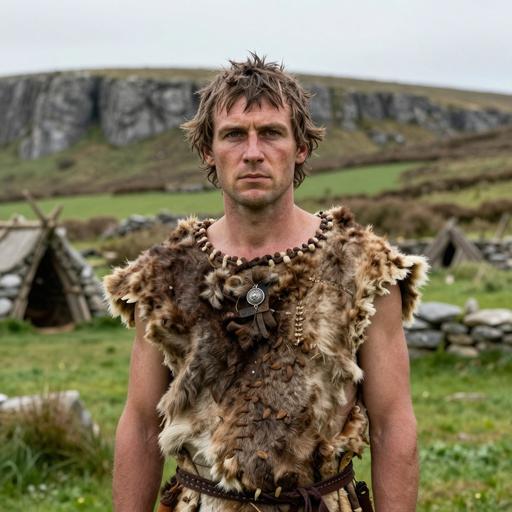
Os retratos são ilustrações geradas com IA. As etiquetas de amostra e os identificadores de acesso identificam os registros de referência.

Retrato Mostrar País Época Data Cultura Y-DNA Corresponder
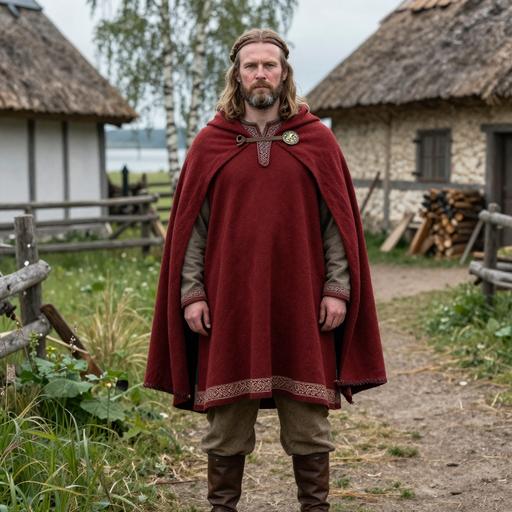
Retrato ilustrativo de Early Medieval individual, Roscommon. Kilteasheen, Ireland (700-1,300 CE) gerado com IA
Identificador de amostra: KIL018
Ireland Anglo-Saxon Early Medieval Kilteasheen, Ireland 700-1300 CE Kilteasheen I2a1b Direct
Retrato ilustrativo de Medieval individual, Ahlgade 15-17 (Holbæk), Denmark (1,000-1,800 CE) gerado com IA
Identificador de amostra: CGG101842
Denmark Denmark Medieval 1000-1800 CE Danish Medieval I2a1b Direct
Retrato ilustrativo de Danish Kingdom individual, Tjærby (Randers Municipality), Denmark (1,300-1,400 CE) gerado com IA
Identificador de amostra: CGG100797
Denmark Denmark Medieval 1300 CE - 1400 CE Danish Medieval I2a1b Direct
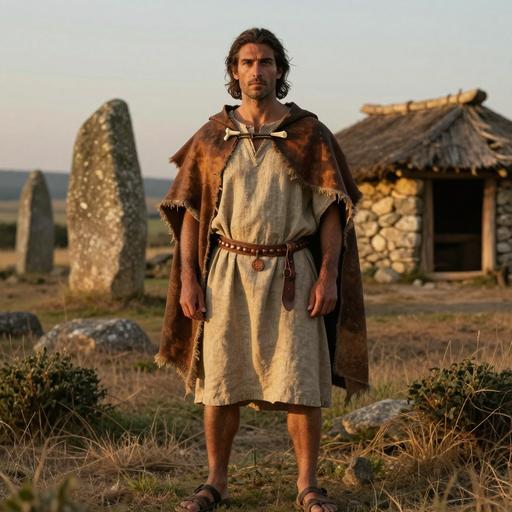
Retrato ilustrativo de Western European Megalithic Culture individual, Cova da Moura, Portugal (2,500-2,000 BCE) gerado com IA
Identificador de amostra: CovaMoura364
Portugal Portugal LN C 2500 BCE - 2000 BCE Portuguese Chalcolithic I2a1b Direct
Retrato ilustrativo de Iberian Chalcolithic individual, Lisbon. Torres Vedras. Cabeço da Arruda I, Portugal (3,350-2,850 BCE) gerado com IA
Identificador de amostra: CabecoArruda117B
Portugal Portugal C 3350 BCE - 2850 BCE Portuguese Chalcolithic I2a1b Direct
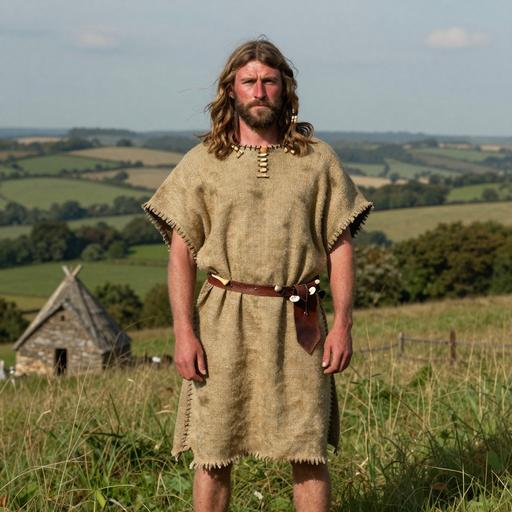
Retrato ilustrativo de England N individual, England. Northampton. Banbury Lane, United Kingdom (3,360-3,100 BCE) gerado com IA
Identificador de amostra: I0518
United Kingdom England N 3400-3100 BCE British Neolithic I2a1b Direct
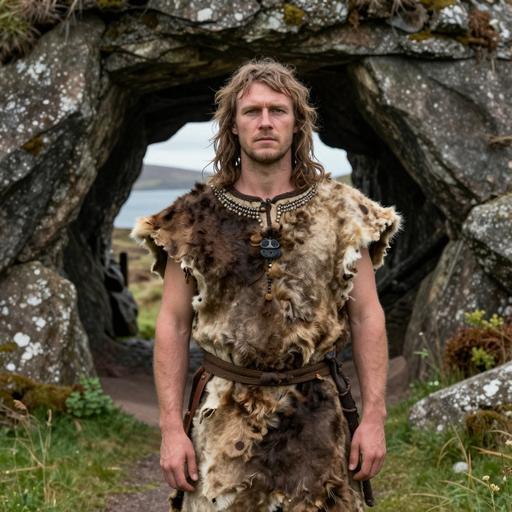
Retrato ilustrativo de Scotland N-olow EEF individual, Scotland. Argyll and Bute. Isle of Ulva. Ulva Cave, United Kingdom (3,751-3,636 BCE) gerado com IA
Identificador de amostra: I12312
United Kingdom Scotland N 3751-3636 calBCE (4895±25 BP, PSUAMS-5771) Scottish Neolithic I2a1b Direct
Retrato ilustrativo de EN MN-o individual, Alpes-Maritimes. Les Bréguières, France (5,216-4,953 BCE) gerado com IA
Identificador de amostra: LBR005
France France EN MN 5216-4953 calBCE (6151±45 BP, LTL-13784A) Linear Pottery Culture I2a1b Direct
Retrato ilustrativo de EN individual, Cueva de Chaves, Spain (5,302-4,991 BCE) gerado com IA
Identificador de amostra: CHA003
Spain Spain EN 5302-4991 calBCE (6180±54 BP, D-AMS-015821) Cardial Culture I2a1b Direct
Retrato ilustrativo de EN individual, Cueva de Chaves, Spain (5,308-5,051 BCE) gerado com IA
Identificador de amostra: CHA001_merged
Spain Spain EN 5308-5051 calBCE (6230±45 BP, GrA-26912) Cardial Culture I2a1b Direct
PATERNAL LINHAGEM · DNA ANTIGO

Mapa de testes de linhagems antigos

Siga os clados superiores até este ramo e explora onde se encontraram portadores antigos.

A carregar as observações antigas...

Os marcadores são locais de achados arqueológicos. Uma linha de descontínua representa uma transição geográfica proposta e incerta entre ramos consecutivos, apoiada em várias observações fechadas; não é uma rota de viagem exata, um local de nascimento ou um teste de descendência direta. As amostras do clado parental podem pertencer a outros ramos descendentes. As datas das amostras são distintas das datas de formação dos haplogrupos são mantidas.

Perfil de Referência

Mapa de distribuição de portadores

Distribuição geográfica das amostras de DNA antigo (22), portadores directos ou de subclasses de I2A1B

Portador directo Portador de um subclasse
Filtro de Período Temporária
Todos os períodos
Mostrar todas as amostras
Perfil de Referência

Distribuição temporária

Distribuição de portadores por períodos arqueológicos

Perfil de Referência

Distribuição geográfica

Recuentos por país registrado das amostras. Reflejam a seleção de referência disponível, não frequências de população.

Perfil de Referência

Distribuição por país e época

Compare as contagens de amostras registadas por países e períodos arqueológicos. Selecione uma célula com dados para examinar uma amostra.

Dados

Dados e proveniência

Informações sobre fontes e qualidade dos dados

Última actualização 2026-06-17
Pontuação de confiança 50/100
Cobertura Low

Fonte de Dados

A classificação, as datas estimadas e o contexto geográfico refletem os dados de referência registrados e podem mudar ao revisar os testes. A cobertura de amostras é desigual; os locais registrados e as associações arqueológicas não estabelecem a origem pessoal nem a identidade cultural.