Menu
Y-DNA Haplogroup • Paternal Lineage

I2A1B

Y-DNA Haplogroup I2A1B

~12,000 years ago
Balkans / Dinaric region
2 subclades
22 ancient samples
Scroll to explore
Chapter I

The Story

The journey of Y-DNA haplogroup I2A1B

Origins and Evolution

Y-DNA haplogroup I2A1B is a sublineage within the I2A1 clade and is best understood as part of the post-glacial European hunter-gatherer genetic legacy retained in Southeast Europe. It likely coalesced in the late Upper Paleolithic to early Holocene period (roughly ~12 kya), shortly after the Last Glacial Maximum, during a time when human populations were recolonizing and becoming established in refugial zones such as the Balkans and adjacent Dinaric mountain areas. As a downstream branch of I2A1, I2A1B inherits that lineage's signal of long-term regional continuity rather than being primarily a product of later large-scale migrations.

Subclades

I2A1B can include multiple downstream branches that show geographically localized patterns; many of these downstream lineages are more frequent in particular Dinaric valleys, coastal areas, or island populations. Ancient DNA sampling to date (including ~28 ancient samples noted in regional databases) has identified I2A1-related lineages at multiple archaeological sites in Southeast Europe, indicating persistence from the Mesolithic into later prehistoric periods. Modern phylogenetic resolution continues to refine named subclades as new SNPs are discovered and more whole Y-chromosome sequences are generated.

Geographical Distribution

I2A1B is concentrated in the Western Balkans and Dinaric populations (e.g., Bosnia and Herzegovina, Croatia, Montenegro), with moderate presence across broader Southeast Europe (Serbia, Albania, North Macedonia). There are secondary occurrences in Central Europe (Slovenia, parts of Austria, northern Croatia) and low-frequency occurrences in Western and Northern Europe. Island and coastal pockets (including some findings in Sardinia and other central/western Mediterranean islands) reflect both ancient retention and later localized drift or founder effects. The modern distribution reflects a combination of deep local ancestry and differential demographic processes (Neolithic farmer expansion, later Bronze Age movements, and medieval migrations).

Historical and Cultural Significance

The persistence of I2A1B in the Balkans suggests it was part of the male-line ancestry of Mesolithic hunter-gatherer groups that later encountered incoming Neolithic farmers from Anatolia and the Mediterranean. Unlike haplogroups strongly associated with large-scale Bronze Age migrations (e.g., some R1b and R1a branches), I2A1B demonstrates regional continuity and is often interpreted as a marker of autochthonous paternal ancestry in the Dinaric and adjacent Balkan zones. In later prehistory and history its carriers would have interacted with, and in many cases admixed with, populations associated with Neolithic, Bronze Age, and Iron Age cultures in the Balkans; as a result I2A1B appears in a range of archaeological contexts but typically at higher frequency in areas where local continuity remained strong.

Conclusion

I2A1B is a Balkan-rooted Y-lineage that illustrates the survival and local prominence of post-glacial European hunter-gatherer paternal ancestry in Southeast Europe. It remains a useful marker for studying regional continuity, founder effects in coastal and island populations, and the demographic interplay between indigenous groups and incoming farming and steppe-associated populations through the Holocene. Continued sampling and improved phylogenetic resolution will refine its internal structure and migratory history further.

Key Points

  • Origins and Evolution
  • Subclades
  • Geographical Distribution
  • Historical and Cultural Significance
  • Conclusion
Chapter II

Tree & Relationships

Phylogenetic context and subclades

Evolution Path

This haplogroup's evolutionary journey from its earliest ancestor to the present.

Steps Haplogroup Age Estimate Archaeology Era Time Passed Immediate Descendants Tested Modern Descendants Ancient Connections
1 I2A1B Current ~12,000 years ago 🌾 Neolithic 12,000 years 2 49 22

Siblings (1)

Other branches from the same parent haplogroup

Chapter III

Where in the World

Geographic distribution and modern presence

Place of Origin

Balkans / Dinaric region

Modern Distribution

The populations where Y-DNA haplogroup I2A1B is found include:

  1. Western Balkans and Dinaric populations (e.g., Bosnians, Croatians, Montenegrins)
  2. Southeast Europeans generally (e.g., Serbs, Albanians, Macedonians)
  3. Sardinians and some other central/western Mediterranean island populations (low-to-moderate frequency pockets)
  4. Central Europeans (e.g., Slovenians, northern Croatians, parts of Austria)
  5. Low-frequency occurrences in Western and Northern Europe (e.g., British Isles, parts of France)
  6. Scattered presence in Eastern European and Slavic populations (e.g., parts of Romania, Poland, Ukraine)

Regional Presence

Southeast Europe (Balkans) High
Southern Europe (Italy, Sardinia, Adriatic coast) Moderate
Central Europe Moderate
Western Europe Low
Northern Europe Low
CHAPTER IV

When in Time

Your haplogroup in the context of human history

~12k years ago

Haplogroup I2A1B

Your Y-DNA haplogroup emerged in Balkans / Dinaric region

Balkans / Dinaric region
~10k years ago

Neolithic Revolution

Agriculture begins, settled communities form

~5k years ago

Bronze Age

Metalworking, writing, and early civilizations

~3k years ago

Iron Age

Iron tools, expanded trade networks

~2k years ago

Classical Antiquity

Greek and Roman civilizations flourish

Present

Present Day

Modern era

Your Haplogroup
Historical Era
Chapter IV-B

Linked Cultures

Ancient cultures associated with Y-DNA haplogroup I2A1B

Cultural Heritage

These ancient cultures have been linked to haplogroup I2A1B based on matching ancient DNA samples from archaeological excavations. The presence of this haplogroup in these cultures provides insights into the migrations and population movements of populations carrying this haplogroup.

Alföld Linear Pottery British Neolithic Cardial Culture Castelnovian Culture Danish Medieval Kilteasheen Linear Pottery Culture Maglemosian Motala Culture Portuguese Chalcolithic Scottish Neolithic Tagliente Culture
Culture assignments are based on archaeological context of ancient DNA samples and may represent regional associations during specific time periods.
Chapter V

Sample Catalog

12 direct carriers and 10 subclade carriers of haplogroup I2A1B

22 / 22 samples
Portrait Sample Country Era Date Culture Y-DNA Match
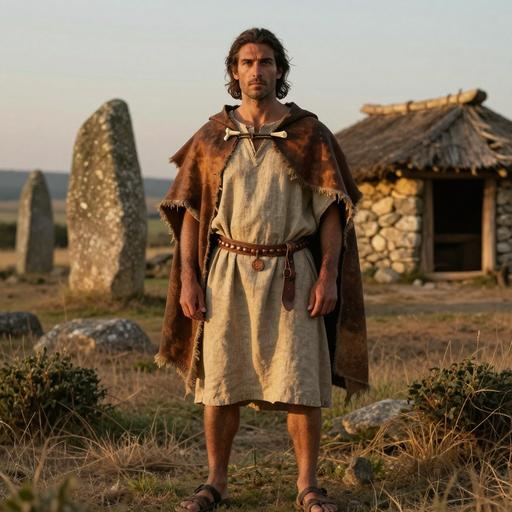
Portrait of ancient individual KIL018 from Ireland, dated 700 CE - 1300 CE
KIL018
Ireland Anglo-Saxon Early Medieval Kilteasheen, Ireland 700 CE - 1300 CE Kilteasheen I2a1b Direct
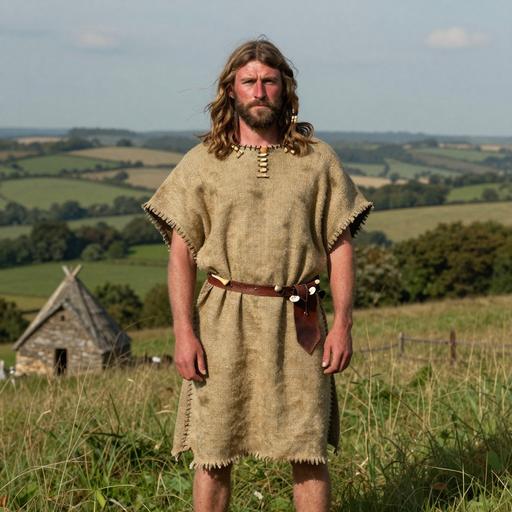
Portrait of ancient individual CGG101842 from Denmark, dated 1000 CE - 1800 CE
CGG101842
Denmark Medieval Danish 1000 CE - 1800 CE Danish Medieval I2a1b Direct
Portrait of ancient individual CGG100797 from Denmark, dated 1300 CE - 1400 CE
CGG100797
Denmark Medieval Danish 1300 CE - 1400 CE Danish Medieval I2a1b Direct
Portrait of ancient individual CovaMoura364 from Portugal, dated 2500 BCE - 2000 BCE
CovaMoura364
Portugal Late Neolithic to Chalcolithic Portugal 2500 BCE - 2000 BCE Portuguese Chalcolithic I2a1b Direct
Portrait of ancient individual CabecoArruda117B from Portugal, dated 3350 BCE - 2850 BCE
CabecoArruda117B
Portugal Chalcolithic Portugal 3350 BCE - 2850 BCE Portuguese Chalcolithic I2a1b Direct
Portrait of ancient individual I0518 from United Kingdom, dated 3360 BCE - 3100 BCE
I0518
United Kingdom Neolithic England 3360 BCE - 3100 BCE British Neolithic I2a1b Direct
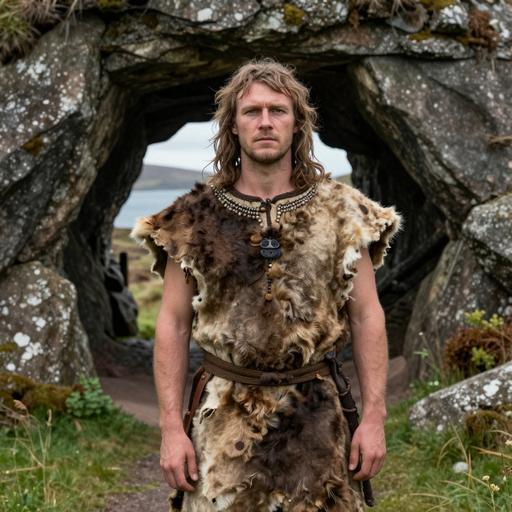
Portrait of ancient individual I12312 from United Kingdom, dated 3751 BCE - 3636 BCE
I12312
United Kingdom Neolithic Scotland 3751 BCE - 3636 BCE Scottish Neolithic I2a1b Direct
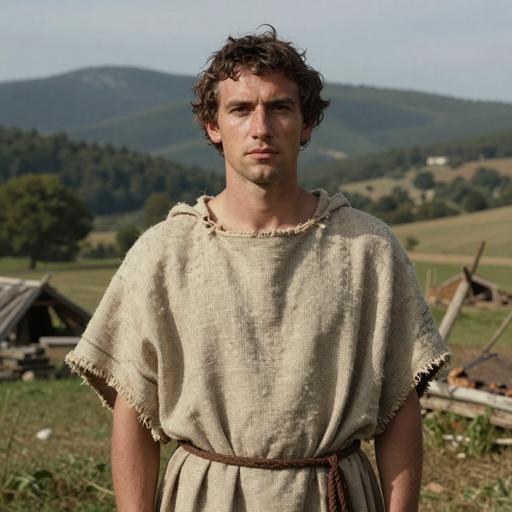
Portrait of ancient individual LBR005 from France, dated 5216 BCE - 4953 BCE
LBR005
France Early to Middle Neolithic France 5216 BCE - 4953 BCE Linear Pottery Culture I2a1b Direct
Portrait of ancient individual CHA003 from Spain, dated 5302 BCE - 4991 BCE
CHA003
Spain Early Neolithic Spain 5302 BCE - 4991 BCE Cardial Culture I2a1b Direct
Portrait of ancient individual CHA001_merged from Spain, dated 5308 BCE - 5051 BCE
CHA001_merged
Spain Early Neolithic Spain 5308 BCE - 5051 BCE Cardial Culture I2a1b Direct
Chapter VI

Carrier Distribution Map

Geographic distribution of 22 ancient DNA samples (direct and subclade carriers of I2A1B)

Direct carrier Subclade carrier
Time Period Filter
All Time Periods
Showing all samples
Chapter VII

Temporal Distribution

Distribution of carriers across archaeological periods

Chapter VIII

Geographic Distribution

Distribution by country of origin (direct and subclade carriers shown by default)

Chapter IX

Country × Era Distribution

Cross-tabulation of carrier countries and archaeological periods (direct and subclade carriers shown by default)

Data

Data & Provenance

Source information and data quality

Last Updated 2026-02-16
Confidence Score 50/100
Coverage Low
Data Source

We use the latest phylotree for YDNA haplogroup classification and data.